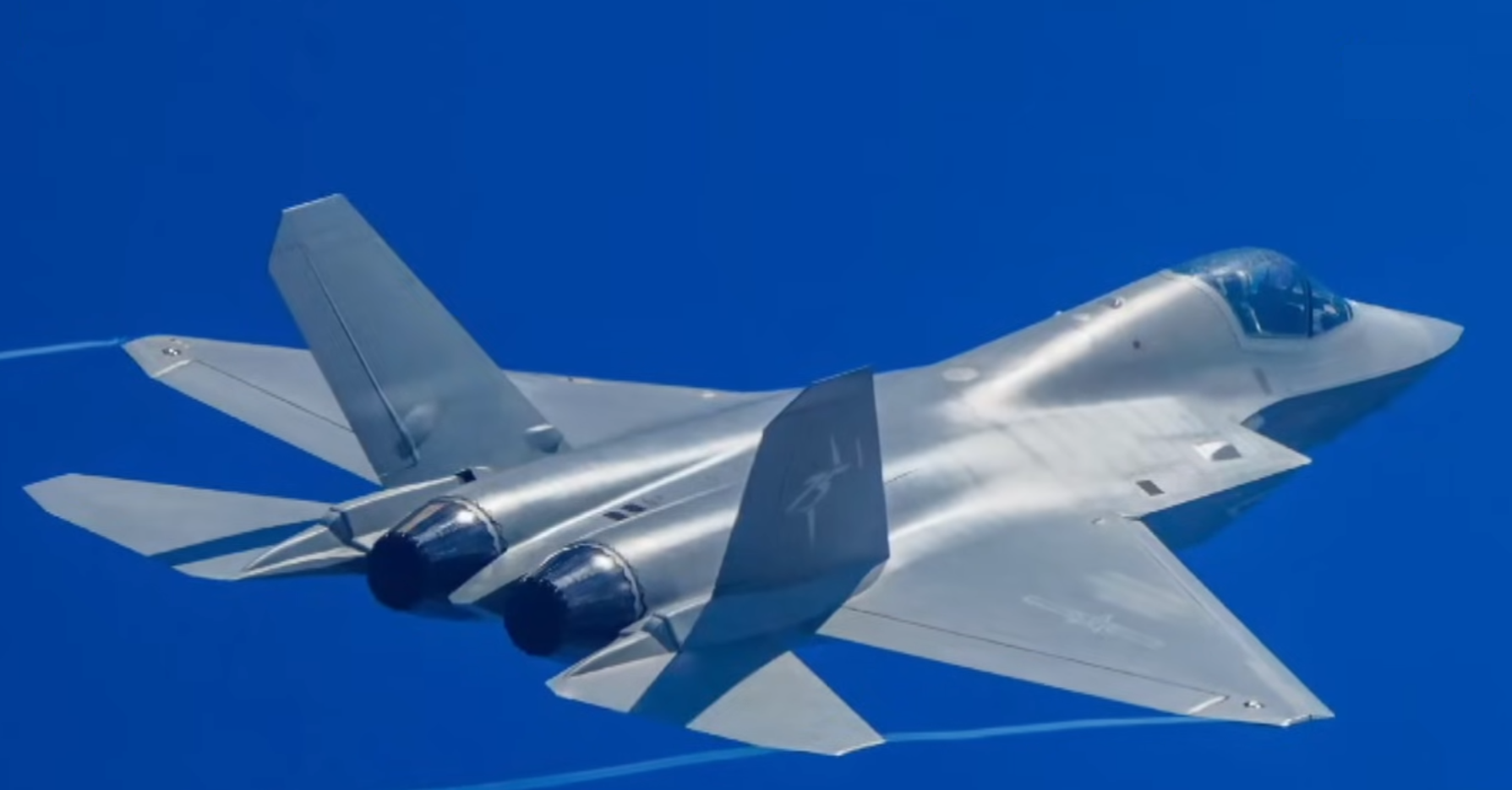
Islamabad, Dec 24: In a significant move, China is reportedly in discussions with Pakistan to sell 40 of its advanced J-35A stealth fighter jets, marking a potential game-changing shift in the region’s air power dynamics. If the deal goes through, Pakistan would become the first country outside China to acquire these cutting-edge aircraft, making it the only foreign operator of the J-35A.
The J-35A, a twin-engine, multi-role, fifth-generation fighter, is regarded as China’s most advanced military aircraft. The jets, expected to be delivered within two years, would replace Pakistan’s aging fleet of U.S.-made F-16s and French Mirage fighters, providing a major boost to its air defense capabilities.
According to a report in the South China Morning Post, which cited Pakistani media sources, China’s defense industry is already set up for mass production of the J-35A, enabling rapid delivery of the jets. However, while Pakistan’s Air Force has reportedly approved the purchase, Beijing has not officially confirmed the sale.
The J-35A is China’s second fifth-generation fighter jet, following the J-20. It is designed for both air superiority and stealth operations, with capabilities to target hostile fighter jets, bombers, and cruise missiles. The aircraft is comparable to the U.S. F-35, though the J-35A has two engines, while the F-35 uses a single engine. China’s military aims to use the J-35A in both its Air Force and Navy, mirroring the U.S. approach to the F-35 with multiple variants for different branches of the military.
Despite Pakistan’s severe economic crisis, the country is reportedly moving ahead with the deal. Islamabad is struggling under the weight of massive debt, much of it owed to Beijing, and its economy is reliant on bailout packages from the IMF and World Bank. However, experts believe China may offer Pakistan additional loans to finance the fighter jet purchase, even though the country already faces significant financial challenges.
This potential deal comes amid broader military cooperation between China and Pakistan. Beijing has already supplied Pakistan with military technology, including the joint development of the J-17 Thunder fighter jet and four advanced naval frigates for Pakistan’s Navy. In November, Chinese General Zhang Youxia visited Pakistan for closed-door talks with Pakistan’s Army Chief Gen Asim Munir. The discussions centered on mutual security interests and regional stability.
However, recent reports suggest that China has been increasing pressure on Pakistan to allow Chinese security forces to deploy in the country, particularly along the China-Pakistan Economic Corridor (CPEC), which runs through disputed regions like Pakistan-occupied Kashmir and Balochistan. Pakistan has resisted these requests due to concerns over national sovereignty.