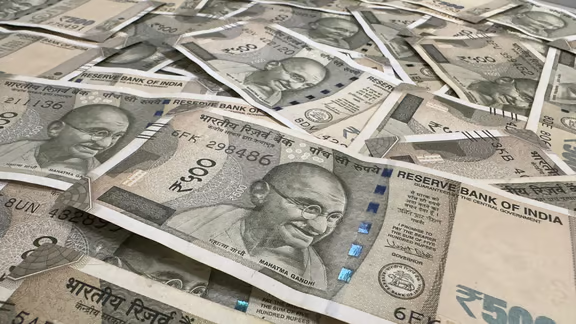
New Delhi, Dec 24: The Indian rupee fell by 9 paise to a fresh all-time low of 85.20 against the U.S. dollar on Tuesday, marking its second consecutive session of depreciation. The currency was weighed down by a stronger greenback, a surge in crude oil prices, and subdued domestic equity markets.
The rupee opened at 85.10 and briefly touched a low of 85.21 before settling at 85.20. This marks a further slide from its previous close of 85.11 on December 23, 2024.
Analysts pointed to a combination of factors contributing to the rupee’s fall. Increased demand for the U.S. dollar, driven by month-end payment obligations, as well as concerns about potential U.S. import tariffs under the Trump administration, were cited as key drivers, reported by The Hindu.
“Increased demand for the dollar due to month-end payment obligations and the fear of an aggressive import tariff by the Donald Trump administration in the U.S. strengthened the greenback,” analysts noted.
Additionally, surging crude oil prices have added pressure on the rupee, further driving its depreciation. The price of Brent crude rose 0.69% to $73.13 per barrel in futures trading.
Anuj Choudhary, Research Analyst at Mirae Asset Sharekhan, attributed the rupee’s slide to weak domestic markets and a strong U.S. dollar.
“The rupee fell to a fresh all-time low on weak domestic markets and a strong U.S. dollar due to increased demand from importers and surging crude oil prices,” said Choudhary, adding that a hawkish U.S. Federal Reserve and an improving U.S. economy could provide continued support for the greenback.
Choudhary also noted that Foreign Institutional Investor (FII) outflows could weigh on the rupee in the near term, but he added that intervention by the Reserve Bank of India (RBI) may offer some support.
“FII outflows may also weigh on the rupee. However, any intervention by the RBI may support the rupee at lower levels,” he said.
The U.S. dollar index, which measures the dollar against a basket of major currencies, was trading 0.11% higher at 107.93, fueled by rising U.S. Treasury yields and fears of delayed interest rate cuts by the U.S. Federal Reserve.
Meanwhile, in the domestic equity market, the BSE Sensex ended 67.30 points lower (0.09%) at 78,472.87, while the Nifty dropped 25.80 points (0.11%) to 23,727.65.
Foreign Institutional Investors (FIIs) were net sellers in the capital markets, offloading shares worth ₹168.71 crore on December 23, 2024, according to exchange data.
The ongoing volatility in the rupee and concerns over inflation and trade balances are expected to keep market participants on edge as India navigates a turbulent economic landscape.