

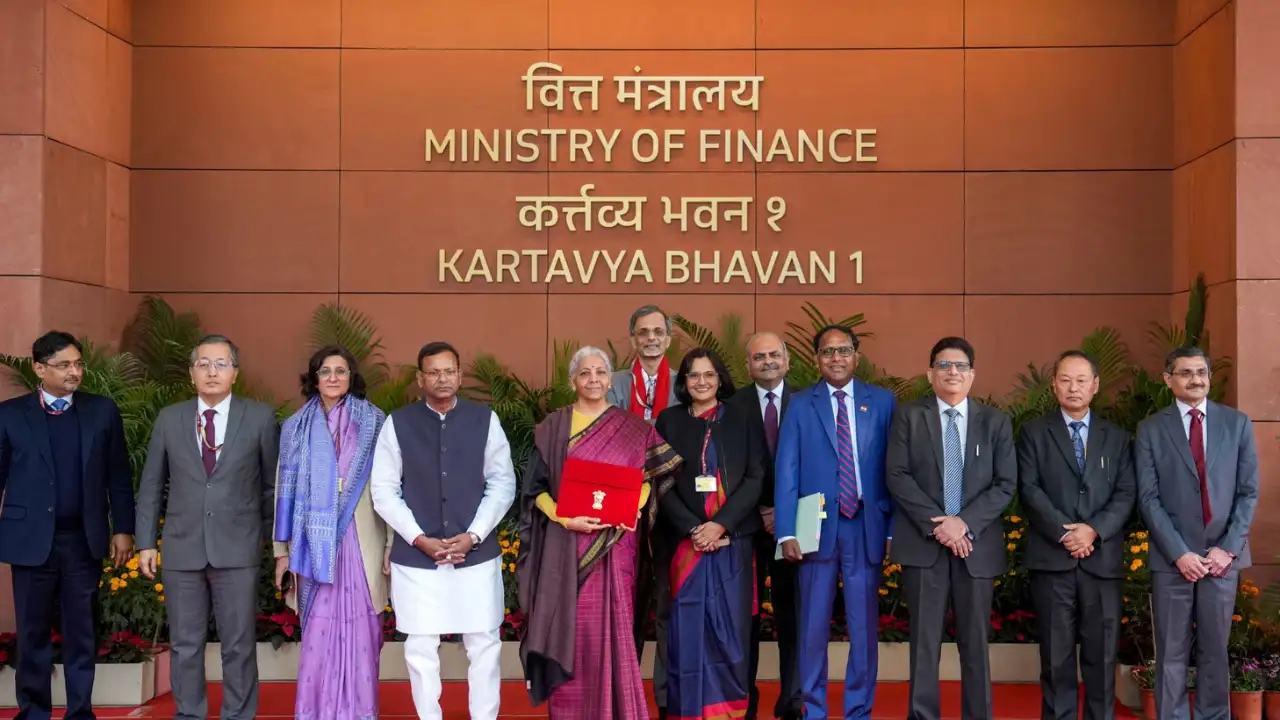
New Delhi, Feb 1: India’s federal budget for 2026–27 set total expenditure at a record ₹53.5 lakh crore (about $600 billion), underscoring a continued push for infrastructure-led growth while marginally tightening fiscal discipline amid global economic uncertainty.
Capital expenditure was raised to an all-time high of ₹12.2 lakh crore, up about 11% year-on-year, with allocations focused on roads, railways, ports and logistics, reinforcing public investment as the main growth engine.
The government pegged the fiscal deficit at 4.3% of GDP, slightly lower than 4.4% in the revised estimate for 2025–26, while signalling a shift in fiscal strategy towards reducing the debt-to-GDP ratio, projected at 55.6% for FY27 and targeted to fall to around 50% by 2030–31.
Non-debt receipts for FY27 were estimated at ₹36.5 lakh crore, including net tax receipts of ₹28.7 lakh crore after devolution to states. To finance the deficit, the government plans gross market borrowings of ₹17.2 lakh crore and net borrowings of ₹11.7 lakh crore, with the balance to come from small savings and other sources.
For comparison, total expenditure in FY26 (revised) stood at ₹49.6 lakh crore, with net tax receipts of ₹26.7 lak crore and capital expenditure of about ₹11 lakh crore.
The budget reaffirmed a focus on manufacturing and supply chains, announcing sectoral pushes across semiconductors, electronics, biopharma, rare earths, chemicals and textiles, alongside a ₹10,000-crore SME Growth Fund to support job creation. Defence spending was raised by over 20%, while ₹20,000 crore was earmarked for carbon capture technologies.
On the tax front, the government announced no changes to personal income tax slabs and avoided populist giveaways, while increasing the securities transaction tax on derivatives and signalling higher tax incidence on share buybacks.
The government projected economic growth of 6.8–7.2% in FY27, maintaining its emphasis on state-led investment, manufacturing self-reliance and fiscal restraint amid volatile global capital flows.