

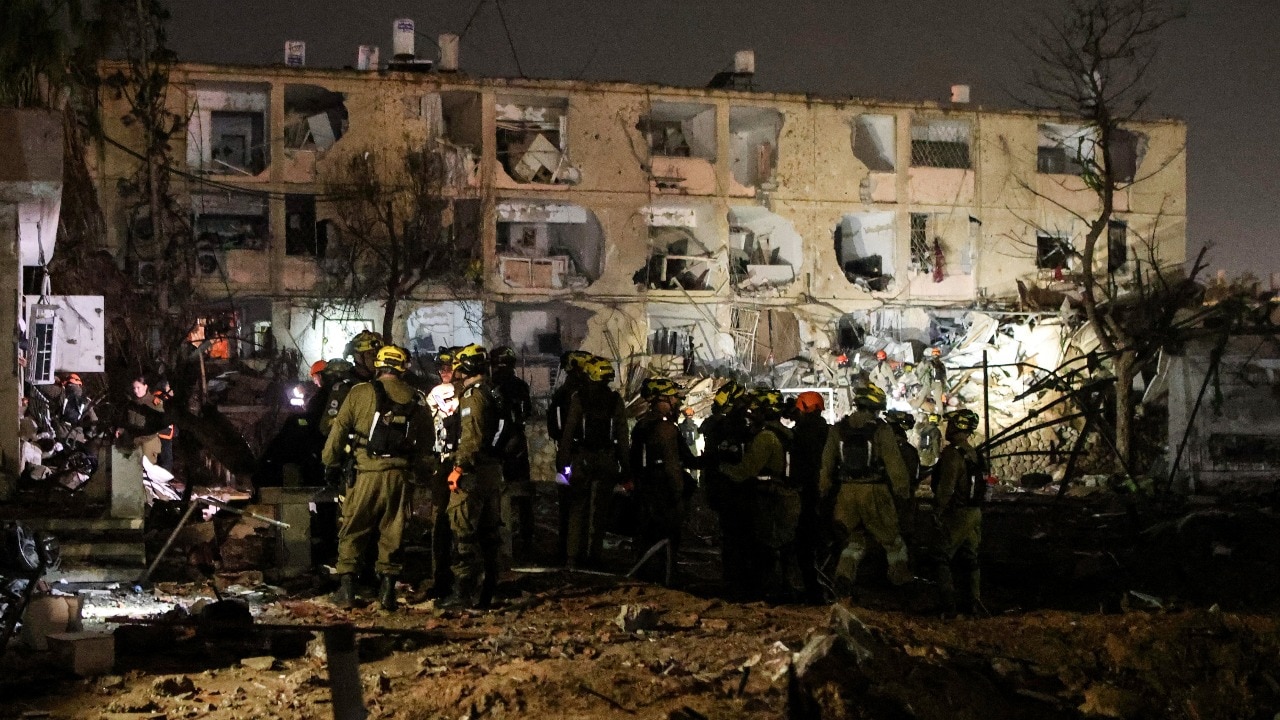
Southern Israel, Mar 23: A fresh wave of Iranian missile strikes has injured around 180 people in southern Israel, hitting residential areas near one of the country’s most sensitive nuclear installations and underscoring the escalating risks in the ongoing conflict.
According to Israeli health authorities, the majority of casualties were reported from the desert towns of Arad and Dimona, where ballistic missiles struck densely populated neighborhoods. Emergency responders described scenes of extensive destruction, with apartment blocks partially torn apart, debris scattered across streets, and civilians—many of them children—treated for head and chest injuries.
Despite the proximity of the strikes to the Shimon Peres Negev Nuclear Research Center, international monitors said there were no indications of structural damage or radiation leakage. The International Atomic Energy Agency confirmed that radiation levels remained normal, easing immediate fears of a nuclear safety incident.
The missile barrage is widely seen as part of a retaliatory cycle, following reported strikes on Iran’s Natanz Nuclear Facility, a key site in its nuclear program. While Tehran signaled that its intended target was strategic infrastructure, Israeli officials argue that the impact on civilian areas reflects the inherent unpredictability and danger of such attacks.
Military officials stated that Israel’s air defense systems intercepted the vast majority of incoming projectiles, estimating a success rate of over 90 percent since hostilities intensified in late February. However, the latest strikes revealed critical gaps, as a small number of missiles penetrated defenses and caused significant damage on the ground.
Security analysts note that even limited breaches can have outsized consequences. “Modern missile defense reduces risk, but it cannot eliminate it entirely,” one defense official said, pointing to the destructive power of a single ballistic missile carrying a heavy warhead.
On the ground, residents described moments of panic as warning sirens gave way to powerful explosions. In several neighborhoods, homes suffered collapsed ceilings and shattered windows, while public infrastructure—including a kindergarten—was also affected. The psychological impact has been significant, particularly in communities that had previously experienced relatively fewer casualties during the current phase of fighting.
The developments highlight a broader strategic concern: the increasing proximity of military exchanges to nuclear-related sites. Experts warn that even without direct hits, sustained operations near such facilities elevate the risk of miscalculation and potential regional escalation.
As both sides continue to exchange strikes, the situation remains volatile, with the possibility of further escalation carrying implications not just for the region, but for global security.
