

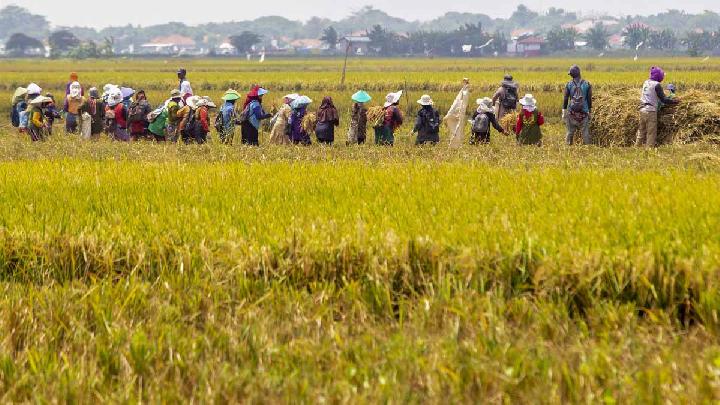
Karawang, Jan 7: President Prabowo Subianto on Tuesday declared that Indonesia has reached full rice self-sufficiency, saying domestic production is now sufficient to meet national demand without imports, marking a major milestone in the country’s food security drive.
Speaking to farmers in Karawang, east of Jakarta, Mr Prabowo said the achievement reflected Indonesia’s renewed focus on agricultural independence, a key pillar of his policy agenda since taking office in October 2024.
Government data shows rice output in 2025 totalled 34.71 million tonnes, comfortably above estimated annual consumption of 31.19 million tonnes, according to the National Food Agency. Officials said the surplus allowed Indonesia to avoid importing rice throughout the year, ending reliance on traditional suppliers such as Vietnam, Thailand and India.
Indonesia, home to around 286 million people, last achieved rice self-sufficiency in 2008, with an earlier period of self-reliance recorded in the mid-1980s. The government attributed the latest success to higher farm subsidies, improved irrigation support and regulatory reforms aimed at boosting domestic production.
Mr Prabowo had originally set a four-year timeline to achieve rice self-sufficiency, but officials said the target was met well ahead of schedule, strengthening the administration’s claim that food security underpins national sovereignty.
Alongside agricultural reforms, the president has rolled out a nationwide free meal programme to combat child malnutrition, which the government says has reached 55 million beneficiaries. However, the initiative has drawn criticism from opposition figures and civil society groups, who argue it has strained public finances and highlighted safety concerns following reports of thousands of food poisoning cases.
Despite the criticism, the government has framed rice self-sufficiency as a strategic achievement, signalling a shift towards reduced dependence on global food markets and greater resilience in feeding Southeast Asia’s largest population.
