

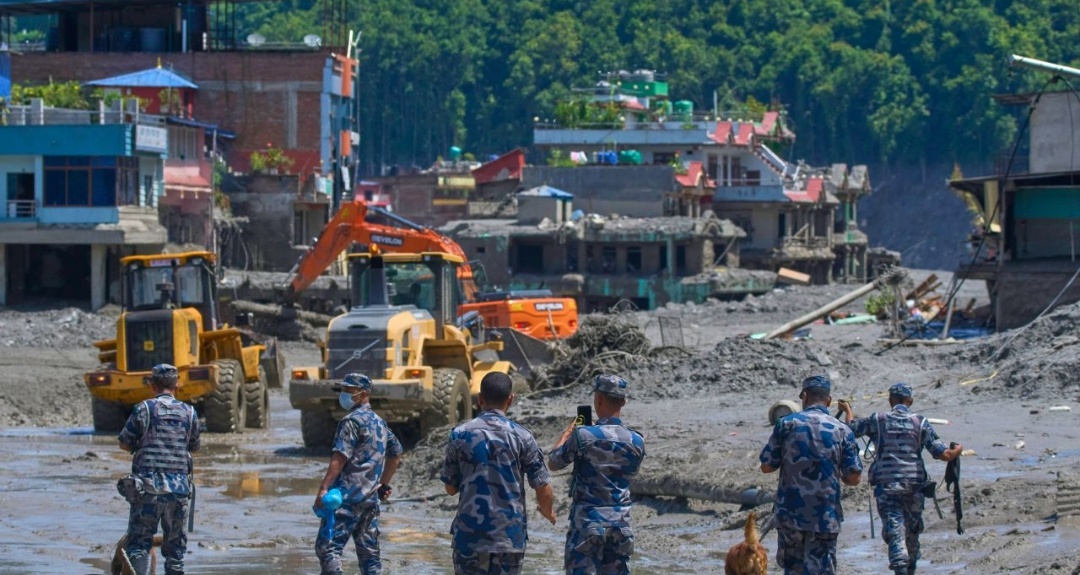
Kathmandu, Aug 27: A sudden flash flood swept through parts of Nepal’s Nuwakot district, leaving a trail of destruction and catching residents largely off guard, according to reports.The rapidly moving flood caused significant damage in affected areas, with hundreds of people reported dead or missing.
The disaster has renewed attention on the vulnerability of communities living in Nepal’s mountainous terrain, where heavy rainfall, unstable slopes and rapidly changing weather conditions can create serious risks.
Flash floods are particularly dangerous because water levels can rise rapidly, leaving residents with little time to evacuate. In mountainous areas, floodwaters can also carry mud, rocks, trees and other debris, increasing their destructive force.Experts have warned that climate change could further complicate disaster risks in mountain regions.
Rising temperatures are contributing to changes in glaciers and permanently frozen ground, potentially increasing the likelihood of hazards such as landslides and glacial lake outburst floods.A recent report by the IFRC-Climate Centre, drawing on findings from the Intergovernmental Panel on Climate Change, highlighted the possibility of cascading hazards in mountainous environments.
Such events occur when one natural hazard triggers or intensifies another, potentially turning a local incident into a much larger disaster.Glacial retreat and permafrost thaw can alter the stability of mountain landscapes. Changes in glacial lakes can also create additional risks if natural barriers holding large volumes of water become unstable.
However, climate change should not automatically be considered the sole cause of the Nuwakot disaster. Determining the influence of climate change on an individual extreme-weather event requires detailed scientific assessment.
The latest disaster has nevertheless highlighted the importance of stronger early-warning systems, improved monitoring of vulnerable areas and faster emergency communication in mountain communities. Better preparedness, timely evacuation plans and coordination between local authorities and disaster-response agencies can help reduce casualties when sudden floods or other hazards occur.
The Nuwakot flooding serves as another reminder of the growing need to understand and prepare for interconnected climate and disaster risks in Nepal’s mountainous regions.
