

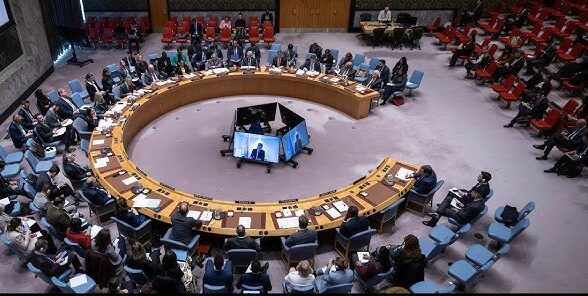
United Nations/Cairo/Jerusalem, June 5: The United States on Wednesday vetoed a U.N. Security Council resolution demanding an “immediate, unconditional and permanent ceasefire” between Israel and Hamas, standing alone as the only member to oppose the measure while 14 others voted in favor amid a deepening humanitarian crisis in Gaza.
The U.S. veto, cast by Acting Ambassador to the U.N. Dorothy Shea, drew sharp criticism from global diplomats and humanitarian agencies, who have warned of famine and large-scale civilian suffering in the densely populated enclave. Shea defended the move, stating the resolution failed to condemn Hamas and did not call for the group to disarm and withdraw from Gaza.
“The United States has been clear: We would not support any measure that fails to condemn Hamas and does not call for Hamas to disarm and leave Gaza,” Shea told the Council. She said the resolution risked undermining ongoing U.S.-led diplomatic efforts to broker a ceasefire.
Israel launched its military campaign in Gaza following Hamas’ October 7 attack that killed 1,200 people in Israel and saw around 250 hostages taken, according to Israeli figures. Since then, more than 54,000 Palestinians have been killed, Gaza health authorities say, with thousands of bodies still trapped under rubble.
On Wednesday alone, Israeli airstrikes killed 45 people, Gaza officials said. The Israeli military reported one soldier killed in combat operations.
Israel has rejected demands for a permanent or unconditional ceasefire, insisting that Hamas must be removed from Gaza. “You chose appeasement and submission,” Israel’s U.N. Ambassador Danny Danon told Security Council members who supported the draft. “You chose a road that does not lead to peace. Only to more terror.”
Hamas condemned the U.S. veto as evidence of “the U.S. administration’s blind bias” toward Israel.
Aid Access Struggles
Humanitarian access remains a critical concern. Israel eased an 11-week blockade on May 19, allowing U.N.-led aid deliveries to resume. However, a new parallel aid system launched shortly afterward by the Gaza Humanitarian Foundation (GHF) — backed by the U.S. and Israel — has faced pushback from the U.N. and international aid groups.
Critics say the GHF lacks neutrality, militarizes aid, and forces the displacement of civilians. Despite the controversy, GHF claims to have distributed more than seven million meals since its operations began. Aid distribution was halted Wednesday following a deadly incident near one of its so-called secure distribution zones. GHF called on the Israeli military to boost civilian protections and clarify guidance to avoid further escalation.
“No one wants to see Palestinian civilians in Gaza go hungry or thirsty,” said Shea, arguing that the U.N. resolution failed to recognize the “disastrous shortcomings” of previous aid delivery models.
U.N. aid chief Tom Fletcher renewed calls for full humanitarian access. “Open the crossings – all of them. Let in lifesaving aid at scale, from all directions,” he said. “Ensure our convoys aren’t held up by delays and denials.”
Slovenia’s U.N. envoy Samuel Zbogar echoed the sentiment during the debate, saying: “Enough of the suffering of civilians. Enough of food being used as a weapon. Enough is enough is enough.”
Next Steps at the General Assembly
A similar resolution is now expected to be brought before the 193-member U.N. General Assembly, where no member holds veto power. Diplomats say the measure is likely to pass, though General Assembly votes are non-binding.
Despite the looming vote, Danon warned against further efforts, saying: “Don’t waste more of your time, because no resolution, no vote, no moral failure, will stand in our way.”
The Security Council deadlock highlights growing international frustration over the worsening humanitarian catastrophe in Gaza and mounting calls for a lasting ceasefire that has so far failed to materialize.