

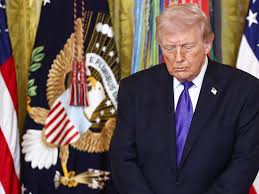
Washington, 3 March: The administration of Donald Trump is facing mounting scrutiny over its justification for expanded US military action against Iran, as lawmakers and independent experts say they have not seen evidence supporting claims of an “imminent threat” to the United States.
In public remarks this week, Trump described Iran as both an immediate and long-term danger, warning that a nuclear-armed Tehran equipped with long-range missiles would pose an “intolerable threat” not only to the Middle East but to Americans at home. He asserted that the United States had come close to being directly endangered and praised what he called the “obliteration” of Iran’s nuclear programme.
Yet the administration’s rationale has shifted in tone. At times, officials have emphasized preventing an impending strike; at others, they have pointed to the broader trajectory of Iran’s missile development and nuclear enrichment as justification for preemptive force.
Secretary of State Marco Rubio defended the operation as necessary to head off escalating violence. He argued that US officials anticipated Israeli military action and believed it would trigger retaliatory attacks on American personnel in the region. Acting first, he said, was intended to limit potential casualties.
Defense Secretary Pete Hegseth framed the campaign as limited in scope, rejecting comparisons to past US interventions in the Middle East. He characterized the strikes as decisive and aligned with “America First” priorities, emphasizing the destruction of missile and naval capabilities without broader regime-change ambitions or nation-building commitments.
However, senior Democrats briefed on classified intelligence say they were not presented with evidence of a concrete, imminent Iranian attack on the United States. Senator Tim Kaine stated that the intelligence he reviewed did not justify sending American troops into another regional conflict. Senator Mark Warner similarly said he saw no indication Iran was on the verge of launching a preemptive strike against US territory.
Outside government, nonproliferation specialists have also questioned the immediacy of the threat. Emma Belcher, president of the advocacy group Ploughshares, said the administration had not publicly substantiated its claims and warned that bypassing a detailed case for war risks undermining democratic accountability. Daryl Kimball of the Arms Control Association argued that while Iran retains nuclear expertise and missile capabilities, available assessments suggest it would require months—not days—to produce a deployable nuclear weapon, and that it does not currently field an intercontinental ballistic missile capable of reaching the continental United States.
The dispute touches directly on presidential war powers. Under the War Powers Resolution, a president may deploy US forces without prior congressional authorization but must withdraw them within 60 to 90 days unless lawmakers approve continued involvement. Legal scholars note that claims of “imminent threat” often serve as the central rationale for unilateral military action under both domestic and international law.
Politically, the debate arrives at a delicate moment. With midterm elections approaching, public opinion surveys indicate skepticism and uncertainty among voters regarding the scope and objectives of the campaign. Analysts warn that if hostilities intensify or US casualties rise, unresolved questions about the administration’s evidence could become a focal point of electoral debate.
The White House maintains that Iran’s record since the 1979 revolution, combined with its missile development and nuclear ambitions, constitutes a cumulative security danger that required decisive action. Critics counter that conflating long-term strategic rivalry with imminent attack risks stretching legal definitions and eroding congressional oversight.
As military operations continue, the central issue remains contested: whether the administration acted to thwart a clear and present danger, or whether it broadened the concept of “imminence” to justify a preemptive strike in a volatile region.
