

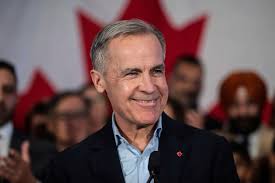
Ottawa, April 30 — Canadian Prime Minister Mark Carney’s Liberal Party won a narrow election victory on Tuesday but fell just short of securing a parliamentary majority, in a vote heavily influenced by trade tensions and incendiary rhetoric from U.S. President Donald Trump.
With nearly all ballots counted, the Liberals were leading or elected in 168 seats, four short of the 172 required for a majority in the 343-member House of Commons, according to Elections Canada. Recounts are expected in several closely contested districts, and the counting of special ballots — cast by voters away from their home ridings — resumed Tuesday and could impact final seat totals.
Carney, a former central banker who succeeded Justin Trudeau as Liberal leader after his resignation earlier this year, framed the result as a mandate for unity and resistance in the face of growing hostilities from Washington.
“We are over the shock of the American betrayal, but we should never forget the lessons,” Carney said in his victory speech. “President Trump is trying to break us so America can own us. That will never… ever happen.”
The election saw a dramatic reversal of fortunes for Conservative leader Pierre Poilievre, who was widely expected to become the next prime minister but not only failed to win power, he also lost the Ottawa-area parliamentary seat he had held for two decades. Poilievre had adopted a populist, Trump-style platform under the slogan “Canada First,” but growing Canadian unease with Trump’s aggressive stance may have cost the Conservatives critical support.
Trump, who has proposed annexing Canada as the 51st U.S. state and launched a trade war that includes tariffs on Canadian goods, continued to stir tensions on election day, falsely claiming on social media that the U.S. “subsidizes Canada.” A White House spokesperson said the Canadian election result “does not affect President Trump’s plan to make Canada America’s cherished 51st state.”
Carney, who took office amid soaring food and housing costs, has promised to direct all revenue from Canadian counter-tariffs toward workers impacted by U.S. trade actions. He also pledged tax relief for the middle class, sustainable immigration levels, and greater support for Canada’s public broadcaster.
While the Liberals were the clear winners, they will likely need to seek support from smaller parties to pass legislation. The New Democratic Party (NDP), which had propped up Trudeau’s minority government in recent years, fared poorly and will be led by a new figure following Jagmeet Singh’s resignation. The separatist Bloc Québécois, poised to finish third, has signaled a willingness to cooperate with a Liberal minority government for stability.
The election featured the highest early turnout in Canadian history, with more than 7.3 million voters casting ballots before election day, amid rising anti-American sentiment and nationalist fervor fueled by Trump’s threats.
“We stood up to Trump and said no to being bullied,” said Reid Warren, a Toronto voter. “Poilievre sounded like a mini-Trump to me. That’s not what Canada needs.”
Foreign policy dominated the election debate more than any time since the 1988 free trade election, with Trump’s actions casting a long shadow over the campaign.
Carney now faces the challenge of governing a deeply polarized country while navigating a deteriorating relationship with its largest trading partner. More than 75% of Canada’s exports go to the United States, and any escalation in trade hostilities could have significant economic repercussions.