

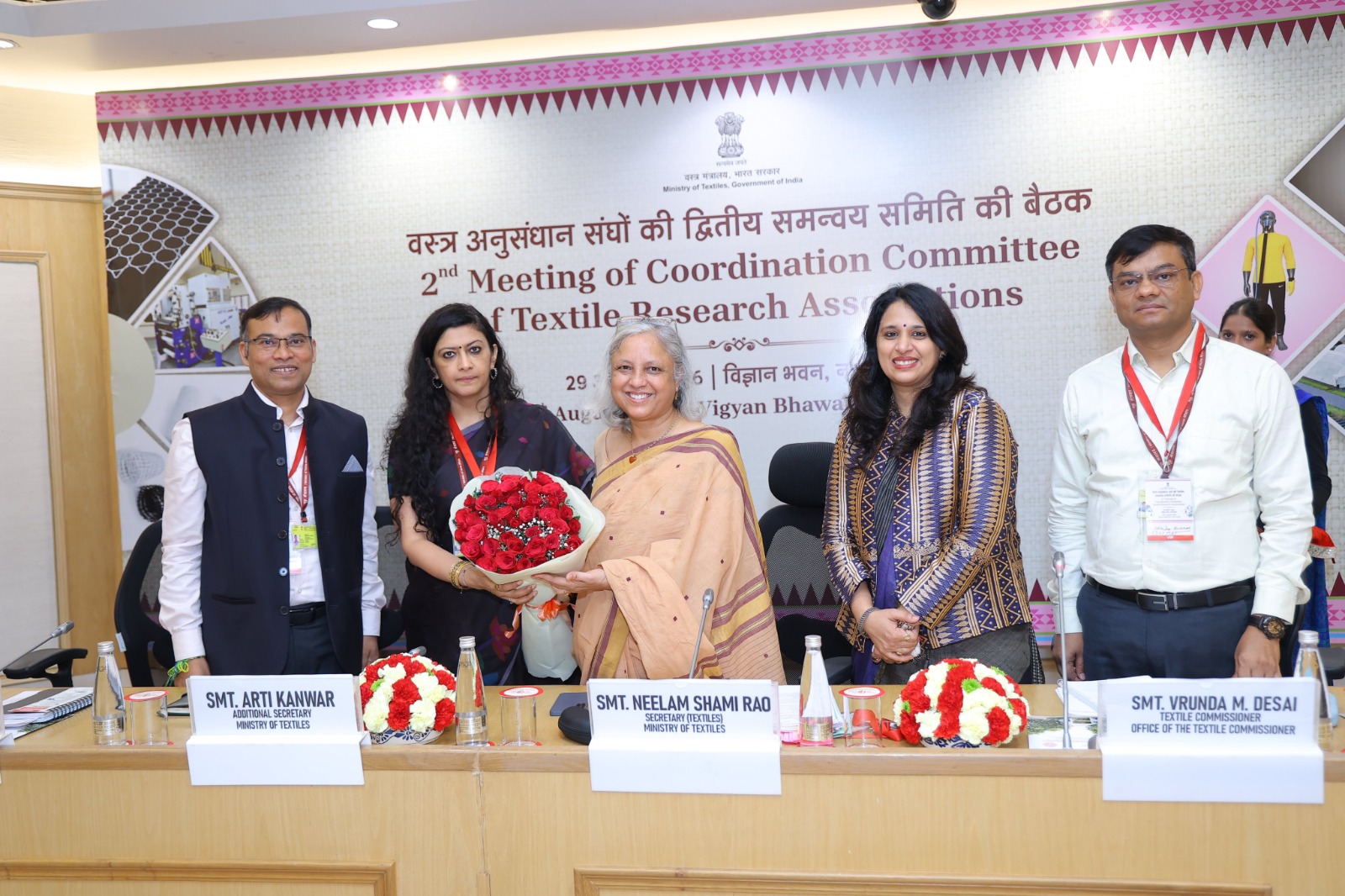
New Delhi, Aug. 29: The Ministry of Textiles has called for a stronger, more coordinated and outcome-oriented research ecosystem for India’s textile sector, with greater emphasis on industry participation, technology development and the commercial use of research outcomes.The focus emerged during the second Coordination Committee meeting of Textile Research Associations (TRAs), held at Vigyan Bhawan in New Delhi on Friday under the chairmanship of Textiles Secretary Neelam Shami Rao.
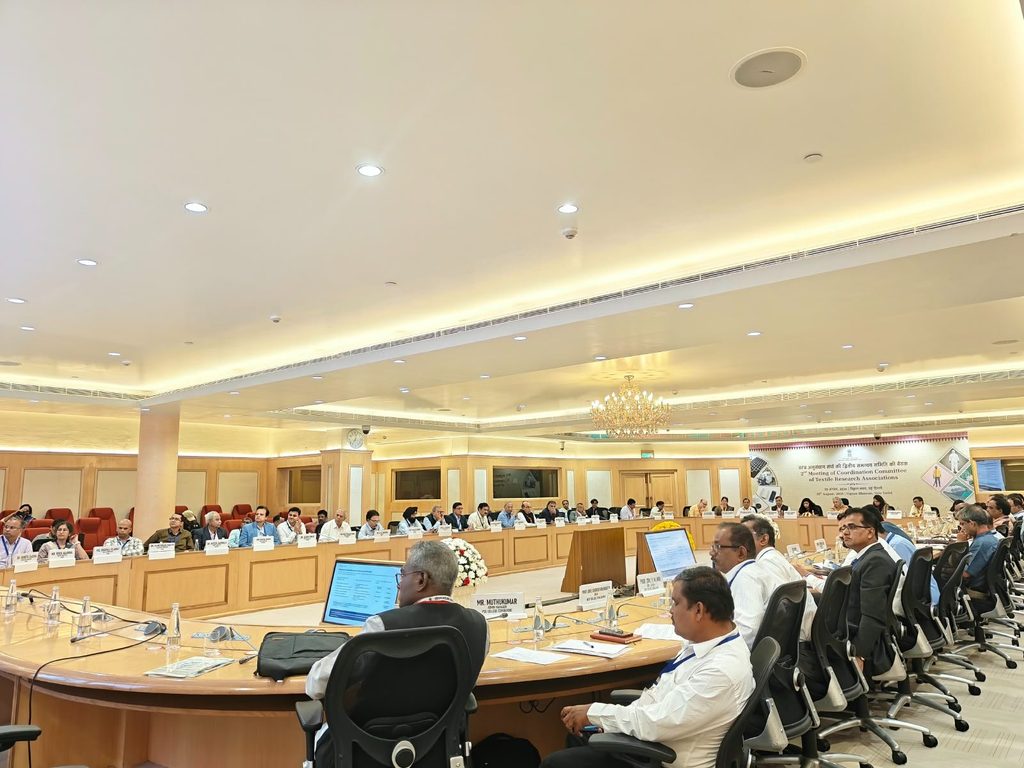
The meeting brought together senior officials of the ministry and representatives from Textile Research Associations, the Office of the Principal Scientific Adviser, the Department of Science and Technology, the Council of Scientific and Industrial Research, IITs and other institutions.
Participants discussed ways to align textile research more closely with national priorities and the changing requirements of the industry.
Key areas included technology development, innovation, industry engagement, commercialisation of research, institutional strengthening and capacity building.The committee also reviewed progress made since its first meeting.
Initiatives under review included the strengthening of equipment inventories and digital information through the i-TRAMS portal, the formation of sub-committees, identification of Centres of Excellence and new-age fibres, and discussions on emerging opportunities in technical textiles.
The government stressed that research undertaken by TRAs should increasingly produce practical and measurable outcomes. Greater attention is expected to be given to developing technologies, securing patents, creating prototypes and identifying opportunities for commercial deployment.
Research institutions were also encouraged to focus on developing solutions for industry challenges, particularly those faced by micro, small and medium enterprises, while supporting efforts to reduce dependence on imported technologies and products.
A key point of discussion was the need to involve industry at an early stage of research planning. Officials said greater industry participation from the concept stage could improve the relevance of research and increase the likelihood of successful adoption of new technologies.
The meeting also considered global benchmarking of Centres of Excellence and the introduction of a systematic Technology Readiness Assessment Framework to assess the development and maturity of new technologies.Other areas discussed included strengthening the startup and innovation ecosystem, creating a common e-library platform, attracting external funding, expanding institutional membership, improving skills and governance, and enhancing performance assessment.
The implementation of projects under the National Technical Textiles Mission was also reviewed, with emphasis on ensuring effective execution and measurable results.
The Ministry said strategic planning for TRAs, including the 2026-27 annual work plan and a broader five-year roadmap, is expected to provide direction for research and development, technology advancement, testing, standardisation, capacity building, innovation and institutional partnerships.
The effective use of the i-TRAMS platform was highlighted as an important tool for monitoring activities, sharing information, mapping research capabilities and connecting industry requirements with available institutional expertise.
The committee further emphasised the need for a robust Key Performance Indicator-based evaluation system supported by reliable data and periodic reviews. Such a framework is expected to improve accountability, promote efficient use of resources and help institutions achieve measurable targets within specified timelines.
The meeting concluded with a shared commitment to building a globally competitive and innovation-driven textile research ecosystem through closer cooperation among TRAs, industry, startups, academic institutions and research organisations.
The initiative is expected to support technological advancement, innovation, sustainability and long-term growth in India’s textile sector.
