

New Delhi, July 17: Tensions in the Middle East escalated sharply on Thursday as the United States reportedly intensified its military campaign against Iran with a series of strikes on defence installations, missile bases and strategic locations, prompting retaliatory missile attacks by Iran on US military facilities in the Gulf region.
According to reports, US strikes targeted Greater Tunb Island in the Strait of Hormuz and several Iranian provinces, including Tehran, Hamadan, Hormozgan, Khuzestan, Lorestan, Markazi, Sistan-Baluchistan and Semnan, a key centre for Iran’s ballistic missile and space programmes.
The US military also reportedly fired on the Curacao-flagged oil tanker Belma, which was said to be heading towards Kharg Island, one of Iran’s principal oil export terminals in the Persian Gulf.
Iran responded by reportedly targeting US military bases in Bahrain, Jordan and Kuwait, further heightening tensions across the region. Jordan’s military said it intercepted and destroyed eight Iranian missiles, while Kuwait and Bahrain confirmed missile attacks and stepped up security measures. Explosions were reported near Kuwait City, and air raid sirens sounded across Manama, Bahrain.
Iran’s Islamic Revolutionary Guard Corps (IRGC) claimed responsibility for missile attacks on a US military installation in the Gulf and also asserted that it had shot down two American drones. These claims could not be independently verified.
The conflict has also affected civilian infrastructure. Iranian authorities said missiles landed near a children’s cancer hospital in Ahvaz, forcing the evacuation of 211 child patients to other medical facilities. The Imam Reza Shrine complex in Mashhad was also reportedly struck during the attacks.
Meanwhile, Yemen’s Houthi rebels warned they would block shipping through the Red Sea if they came under attack, raising concerns over the security of one of the world’s busiest maritime trade routes.
US President Donald Trump claimed that Iran was seeking negotiations despite the ongoing hostilities.
“Iran wants to reach a peace agreement,” Trump said, adding, “They don’t like our action, and they want to compromise.” He, however, did not provide further details to support the claim.
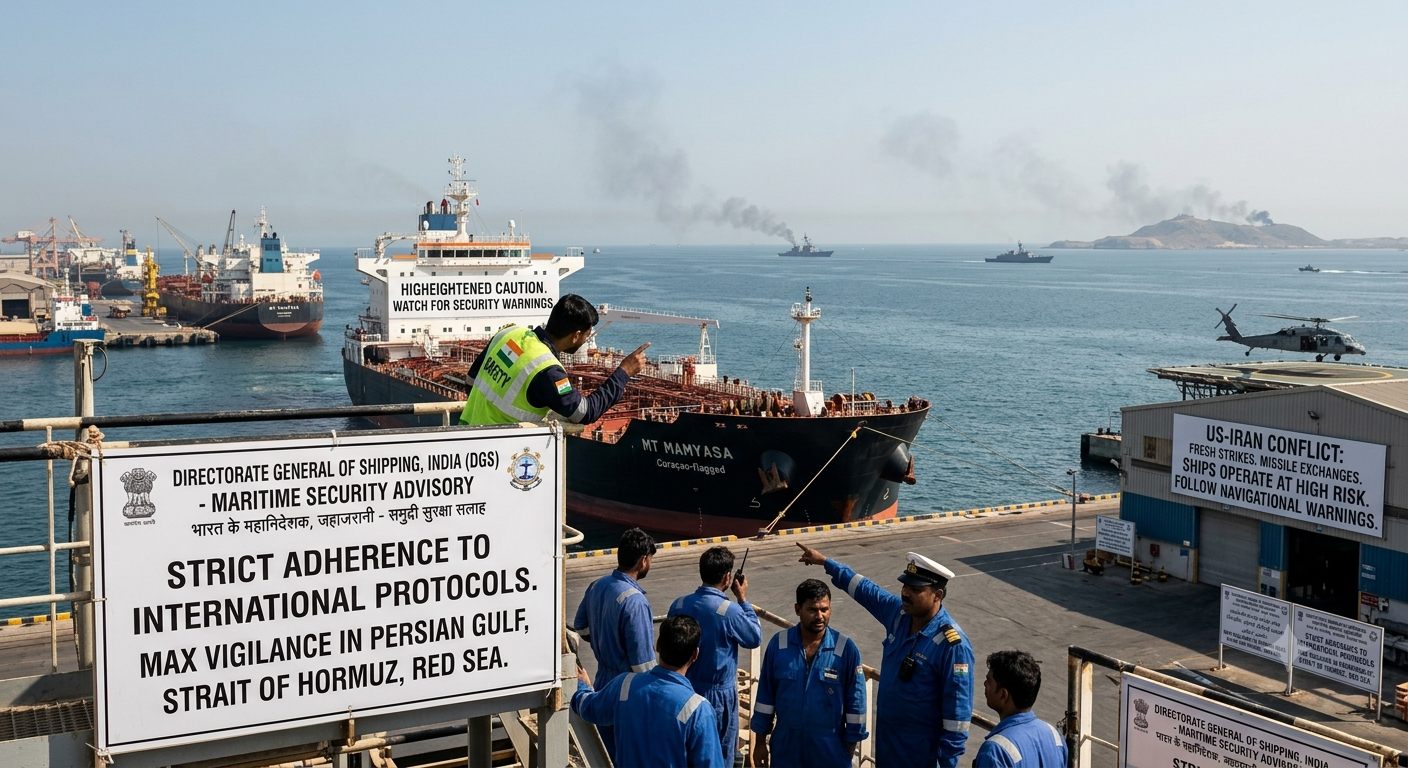
Amid the escalating conflict, India’s Directorate General of Shipping (DGS) issued an advisory directing shipping companies and vessel operators to exercise heightened caution while operating in the Persian Gulf and the Strait of Hormuz.
The advisory instructed ship captains to maintain maximum vigilance, closely monitor navigational and security warnings, and strictly adhere to international maritime security protocols.
“Captains operating in the Persian Gulf, Strait of Hormuz and surrounding waters must maintain a high level of security and vigilance and strictly follow international maritime security protocols,” the DGS said.
The advisory followed attacks on the vessels MT Al Wahia and MT Momyasa, which reportedly had 46 crew members, including 30 Indian sailors, on board.
According to the report, more than 100 Iranians and several Americans have been injured in the latest round of attacks.
The rapidly escalating conflict has raised fresh concerns over regional stability, global energy supplies and the safety of international shipping through the Strait of Hormuz and the Red Sea.
Note: This report is based on claims made by the parties involved and information provided in the source material. Several battlefield claims, including missile interceptions, drone shootdowns and casualty figures, could not be independently verified.
