

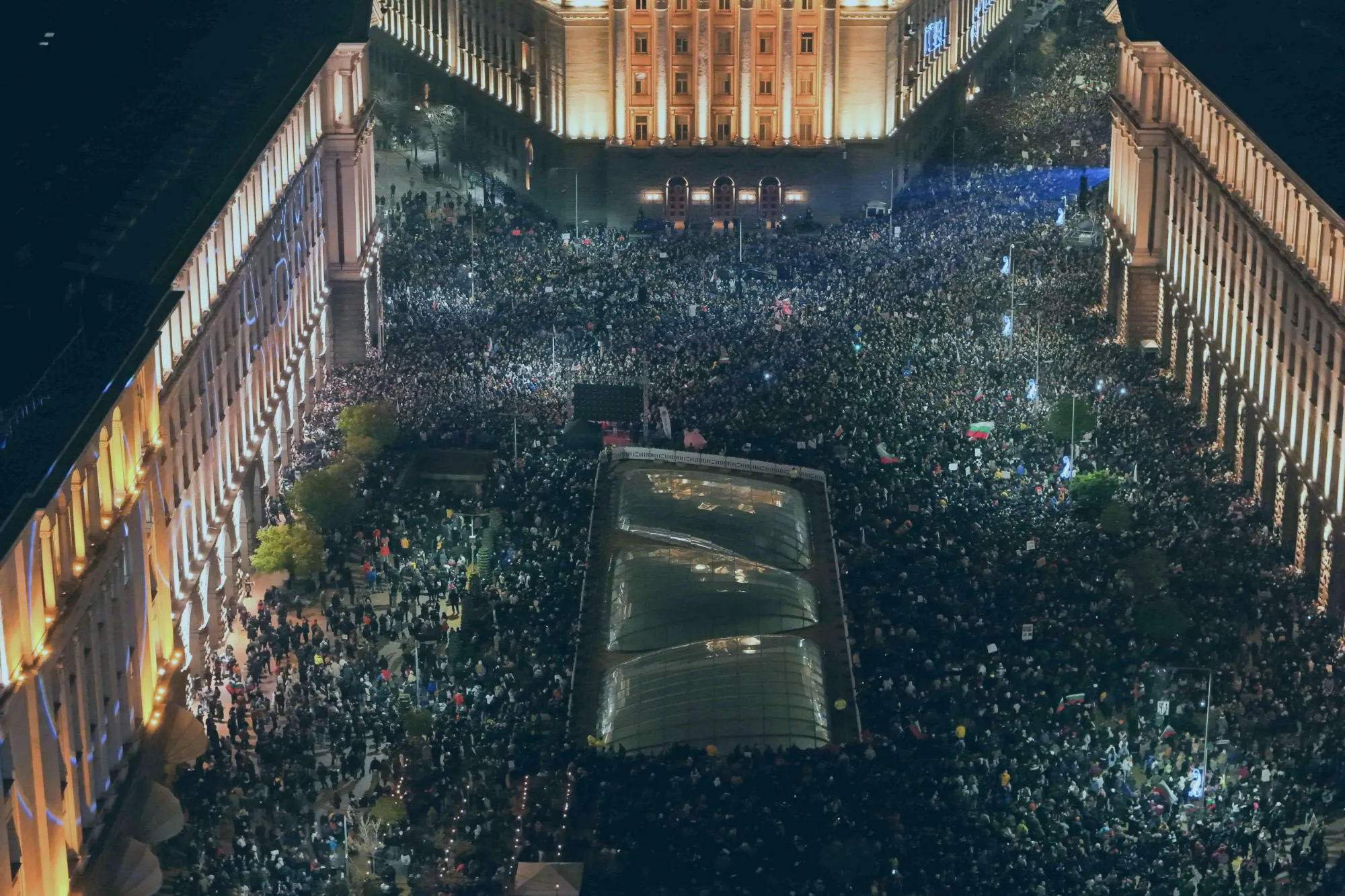
Sofia, December 13: Bulgaria’s government resigned on Thursday after weeks of mass protests over corruption and a controversial budget, plunging the Black Sea nation into fresh political uncertainty just weeks before it is due to adopt the euro.
Prime Minister Rosen Zhelyazkov handed in the resignation of his three-party coalition, which had been in office since January and was expected to oversee Bulgaria’s entry into the euro zone on Jan. 1. President Rumen Radev, whose role is largely ceremonial, had also called for Zhelyazkov to step down.
The resignation ends an increasingly unpopular administration but raises the prospect of prolonged instability in a country that has held seven national elections in four years amid a deeply fractured parliament.
Street reaction in Sofia was subdued, though some protesters welcomed the move as a sign that public pressure had worked. “It was about time,” said IT specialist Hristiyan Marinov, who said he hoped lawmakers could now “put an end to the abuses we’ve seen.”
The protests began in late November after the government proposed a draft budget that would have increased taxes on dividends and social security contributions to fund higher state spending. Much of the planned spending was earmarked for police, security services and the judiciary — institutions widely viewed by many Bulgarians as corrupt. Although the government later withdrew the budget, public anger continued to build.
Demonstrations swelled to tens of thousands of people across cities and towns by Wednesday, in what analysts described as some of the largest anti-government protests since the end of communism in 1989. The unrest was also fuelled by allegations of a crackdown on liberal, pro-European opposition figures, including the jailing of Blagomir Kotsev, the mayor of the coastal city of Varna, on corruption charges he denies.
“This was an accumulation of things. The tension has been growing over time, and the budget was the tipping point,” said Dimitar Markov, director of the law programme at the Centre for the Study of Democracy in Sofia.
The political turmoil casts a shadow over Bulgaria’s long-planned euro adoption. While many urban professionals back joining the single currency, others fear it could drive up prices or oppose Sofia’s pro-Western stance, including its support for Ukraine. Polls show the country remains divided over the euro.
Under Bulgaria’s constitution, President Radev will first give the largest party in parliament, GERB, a mandate to form a new government. If that fails, two other parties will get a chance. Should all attempts collapse, Radev will appoint an interim government and call snap elections, potentially pushing the country into yet another round of voting.
Analysts warn that the absence of a stable government and an approved budget could heighten economic risks. “The state has a critical role to make sure there are no major shocks to the system,” said Mario Bikarski, a senior Europe analyst at risk consultancy Verisk Maplecroft. “In the absence of a budget and a government, the risks are increasing quite a bit.”
Despite the uncertainty, some analysts see the protests as a sign of a more engaged public that could force greater accountability on future leaders.
