

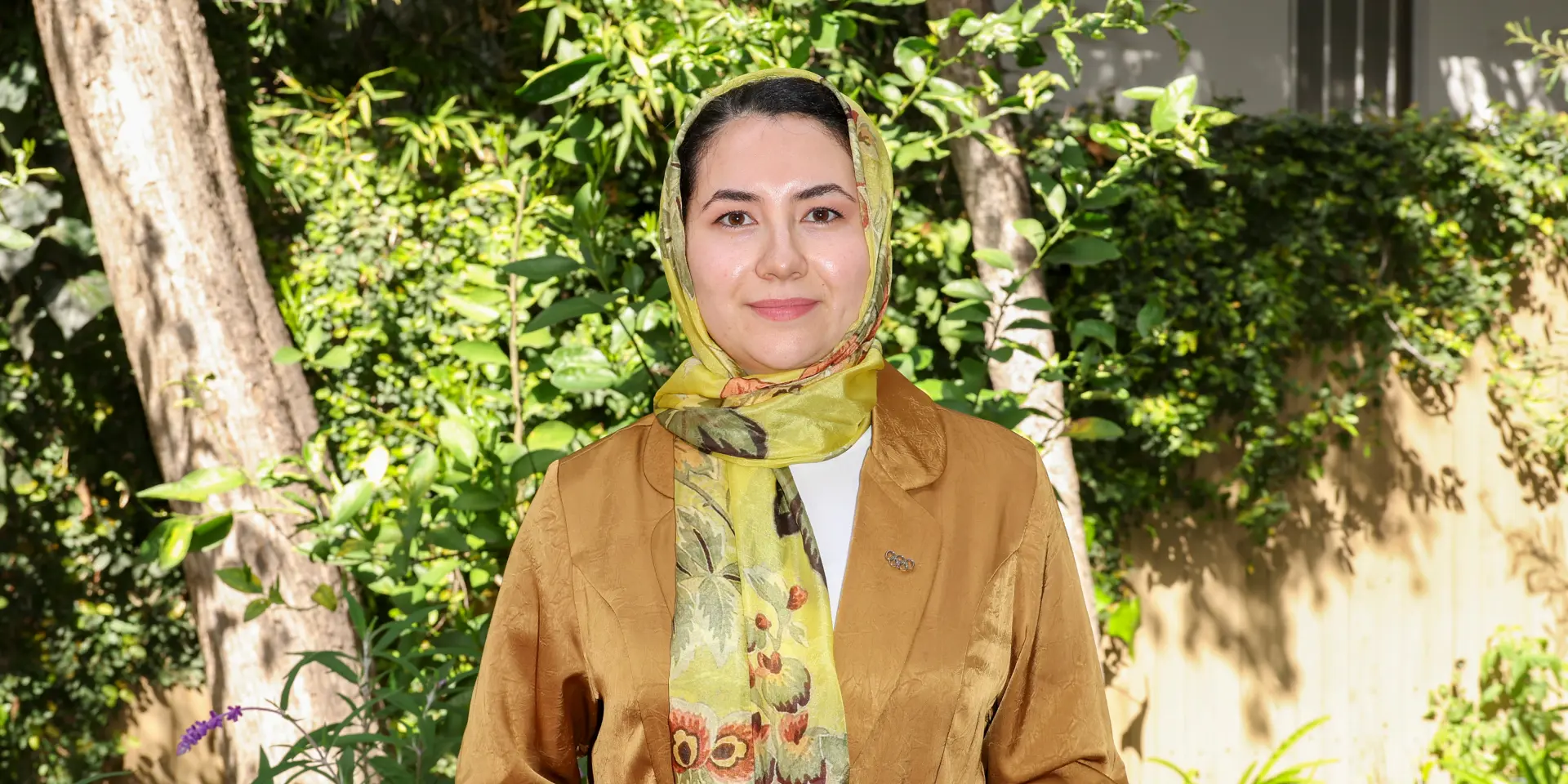
Kabul, Dec 13: Afghanistan’s International Olympic Committee (IOC) member Samira Asghari has said the Taliban authorities must recognise that international acceptance is directly linked to respecting women’s rights, particularly access to education and sport.
Speaking in an interview, Asghari stressed that the Taliban cannot continue to govern Afghanistan in the long term while denying fundamental human rights to women.
“If they are ever to be accepted internationally, they must respect the rights of women to education and sport,” she said.
“The Taliban need to understand that their international acceptance is directly linked to respecting human rights.”
Asghari, who is living in exile, acknowledged that public advocacy for women’s rights carries serious risks under Taliban rule.
“When you take a public stand for women’s rights, you do become a target,” she said, adding that campaigning for Afghan women’s sport “does require certain precautions.”
Despite these risks, Asghari said she believes engagement and dialogue remain essential, as the Taliban continue to control Afghanistan.
“As long as the Taliban remain the reality on the ground in Afghanistan, we cannot afford to waste time doing nothing,” she said.
“I believe strongly in communication and engagement.”
She clarified that ongoing discussions between international sports bodies and Taliban authorities do not amount to political recognition.
“These conversations are not about legitimising any government,” Asghari said.
“They are important for creating tangible opportunities for future generations of young boys and girls in Afghanistan.”
The IOC has held talks with Afghan authorities since 2021, focusing on safeguarding athletes. Ahead of the Paris 2024 Olympics, the IOC ensured a gender-balanced Afghan team, with all athletes competing from exile.
Asghari said she has worked to facilitate dialogue between the IOC and Afghan officials, while urging broader cooperation from global sports organisations.
“I hope FIFA can align with the IOC’s ongoing talks with the Taliban,” she said, noting that support for athletes in exile “is just the first step.”
With Afghan sportswomen now scattered across several countries, she acknowledged that forming national teams remains a complex challenge. Nevertheless, teams such as Afghan Women United, made up of players based abroad, have continued to compete internationally.
Asghari also called for small but meaningful openings, particularly in primary education, where girls are still permitted to attend school.
“If we can find small openings — like developing sport in primary schools — we should take them,” she said.
“This isn’t about accepting restrictions; it’s about not abandoning Afghan girls.”
Warning of the long-term consequences of continued restrictions, Asghari said Afghanistan risks creating another lost generation of women.
“What concerns me deeply is that we’re creating another lost generation,” she said, recalling how women previously denied education were forced to return to school years later.
“I cannot accept seeing this happen again.”
Despite the bleak outlook, Asghari said she remains hopeful and committed to dialogue.
“The future of Afghanistan is this young generation,” she said.
“We must never, ever give up on them.”
