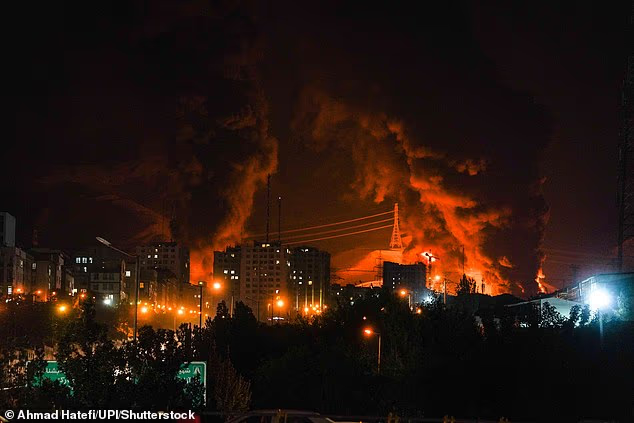
Jerusalem/Tehran, June 21: The escalating war between Israel and Iran entered its seventh day on Friday, with Tehran launching a missile that struck an Israeli hospital and Israeli officials responding with threats to eliminate Iran’s Supreme Leader Ayatollah Ali Khamenei.
The Iranian missile hit Soroka Medical Center in Beersheba, southern Israel, causing significant damage to a surgical building and lightly injuring several people, according to Israeli authorities. Most patients had been evacuated ahead of the strike due to prior warnings.
The attack was part of a wider barrage of ballistic missiles and drones launched by Iran overnight, wounding at least 240 people across Israel. Four individuals sustained serious injuries, Israel’s Health Ministry said.
In response, the Israel Defense Forces (IDF) struck Iran’s Arak heavy-water nuclear reactor in Khondab. Iranian officials said the facility had been evacuated and there was no radiation threat. The reactor was expected to become operational in 2026, following notification to the International Atomic Energy Agency (IAEA).
IDF spokesperson Brigadier General Effie Defrin said Israel had destroyed two-thirds of Iran’s missile launchers during the week-long campaign, though Iran retains more than 100 launch platforms. Iran has reportedly fired over 450 ballistic missiles and hundreds of unmanned aerial vehicles (UAVs) at Israel since hostilities began.
The conflict began after Israel launched “Operation Rising Lion,” a series of pre-emptive strikes targeting Iranian nuclear facilities, military leaders, and scientists. Israel has said the offensive was aimed at halting Iran’s nuclear weapons programme, which it views as an existential threat.
Israel’s Defence Minister Israel Katz escalated rhetoric on Friday, calling for the elimination of Khamenei following the hospital strike. “Khamenei can no longer be allowed to exist,” Katz said at a briefing in Holon, accusing the Iranian leader of ordering attacks on civilian targets.
India announced plans to evacuate its citizens from Israel, a day after beginning similar efforts in Iran under “Operation Sindhu.” The Ministry of External Affairs said evacuations would be carried out via land routes and completed by air.
Meanwhile, Iran accused the UN nuclear watchdog of bias. Foreign Ministry spokesperson Esmaeil Baqaei criticised the IAEA over a report on Tehran’s nuclear non-compliance issued just prior to the outbreak of war, calling it politically motivated and aligned with Israeli interests.
Iran also warned the United States against intervening militarily. Deputy Foreign Minister Kazem Gharibabadi said Tehran was prepared to respond to any direct U.S. involvement. The Kremlin echoed those warnings, cautioning that American intervention could trigger a “terrible spiral of escalation.”
According to available figures, Israeli airstrikes have killed more than 240 people in Iran, including at least 70 women and children. Iranian strikes have resulted in the deaths of 24 people in Israel.