

Colombo, 17 March: Sri Lanka has announced a four-day work week for public institutions, declaring Wednesdays a holiday in a bid to conserve fuel amid rising global oil prices linked to the ongoing US–Israel war with Iran.
The decision, which also extends to schools and universities, comes as energy supplies tighten across Asia. Essential services such as healthcare and immigration will continue to operate without disruption, officials said.
President Anura Kumara Dissanayake warned of a difficult period ahead, stating, “We must prepare for the worst, but hope for the best.”
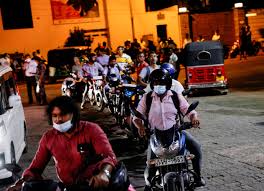
Authorities selected Wednesday as the additional holiday to avoid a prolonged three-day shutdown of government services. Alongside this, Sri Lanka has reintroduced its National Fuel Pass system to regulate fuel distribution, limiting private vehicles to 15 litres and motorcycles to five litres.
The measures reflect broader regional concerns as disruptions around the Strait of Hormuz — through which nearly 90% of oil bound for Asia transits — continue to strain supplies. Asia remains the world’s largest oil-importing region, making it particularly exposed to price shocks.
Across the region, governments are rolling out conservation strategies. Thailand has encouraged lighter clothing to reduce air-conditioning use, while Myanmar has implemented alternate-day driving rules.
In Bangladesh, authorities have advanced academic holidays and introduced scheduled power cuts. Meanwhile, the Philippines has expanded work-from-home policies, restricted non-essential government travel, and announced financial assistance for vulnerable groups.
Vietnam has urged citizens to limit private vehicle use, promoting cycling, carpooling, and public transport to reduce fuel consumption.
Sri Lanka’s latest move revives measures first seen during its 2022 economic crisis, when the country faced severe foreign exchange shortages and struggled to import fuel and other essentials.
With global crude prices hovering near $100 per barrel, analysts warn that prolonged geopolitical tensions could deepen economic pressures across energy-dependent Asian economies.
