

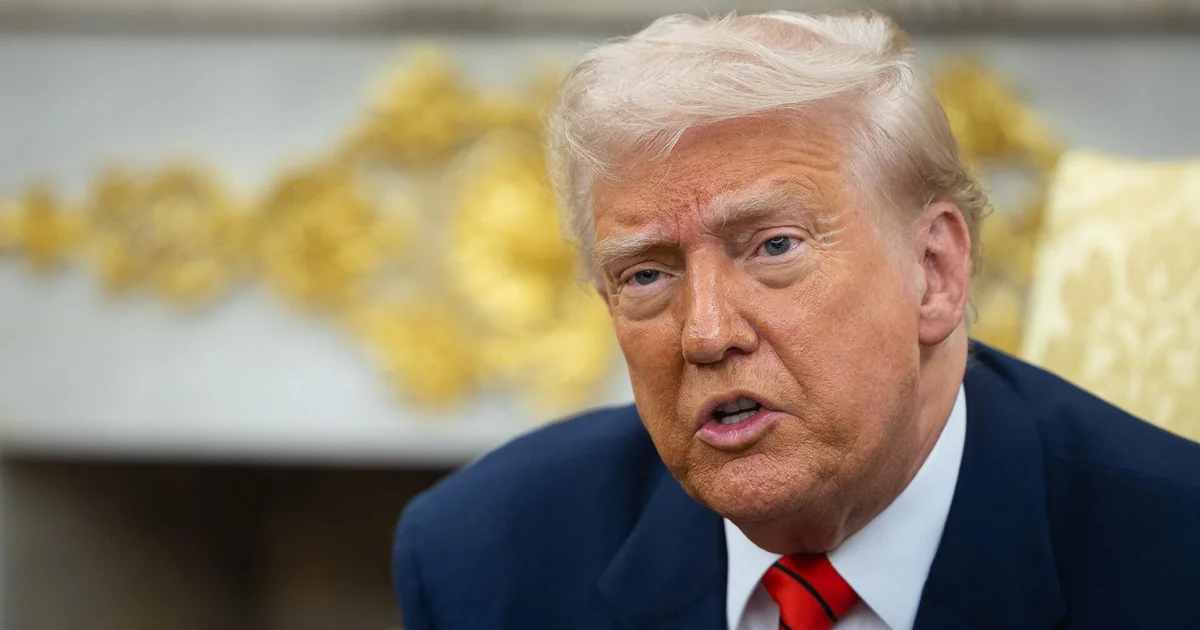
Washington, May 30 – A U.S. federal appeals court on Thursday temporarily paused a lower court ruling that had blocked President Donald Trump’s use of emergency powers to impose sweeping tariffs, allowing the levies to remain in place for now as the legal battle continues.
The Court of Appeals for the Federal Circuit in Washington granted an emergency request from Trump’s legal team, which argued that lifting the tariffs would harm national security. The decision comes a day after a three-judge panel from the U.S. Court of International Trade found that Trump overstepped his authority under the 1977 International Emergency Economic Powers Act (IEEPA).
The tariffs, dubbed “Liberation Day” tariffs by the Trump administration, have faced multiple legal challenges from businesses and trade groups who claim the measures went beyond the scope of presidential powers.
In its ruling on Wednesday, the trade court determined that Trump improperly invoked a national emergency to justify tariffs on imports from nearly every country. The decision was seen as a significant setback to the former president’s aggressive trade agenda, which has rattled global markets and drawn criticism from U.S. allies.
Despite the temporary reprieve, the White House indicated it remains concerned about the appeals court’s final decision and vowed to take the case to the U.S. Supreme Court.
“We intend to win,” White House Press Secretary Karoline Leavitt said in a statement Thursday. “We have filed an emergency appeal, and we expect to fight this battle all the way to the Supreme Court.” Leavitt added that if the current legal pathway fails, Trump is prepared to reimpose similar tariffs through other executive authorities.
“America cannot function if President Trump — or any other president, for that matter — has their sensitive diplomatic or trade negotiations railroaded by activist judges,” she said. “Ultimately, the Supreme Court must put an end to this for the sake of our Constitution and our country.”
Top White House trade adviser Peter Navarro welcomed the appeals court’s intervention. “The Trump tariff agenda is alive, well, healthy, and will be implemented to protect you, to save your jobs and your factories,” Navarro told reporters.
The case marks a major test of the limits of presidential trade authority and could have far-reaching implications for how future administrations handle economic policy under emergency powers.