

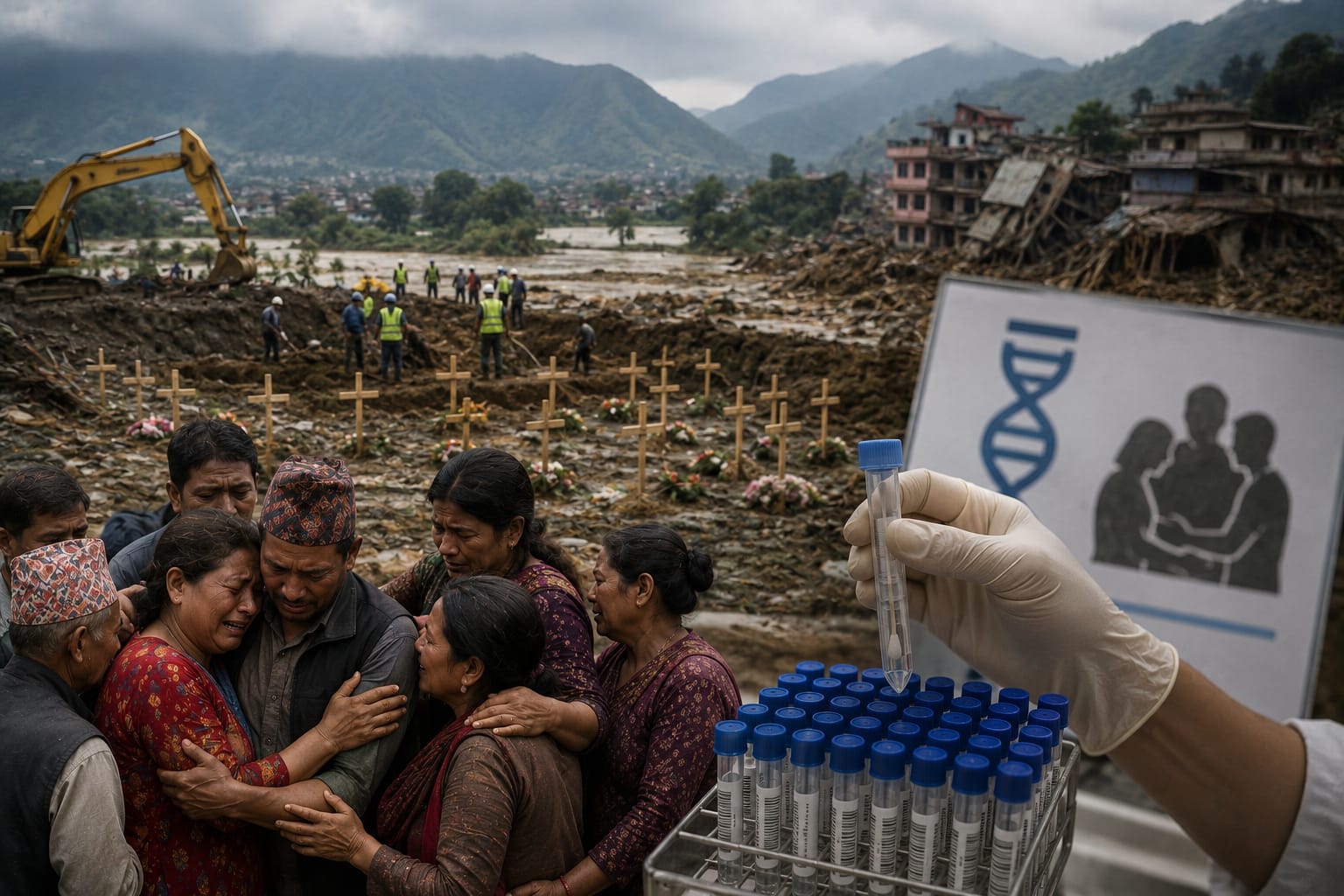
Kathmandu, Sep 2: Nepal has begun mass burial of unidentified flood victims as rapidly decomposing bodies overwhelm morgues and temporary holding centres, but authorities are preserving DNA and other forensic records to keep open the possibility of identifying the dead and returning them to their families.
The devastating floods, triggered by a glacier collapse near the Nepal-Tibet border, sent torrents of water, mud, rocks and debris through settlements and along the Bhotekoshi and Trishuli rivers. Thousands of people were reported missing, while bodies were recovered from rivers, debris and mud across several districts.
The scale of the tragedy has created a grim question for authorities — “what to do with hundreds of unidentified bodies.”
Many of the remains had been exposed to water and mud for days and were decomposing rapidly. With storage facilities reaching capacity, bodies were moved to facilities in Pokhara, Palpa, Rupandehi and Kapilvastu.
Authorities in Chitwan have selected an open site at Devghat in Bharatpur for mass burial of unidentified and unclaimed remains under Nepal’s 2026 body-management guidelines.
Officials, however, have stressed that “mass burial does not mean the case is closed.” Before burial, forensic teams collect DNA samples, photographs and detailed identification records from each body.
A 40-member medical team, including seven forensic pathologists and seven dental surgeons, is involved in the identification process. DNA samples have already been collected from bodies kept at temporary holding centres.
Each body is assigned a permanent reference or tracking number. Authorities also document physical characteristics, photographs, clothing, jewellery, identity documents and other belongings, along with post-mortem reports, investigation records, burial dates and the precise location of each grave.
“The purpose is to preserve the remains in a way that allows identification later,” authorities said.
The preserved DNA could prove crucial when families report missing relatives. Samples collected from relatives can be compared with DNA profiles obtained from unidentified remains. If a match is established, officials can trace the relevant grave and recover the remains for the family.
The mass burials are therefore being treated as an emergency response to a rapidly worsening forensic and public-health challenge, rather than the conclusion of efforts to identify victims.
“It is an emergency measure aimed at managing rapidly decomposing bodies while keeping open the possibility that Nepal flood victims can still be identified and returned to their families.”
