

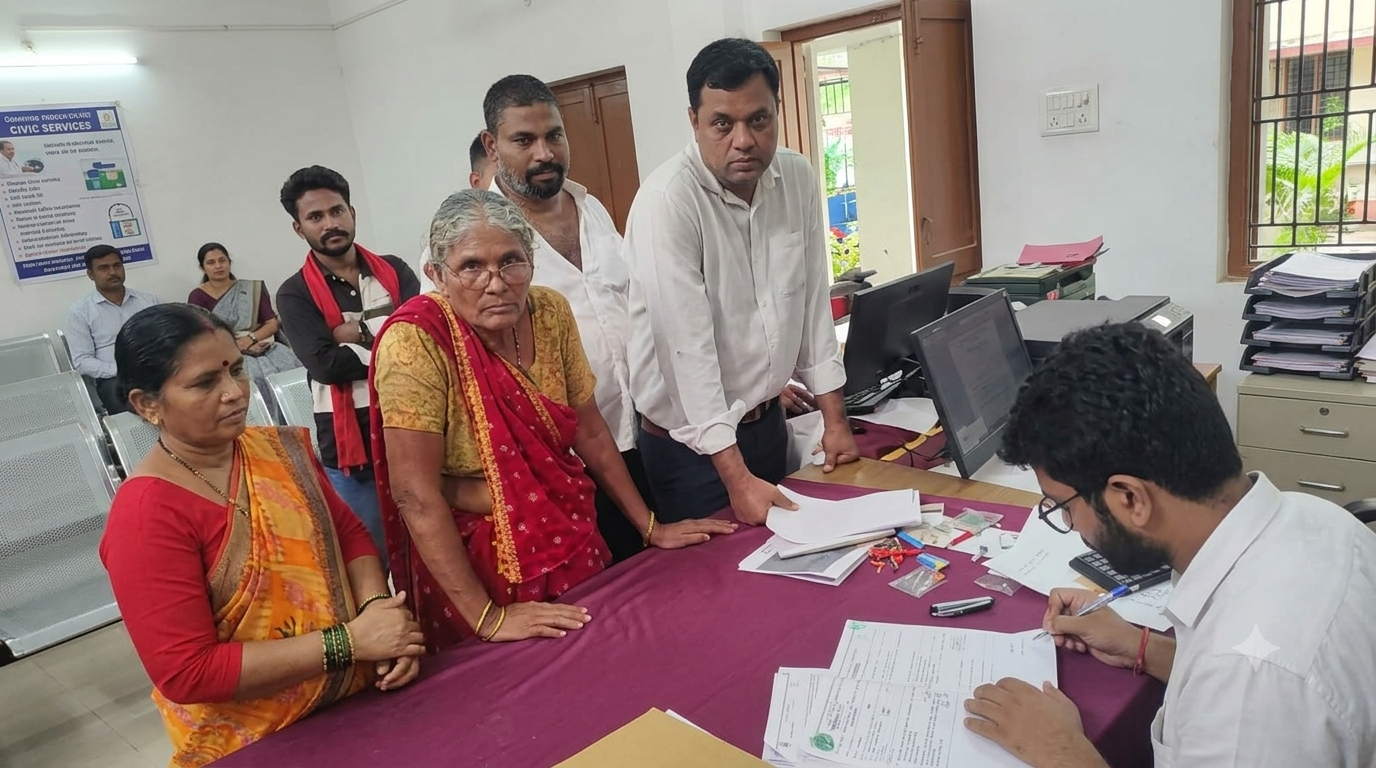
Daltonganj, Aug 28: The absence of a formal family register system in Jharkhand is creating difficulties for officials and voters during the Special Intensive Revision (SIR) of electoral rolls, particularly in Palamu district.
The Election Commission has listed a family register issued by a state or local authority among the 12 documents accepted as proof of Indian citizenship during the SIR exercise. However, Jharkhand does not maintain such a register.
The closest equivalent is the ‘vanshavaali’ or family tree, which records a person’s genealogy and can be issued by the district administration for submission during the revision process.
Officials said such documents are generally required only in cases involving legal heirship, inheritance or property disputes. As a result, they are not commonly available with residents.
Revenue officials deployed at SIR camps
The situation has become more complicated as revenue officials, who are responsible for preparing family trees, have been deployed at SIR camps from 10 am to 7 pm to deal with claims and objections.
“Family tree is to be issued by the circle officer. And COs are doing SIR work. So who will issue a family tree if and when asked for?” an official said, requesting anonymity.
Preparing a family tree requires verification of land records, particularly the khatian or record of rights, by revenue officials. Officials said several khatians kept at the district record room in Palamu are in poor condition, further complicating the process.
Palamu faces shortage of revenue officials
Additional Collector Kundan Kumar said Palamu’s cadastral survey was conducted in 1920, while the 2010 revisional survey covered only five revenue circles — Hussainabad, Manatu, Haider Nagar, Pipra and Harihurganj.
“Our land revenue offices right from the headquarters in Daltonganj down to 20 areas across the district are facing a lack of officials following their deployment in the SIR camps,” Kumar said.
He, however, said the administration would make every effort to prepare the required documents for electors whenever needed.
Officials have also asked voters to bring any available documents related to their land. However, many residents are unable to produce such records immediately.
Family trees require detailed genealogy
Officials said a family tree has to include both living and deceased members of a family. This makes verification particularly important where old land records and inheritance claims are involved.
Sources also said the availability of such documentation could be limited in Palamu. Fewer than 4 per cent of residents in the district are estimated to hold passports, compared with the national figure of 8.71 per cent, and officials believe the availability of family trees is similarly low.
Meanwhile, on the directions of Palamu Deputy Commissioner Dilip Pratap Singh Shekhawat, the block-level Jan Samadhan Day has been suspended until October 19, when the SIR exercise is scheduled to conclude.
The issue has highlighted the administrative challenges involved in implementing the voter roll revision, particularly in areas where historical land and family records are difficult to access.
