

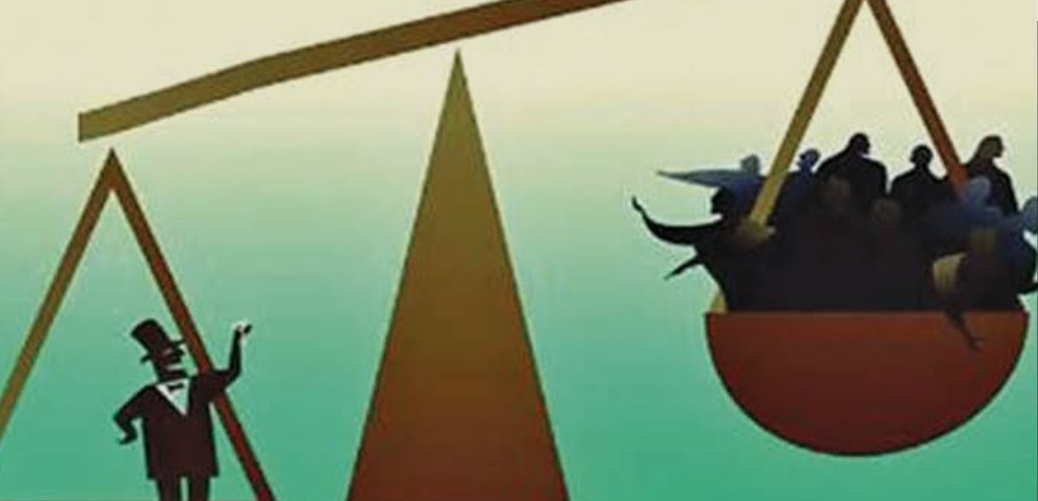
World, Mar 2: India’s economic rise over the past three decades has lifted millions out of poverty, but inequality remains among the highest in the world, according to the latest findings of the World Inequality Report 2026.The report paints a stark global picture: while the world is wealthier than ever, the gains are increasingly concentrated at the top. The richest 0.001 percent of adults — roughly 56,000 people worldwide — now hold three times more wealth than half of humanity combined. Globally, the bottom 50 percent accounts for just 8 percent of total income and owns only 2 percent of total wealth. By contrast, the top 10 percent controls 75 percent of personal wealth and captures more than half of all income.
Regional income disparities are also striking. Average monthly income in South and Southeast Asia stands at about €601, compared with €2,934 in Europe — nearly five times higher.India’s unequal riseIn India, inequality levels remain elevated and have shown little change in recent years. The top 10 percent of earners capture about 58 percent of national income, while the bottom 50 percent receive only 15 percent. The top 1 percent alone accounts for 22.6 percent of total income.Wealth disparities are even more pronounced. The richest 10 percent hold around 65 percent of total wealth, and the top 1 percent controls roughly 40 percent.
On average, annual per capita income in India is about €6,200 in purchasing power parity terms. But the averages conceal sharp divides: the top 1 percent earns approximately €140,649 annually, compared with just €940 for individuals in the bottom 50 percent. In effect, the richest 1 percent earns around 150 times more than half the population.Historically, the distribution looked different. In 1982, the top 10 percent held about 30 percent of income — their lowest share in decades — while the bottom 50 percent captured nearly 24 percent. Since economic liberalisation in the early 1990s, however, the income gap has steadily widened.Poverty falls despite widening gapsYet the story is not one of uniform distress. Poverty has declined dramatically.In 1977, nearly 60 percent of Indians lived on less than $3 a day. By 1993, shortly after the launch of liberalisation, privatisation and globalisation reforms, the poverty rate had fallen to 47.5 percent.
By 2022, it had dropped further to 5.25 percent.In absolute numbers, the transformation is striking: the number of people living in poverty declined from 442 million in 1993 to 75 million in 2022.The post-liberalisation decades were marked by sustained economic growth, averaging between 5 and 8 percent per decade. Rapid expansion in construction, services, and informal urban employment created opportunities that enabled millions to cross the poverty line.In other words, rising inequality and declining poverty have occurred simultaneously. While the rich have grown significantly wealthier, data do not strongly support the notion that the poor have become poorer during this period. Instead, living standards at the bottom have improved — just not nearly as fast as incomes at the top.The policy dilemmaThis dual reality presents policymakers with a complex challenge.Reducing inequality could involve higher taxation on top earners and greater redistribution through welfare programs. Alternatively, governments could focus on strengthening education, healthcare and employment opportunities to expand economic capabilities among lower-income groups.Both strategies require significant fiscal resources, potentially implying higher taxes on corporations and wealthy individuals.This raises a sensitive question: should the state risk dampening economic growth by increasing taxes to address inequality? Or should it prioritise growth and maintain relatively lower taxes in the hope that a larger economic base will eventually generate more revenue and broader prosperity?Evidence on whether corporate tax reductions directly stimulate growth remains inconclusive, particularly in India’s context.
As a result, the country faces a continuing balancing act — designing industrial policies that generate employment for both skilled and unskilled workers while also considering redistributive measures to narrow income gaps.As the global debate on inequality intensifies, India’s experience underscores a nuanced reality: economic growth can lift millions out of poverty, but without deliberate policy interventions, it may also deepen divides that shape opportunity, wealth and social mobility for generations to come.
