

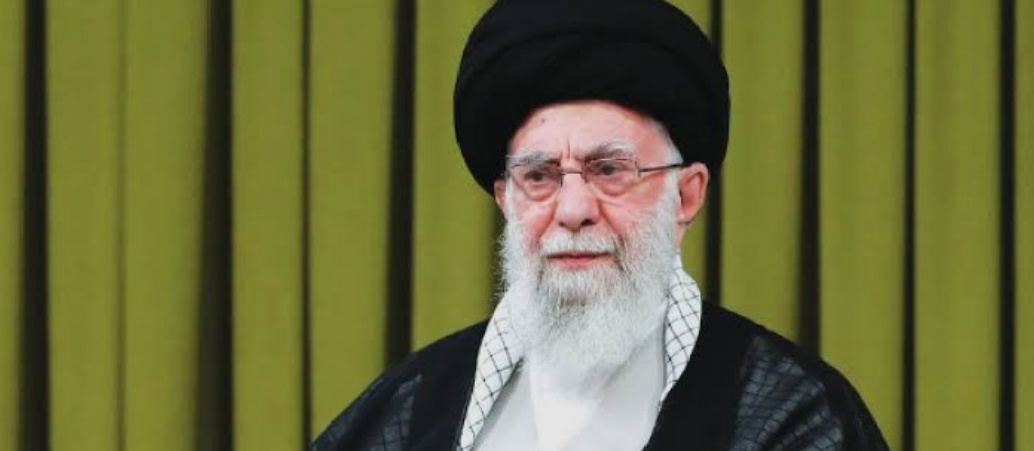
Iran, Mar 2: Ayatollah Ali Khamenei, Iran’s supreme leader for 37 years and one of the most consequential figures in the modern Middle East, has died at the age of 86 following a large-scale air attack on the country by the United States and Israel.His death marks the end of an era defined by rigid clerical authority at home and assertive regional strategy abroad. For nearly four decades, Khamenei stood at the apex of Iran’s complex theocratic system, wielding ultimate authority over the military, judiciary and key state institutions — and shaping the country’s nuclear ambitions and regional alliances.From president to supreme leaderBorn in 1939 in Mashhad, Khamenei rose through the ranks of the clerical establishment as a close ally of Ruhollah Khomeini, the revolutionary leader who overthrew the Shah in 1979 and established the Islamic Republic.Khamenei served as Iran’s president during the 1980s, a turbulent period marked by war with Iraq and internal consolidation of power.
In 1989, following Khomeini’s death, Iran’s Assembly of Experts selected him as supreme leader — a position that granted him final authority over state policy, the armed forces and the direction of the revolution.Over time, he became commander-in-chief of both the regular army and the powerful Islamic Revolutionary Guard Corps (IRGC), and oversaw the expansion of Iran’s influence across the region through allied groups in Lebanon, Iraq, Syria, Yemen and Gaza — an alignment often referred to as the “axis of resistance.”Nuclear standoffs and sanctionsKhamenei’s tenure was marked by repeated confrontation with the West over Iran’s nuclear programme. While he authorized negotiations that led to the 2015 nuclear accord — formally known as the Joint Comprehensive Plan of Action — he also consistently defended Iran’s right to enrich uranium and expand its missile capabilities.The agreement, reached during the presidency of Hassan Rouhani, temporarily eased sanctions in exchange for nuclear restrictions. But in 2018, US President Donald Trump withdrew from the deal and imposed a “maximum pressure” campaign of sanctions, plunging Iran back into economic crisis.Years later, amid renewed tensions and failed diplomatic efforts, the US and Israel launched a fresh military campaign aimed at crippling Iran’s nuclear infrastructure. Though the strikes damaged key facilities, they did not fully dismantle the programme.
Repression and dissentDomestically, Khamenei presided over a political system that combined elected institutions with tight clerical oversight. Reformist presidents, including Mohammad Khatami, sought periods of social and diplomatic openness, but reform efforts repeatedly collided with the security establishment.The 2009 “Green Movement” protests following a disputed presidential election were met with a forceful crackdown. Millions took to the streets demanding accountability; security forces suppressed demonstrations, and Khamenei publicly sided with the ruling establishment.Subsequent waves of unrest — including the 2019 protests known as “Bloody November” — resulted in significant casualties and mass arrests. In the wake of economic decline, international sanctions and political frustration, protests intensified again in early 2026. Estimates suggest tens of thousands of demonstrators were killed during a sweeping crackdown — the deadliest episode of internal unrest in the Islamic Republic’s history.
Khamenei’s critics accused him of entrenching hardline dominance, particularly through institutions such as the Guardian Council, which vets electoral candidates. In 2021, the disqualification of moderate contenders paved the way for the presidency of Ebrahim Raisi, a conservative cleric widely viewed as a potential successor to Khamenei until his death in a helicopter crash in 2024.Regional shadow and global consequencesUnder Khamenei’s leadership, Iran became a central actor in Middle Eastern geopolitics. Through the IRGC and its external Quds Force, Tehran supported armed groups across the region, shaping conflicts in Syria, Iraq, Lebanon and Yemen.The 2020 US drone strike that killed Quds Force commander Qasem Soleimani marked one of the most dramatic escalations of tensions during Khamenei’s rule. That same year, Iran faced one of the region’s worst Covid-19 outbreaks, compounded by controversy over vaccine imports and government transparency.Despite mounting economic hardship and political isolation, Khamenei maintained that resistance to Western influence was essential to preserving the Islamic Republic’s sovereignty.
An uncertain successionWith his passing, attention now turns to the question of succession — a decision that will again fall to the Assembly of Experts. The choice will shape whether Iran continues along a path of hardline consolidation or opens the door to recalibration at a moment of profound internal strain.Khamenei leaves behind a country deeply divided — economically pressured, socially restless and strategically entrenched across the Middle East. Supporters credit him with preserving the Islamic Republic through decades of external pressure and regional turmoil. Critics argue that his uncompromising rule narrowed political space at home and intensified Iran’s isolation abroad.His death during a period of direct military confrontation underscores the volatility of the moment. For Iran and the wider region, the end of his long tenure signals not closure, but the beginning of another uncertain chapter.
