

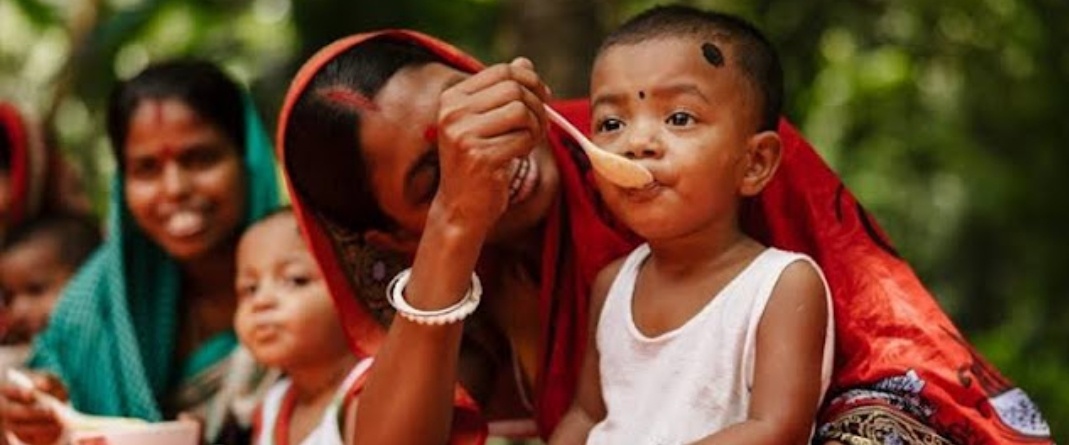
New Delhi, Feb 25: India’s rapid digital transformation has earned global praise. From biometric identification systems to real-time welfare dashboards, the country is often showcased as a model for technology-driven governance. Yet, behind this narrative of innovation lies a stark and troubling reality — millions of children continue to suffer from malnutrition, their hunger frequently invisible within the very systems designed to protect them.The contrast raises a difficult but necessary question: development for whom?Across rural villages and urban settlements, frontline health workers rely on digital platforms to track beneficiaries under flagship schemes such as the Integrated Child Development Services (ICDS) and POSHAN Abhiyaan. Attendance is marked through apps, benefits are recorded on portals, and data flows upward to central dashboards.
But when documentation gaps prevent a pregnant woman from accessing supplementary nutrition, or when biometric failures delay maternity benefits, the system’s efficiency offers little comfort.Child rights advocates warn that an overemphasis on digitisation can create new barriers for the poorest families. In communities where access to smartphones, stable internet connections, or updated identity documents is limited, technological systems can exclude those most in need. A missing document, an unlinked bank account, or a fingerprint mismatch can mean delayed rations or denied benefits.“Technology should enable delivery, not determine eligibility,” says a nutrition policy researcher based in Delhi. “When access to food becomes conditional on paperwork or digital compliance, we risk turning a right into a privilege.”India continues to grapple with high levels of child malnutrition, including stunting, wasting, and anaemia among women and children.
While government initiatives have aimed to address these challenges through targeted interventions and data-driven monitoring, experts argue that structural issues — poverty, food insecurity, gender inequality, and sanitation — require deeper, community-focused solutions.For many families, the impact is immediate and deeply personal. In several states, activists report cases where maternity entitlements were withheld due to minor discrepancies in identification documents. In others, children were temporarily excluded from nutrition programmes because their details were not updated in digital records. While such instances may appear statistically minor in national datasets, for affected households they can mean days or weeks without critical nutritional support.Policy specialists say the way forward lies not in abandoning technology, but in rebalancing priorities. Simplifying documentation requirements, ensuring offline alternatives, strengthening grievance redressal mechanisms, and treating nutrition as a universal right rather than a conditional benefit could make programmes more inclusive.Development, they argue, cannot be measured solely by the number of portals launched or dashboards updated.
Its true measure lies in whether a pregnant woman receives timely care, whether a child has access to adequate food, and whether families can claim their entitlements without navigating complex bureaucratic hurdles.India’s digital infrastructure has the potential to transform welfare delivery. But as the country continues to invest in technological progress, it faces a parallel moral challenge: ensuring that innovation does not overshadow empathy, and that no child’s hunger is hidden behind a well-designed interface.The promise of progress will remain incomplete until every mother and every child can claim not just digital recognition, but their fundamental right to nutrition.
