
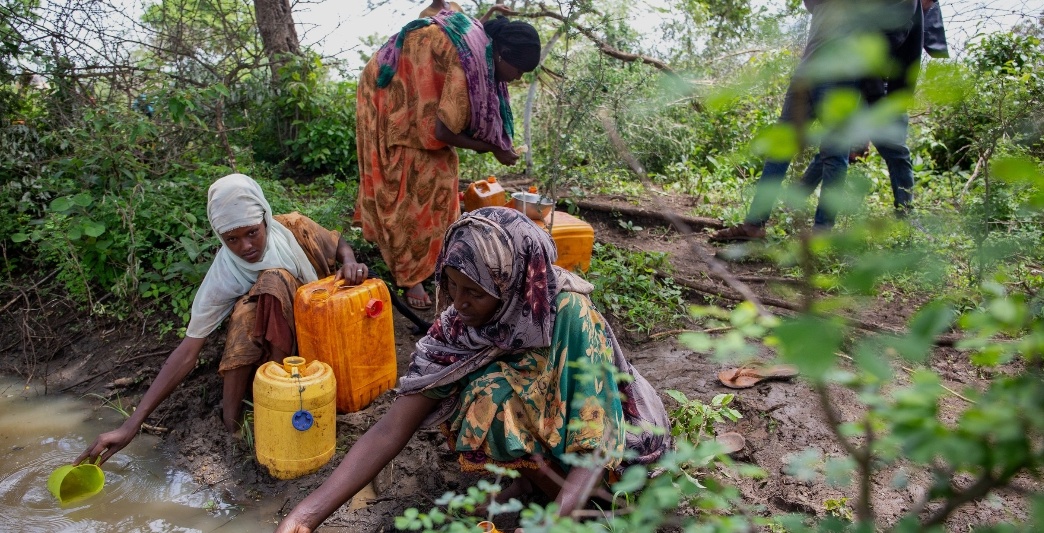
UN, Mar 19: Women and girls across the world spend an estimated 250 million hours every day collecting water, highlighting the scale of unpaid labour sustaining the global water crisis, according to a United Nations report.
The United Nations World Water Development Report 2026, released by UNESCO ahead of World Water Day, said gender inequality continues to shape access to water, sanitation and hygiene.
Despite progress in recent decades, about 2.1 billion people still lack access to safely managed drinking water, with women and girls bearing a disproportionate burden, the report noted.
In a majority of unserved rural households, women and girls are primarily responsible for fetching water, often travelling long distances and facing unsafe conditions.
The report warned that this unpaid work limits opportunities for education, employment and rest, while exposing them to health risks and physical strain.Khaled El-Enany said greater participation of women in water governance is critical for sustainable development, adding that equal access to water benefits entire communities.
The report also highlighted the impact on girls, noting they are more likely than boys to be tasked with water collection. Inadequate sanitation facilities further contribute to school absenteeism among adolescent girls.
It pointed out that poor access to safe water and sanitation increases risks to women’s safety, particularly in remote or insecure areas, and can heighten vulnerability to gender-based violence.
Despite their central role in managing water at the household level, women remain underrepresented in decision-making.
Data cited in the report showed that in many low- and middle-income countries, women account for less than one-fifth of the workforce in water utilities, with even lower representation in leadership positions.
The report further warned that climate change and water scarcity are worsening these inequalities, particularly in disaster-prone and water-stressed regions.
Women in such areas face greater risks while having limited access to resources, early warning systems and recovery support.
Calling for urgent action, the report urged governments to remove legal barriers to women’s access to land and water, increase gender-responsive investments and strengthen women’s leadership in water governance.
The United Nations said addressing gender inequality is essential not only for social justice but also for improving global water security and achieving sustainable development goals.
