

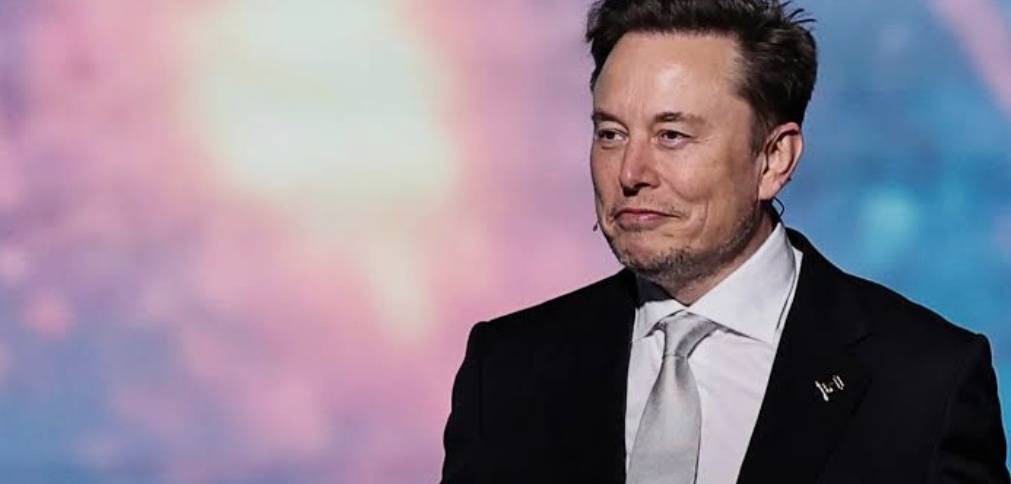
United States, Feb 27: As billionaire entrepreneur Elon Musk edges closer to becoming the world’s first trillionaire, anti-poverty group Oxfam has released a new report arguing that his growing fortune highlights deep structural inequalities in the U.S. economy.The analysis, titled “Trillionaire in the Making,” focuses on Musk’s ownership stake in Tesla and claims the electric vehicle giant has played a central role in the rapid expansion of his personal wealth.According to figures cited from Forbes, Musk’s net worth stood near $900 billion as of February 2026 — placing him less than $200 billion away from the unprecedented $1 trillion threshold.
Wealth on a Historic ScaleOxfam’s report underscores the scale of Musk’s fortune by comparing it to national economies and public finances. If his wealth reaches $1 trillion, it would exceed the gross domestic product of countries such as Switzerland, whose GDP was estimated at around $936 billion in 2024.The organization also noted that such a fortune could theoretically cover the combined public debt of dozens of the world’s poorest nations — currently estimated at just over $200 billion — and still leave the bulk of the wealth intact.“These figures are not just symbolic,” said Irit Tamir, Oxfam America’s senior director of corporate accountability and worker justice. “They reflect a system where extreme wealth concentration is accelerating at a pace that far outstrips economic gains for ordinary workers.”Tesla’s Role in Wealth AccumulationUsing what it calls a “Corporate Inequality Framework,” Oxfam argues that Tesla has contributed to widening inequality through tax strategies, executive compensation structures and governance practices that critics say concentrate power among top executives and major shareholders.The report also questions labor practices and regulatory oversight, suggesting that Musk’s influence in Washington has helped reduce scrutiny in certain areas.
Tesla has not publicly responded to the claims in the report.Musk’s wealth is largely tied to his holdings in Tesla, whose stock performance over the past decade has dramatically increased his net worth. In addition, Tesla shareholders approved a multiyear compensation package last year that could potentially be worth up to $1 trillion over the next decade, depending on performance targets.Meanwhile, Musk’s broader business portfolio continues to expand. In February, his aerospace company SpaceX announced the acquisition of AI venture xAI ahead of a planned public offering, further consolidating his position across high-growth technology sectors.
A Broader Debate on InequalityOxfam’s report places Musk’s wealth within a wider global trend of rising billionaire fortunes and growing disparities between the ultra-rich and the general population. The organization argues that extreme wealth accumulation is less about individual effort and more about systemic structures that favor capital ownership, tax advantages and corporate consolidation.Supporters of Musk, however, often point to his role in accelerating electric vehicle adoption, advancing commercial spaceflight and investing in artificial intelligence as examples of innovation driving economic value.
The debate reflects a larger question confronting policymakers worldwide: how to balance incentives for entrepreneurship and innovation with concerns about wealth concentration and economic fairness.As Musk’s net worth continues to climb, the conversation around trillionaire status is becoming more than a financial milestone — it is emerging as a focal point in the broader discussion about inequality, corporate power and the future of capitalism.
