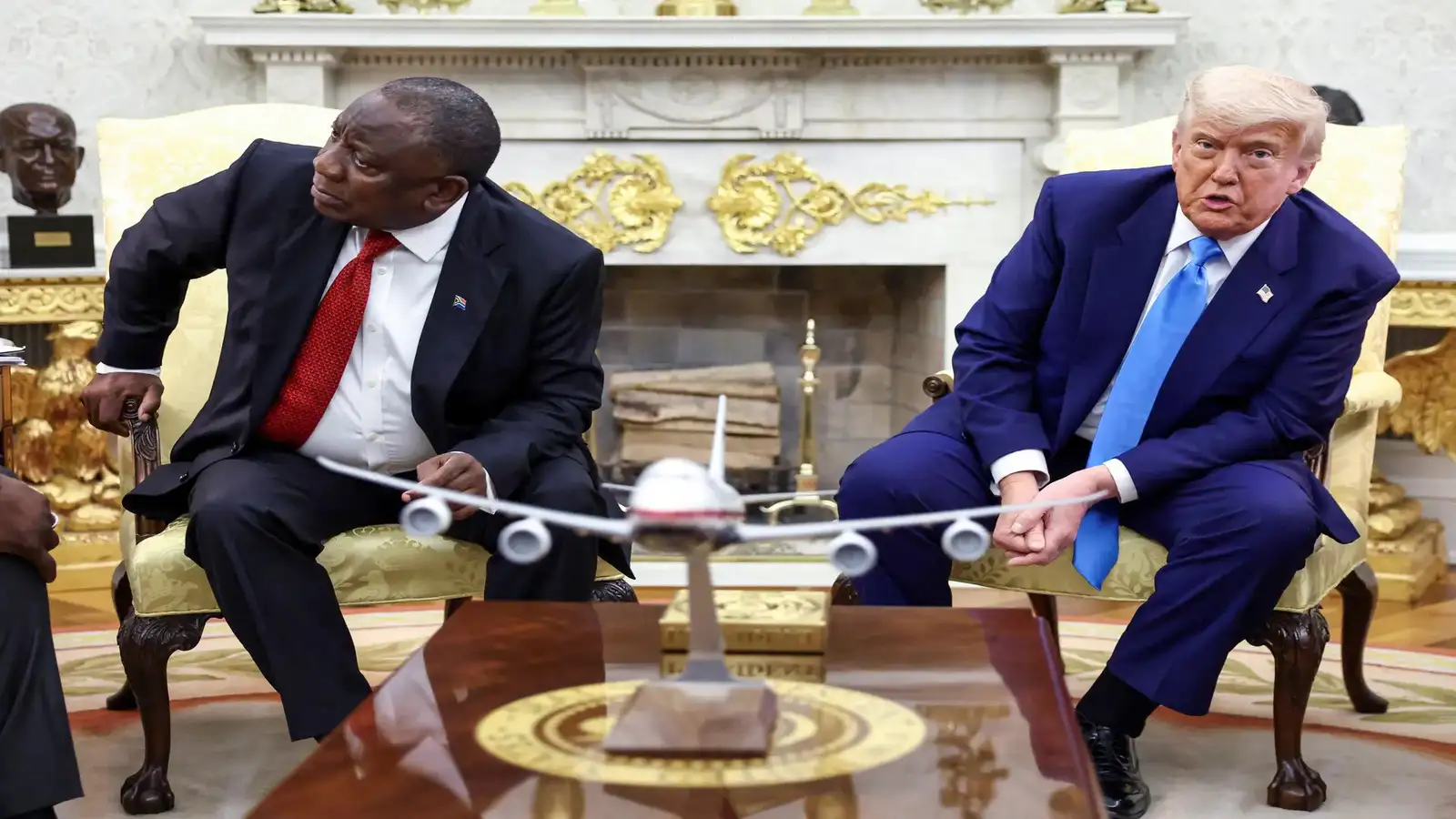
WASHINGTON, May 23 – A routine diplomatic visit by South African President Cyril Ramaphosa to the White House on Wednesday took an unexpected turn when U.S. President Donald Trump confronted his guest with a controversial video, raising concerns over a new pattern in the American president’s handling of foreign leaders.
The meeting, initially intended to ease recent tensions between Washington and Pretoria, mirrored a February encounter with Ukrainian President Volodymyr Zelenskyy, during which Trump and Vice President JD Vance publicly rebuked their guest in a televised session.
According to people familiar with the meeting, Ramaphosa was blindsided roughly 20 minutes into the discussion when Trump ordered the lights dimmed and had a video presentation queued up in the Oval Office. The footage, introduced by White House aide Natalie Harp, reportedly featured South African opposition figures Jacob Zuma and Julius Malema singing apartheid-era songs with lyrics referencing violence against “Boers,” a term referring to Afrikaners or white farmers.
Ramaphosa, caught off-guard, remained silent during the video and later left the meeting without commenting publicly on the matter. The South African presidency has yet to issue an official statement. The White House did not respond to a request for comment.
Diplomatic observers say the event reflects an emerging trend in Trump’s foreign policy approach, in which the Oval Office is increasingly used as a stage for theatrical confrontations rather than private diplomacy. The encounter comes amid a broader reassessment by some governments on the risks of direct engagement with Trump, whose second term in office has upended longstanding diplomatic protocols.
“This is not traditional diplomacy. It’s diplomacy as performance,” said a Washington-based diplomat, speaking on condition of anonymity. Trump’s confrontational meeting style has sparked concern among allies and rivals alike, especially as his administration faces rising tensions on multiple foreign policy fronts, including trade disputes and military escalations.
For Ramaphosa, the incident is likely to reverberate back home, where his African National Congress (ANC) faces internal challenges ahead of upcoming elections. Meanwhile, critics warn that Trump’s increasingly unpredictable diplomatic conduct could undermine trust in traditional bilateral mechanisms.