

NEW DELHI/ISLAMABAD, May 23 – India on Wednesday firmly rejected accusations by Pakistan’s military that it orchestrated a deadly bombing of a school bus in Balochistan, calling the allegations “baseless” and an attempt to divert attention from Islamabad’s own internal failures.
The blast, which struck a school bus in the city of Khuzdar in Balochistan province earlier this week, killed six people, including four students, and injured dozens, according to provincial officials.
Pakistan’s military media wing, the Inter-Services Public Relations (ISPR), claimed the attack was “planned and orchestrated by the terrorist state of India and executed by its proxies.” However, no evidence was presented publicly to substantiate the charge.
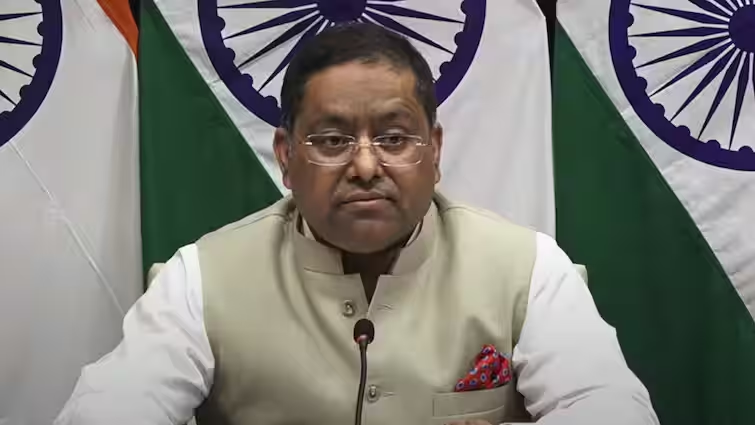
India’s foreign ministry strongly denied the allegations. “India rejects the baseless allegations made by Pakistan,” said External Affairs Ministry spokesperson Randhir Jaiswal. “It has become second nature for Pakistan to blame India for all its internal issues in order to deflect from its reputation as the global epicentre of terrorism.”
Jaiswal extended condolences for the loss of lives but said attempts to “hoodwink the world” through such claims would fail.
The incident adds to simmering tensions between the two nuclear-armed neighbours, which have seen heightened military activity in recent weeks. Earlier this month, India launched Operation Sindoor on May 7, targeting what it called terrorist infrastructure in Pakistan-controlled territory following the Pahalgam terror attack on April 22. The resulting four-day escalation involved drones, missiles, and long-range weapons, but concluded with both sides agreeing to cease further military actions.
Balochistan, Pakistan’s largest but least populated province, has long suffered from a separatist insurgency. Several militant groups in the region are demanding greater autonomy and control over the area’s vast natural resources.
Pakistan has also accused Indian proxies of attempting to destabilize other provinces, including Khyber-Pakhtunkhwa, but analysts note that internal unrest in these areas has historically been driven by local grievances.
The two countries, which have fought three wars since independence, remain locked in a fraught relationship, with diplomatic and military flashpoints continuing to strain regional stability.