
Manish Gupta
Ranchi, Sept 17: At a time when global headlines are dominated by mass layoffs in the tech industry, from Microsoft cutting thousands of roles to Intel slashing entire divisions, one Indian company is quietly rewriting the rules of the IT jobs market.
ManageEngine, the IT management division of Zoho Corporation, has not only avoided layoffs but has been steadily increasing its headcount. It is building its talent pipeline by training 12th pass students from government schools and low-income families, and placing them on career tracks that begin with a stipend and end with a full-fledged IT job.
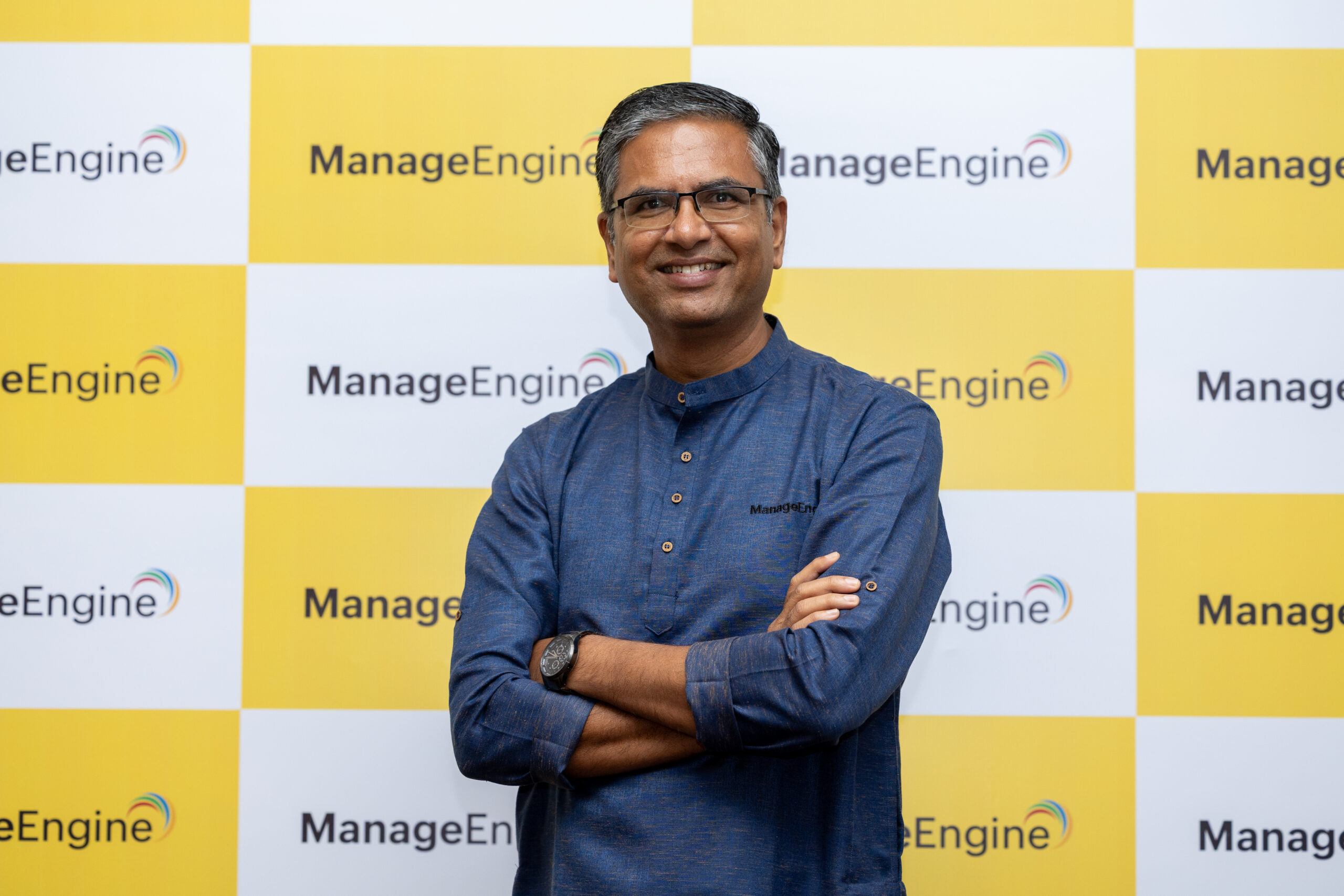
“We realised it wasn’t fair to expect colleges to produce graduates who are industry-ready,” Rajesh Ganesan, CEO of ManageEngine, told Bodhi Wire in an interview. “So, we had to do our bit,” he said, adding that instead of waiting for employability, they started creating it.
The Zoho Schools experiment
Launched in 2004 in Chennai, Zoho Schools of Learning have trained over 2,000 students who could not afford higher education. Selected straight out of school, they undergo a two-year tailored programme covering coding, problem-solving, data structures and customer support. Graduates then start careers with salaries ranging from ₹5 lakh to ₹9 lakh a year.
About 15% of Zoho Corp’s current workforce are graduates of this programme. Some stay, others move on to other IT firms. Inspired distributors and partners have replicated the model in places as far apart as Ranchi and Nagpur.
“Not all software problems need IIT-type brains,” Ganesan said. “Only 2-3% of the workforce needs to be of that calibre who’s thinking deep problems, who’s building the architecture, but the rest need curiosity, coding ability and discipline. You need a lot of people to translate that idea into software.”
Building in the heartlands
The company has also pushed beyond metropolitan centres. In Tenkasi, a small temple town in Tamil Nadu known as the ‘Kashi of the South’, Zoho set up an office that now employs over 1,000 people. Salaries match those in Chennai, but employees live closer to their families, strengthening local economies.
“We could have been discouraged, but we said, let us just go try” Ganesan said. “What started with 20 people is now 1,000. It is not just Zoho school. Even normal employees who want to move there, they can. Last month we started an R&D office in Kerala, in a small village called Kottarakara.”
Ganesan hopes more IT companies follow the idea in bringing jobs near to homes across all the 800-odd districts in India. “We have enough companies, where each one can just go, set up an office in each of these districts. Just run your operations, normal operation what you would do in Chennai,” he said.
Zoho is also considering new schools in states like Bihar and Jharkhand, regions where cost and distance still push bright students out of higher education.
No layoffs, by design
Equally striking is the company’s no-layoffs policy. While firms from TCS to Microsoft have shed thousands of employees this year, ManageEngine has kept staff on board.
Ganesan explained that the company builds financial “runways” to ensure survival even in extreme downturns. “What’s the worst that can happen – revenue dropping to zero? If that happens, how long can we continue? Can we continue two years, three years? That is how we plan. Till this time, we will still be able to retain all our people, run our operations. And we hope by that time, we will be able to reinvent ourselves as a company, because we have done that a few times before.”
Layoffs are off the table, he stressed. The only exception: misconduct. “We will not do it for reasons like revenue or performance or organizational restructuring, not for these reasons.”
The AI question
With artificial intelligence (AI) reshaping industries, many fear mass redundancies. Ganesan is pragmatic: jobs will go, but new ones will come.
“If you had 100 software programmers, you will no longer need 80 of them. 20 people would be enough to still manage the same job,” he said. But AI also needs vast infrastructure, cybersecurity, new kinds of problem-solving, the workforce has to move there, he added.
“Every three years in my 29-year career, I had to upskill, reskill, reinvent myself. I could have stayed only as a C and Java developer for 30 years. Then I should be concerned… It is a very entitled expectation for anyone to feel, I have been trained in a certain way. I must be having a job. No, that is not how the world works.”
His advice is blunt: stop worrying about being employed, start worrying about being employable. And, don’t wait to be laid off, be proactive.
Influencers and illusions
On another hot youth aspiration, to become a YouTube influencer, Ganesan is sceptical.
“With a mobile phone, anyone can become an influencer. But where is the differentiator, where is the steady revenue stream? Will it be a career for 30 years? After six months, one year, a new influencer would come in. At best, it gives short-term visibility,” he said, adding that there are too many platforms, too much noise.
Ganesan warned that it is producing a society who is always on the device. “There is a side effect to this where people can mass ditch these social media because they will get fed up. Today, if you go to Instagram or Facebook, I only get shown what I don’t want. I cannot see updates from my friends much. It’s always ads. It’s always influencers.”
Instead, he advises young people to focus on the core skills that they are good at whether farming, stock broking, teaching, writing or selling sweets, and use AI or digital platforms as tools to do their jobs better and increase their productivity.
A different playbook
ManageEngine, which already contributes significantly to Zoho’s $1 billion annual revenue, is expected to cross the billion-dollar mark itself by FY2027. With 18 data centres worldwide and growing global adoption, its success has come without external funding or stock market pressure, even as it remains empathetic towards its employees.