

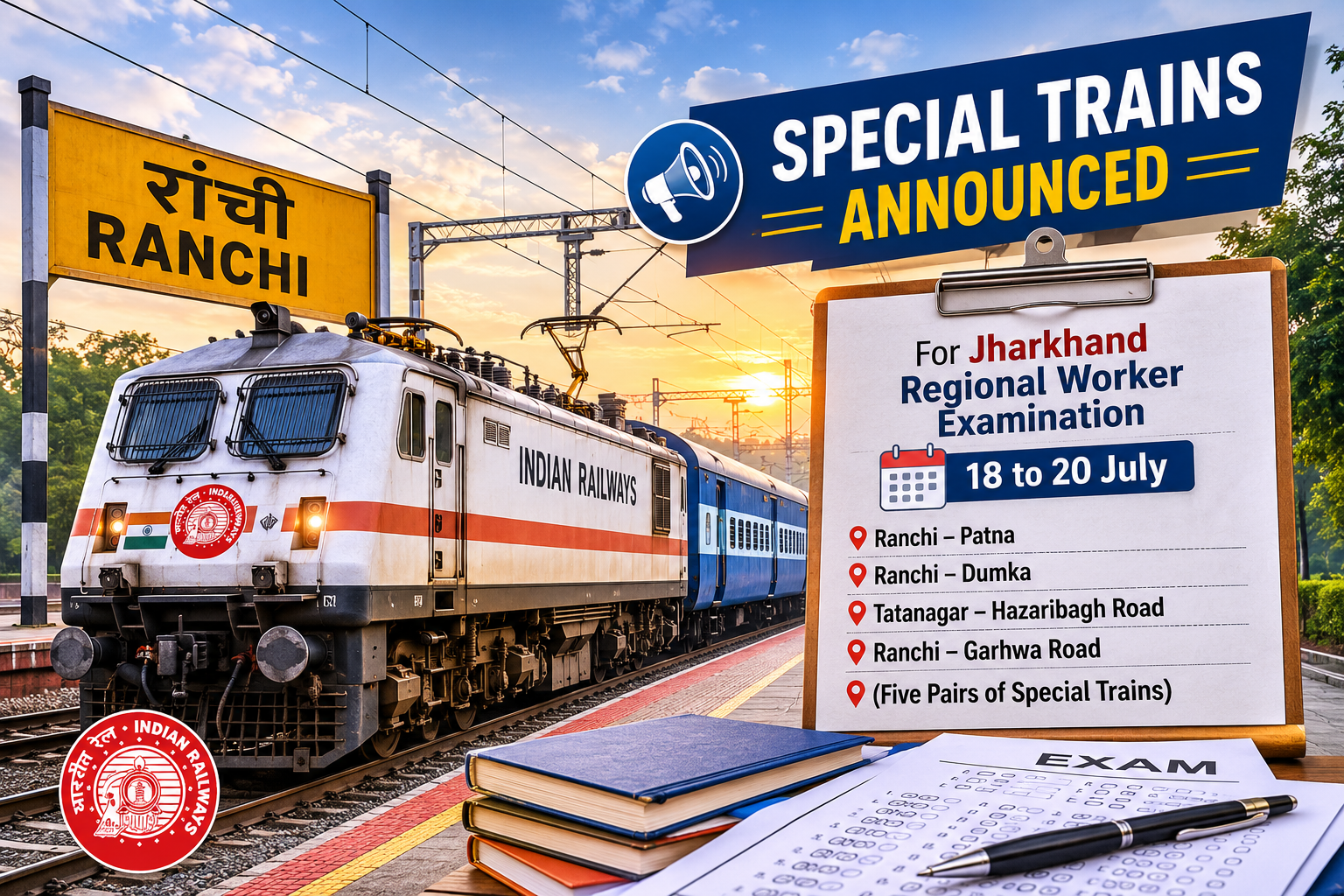
Ranchi, July 18 : In a major relief for candidates appearing in the Jharkhand Regional Worker Competitive Examination, the Railways has announced the operation of five pairs of special trains from July 18 to July 20 to ensure hassle-free travel to examination centres across the state.
The special train services have been introduced in view of the large number of aspirants expected to travel for the recruitment examination, which is scheduled to be held on July 19. The move is aimed at reducing overcrowding on regular trains and providing convenient transportation facilities to candidates travelling from different parts of Jharkhand and neighbouring regions.
According to railway officials, the special trains will operate on important routes connecting major examination hubs. These include Ranchi–Patna, Ranchi–Dumka, Tatanagar–Hazaribagh Road, Ranchi–Garhwa Road, along with another designated route, enabling candidates from various districts to reach their destinations with ease.
The additional train services are expected to benefit thousands of aspirants travelling to district headquarters where the examination will be conducted. Railway authorities have made the arrangements keeping in mind the anticipated surge in passenger traffic during the examination period.
The Jharkhand Staff Selection Commission (JSSC) is conducting the Regional Worker Competitive Examination on July 19 across multiple centres in the state. More than 3.22 lakh candidates are expected to appear for the examination, which will be conducted in three shifts at 813 examination centres across Jharkhand.
Candidates have been advised to check the schedules of the special trains in advance and plan their journey accordingly. Railway officials have also appealed to passengers to cooperate with railway staff and follow all travel guidelines to ensure a smooth and safe journey during the examination period.
The deployment of special trains is expected to significantly improve connectivity for examinees and help them reach their examination centres on time, while easing pressure on regular passenger services during the peak travel period.
