

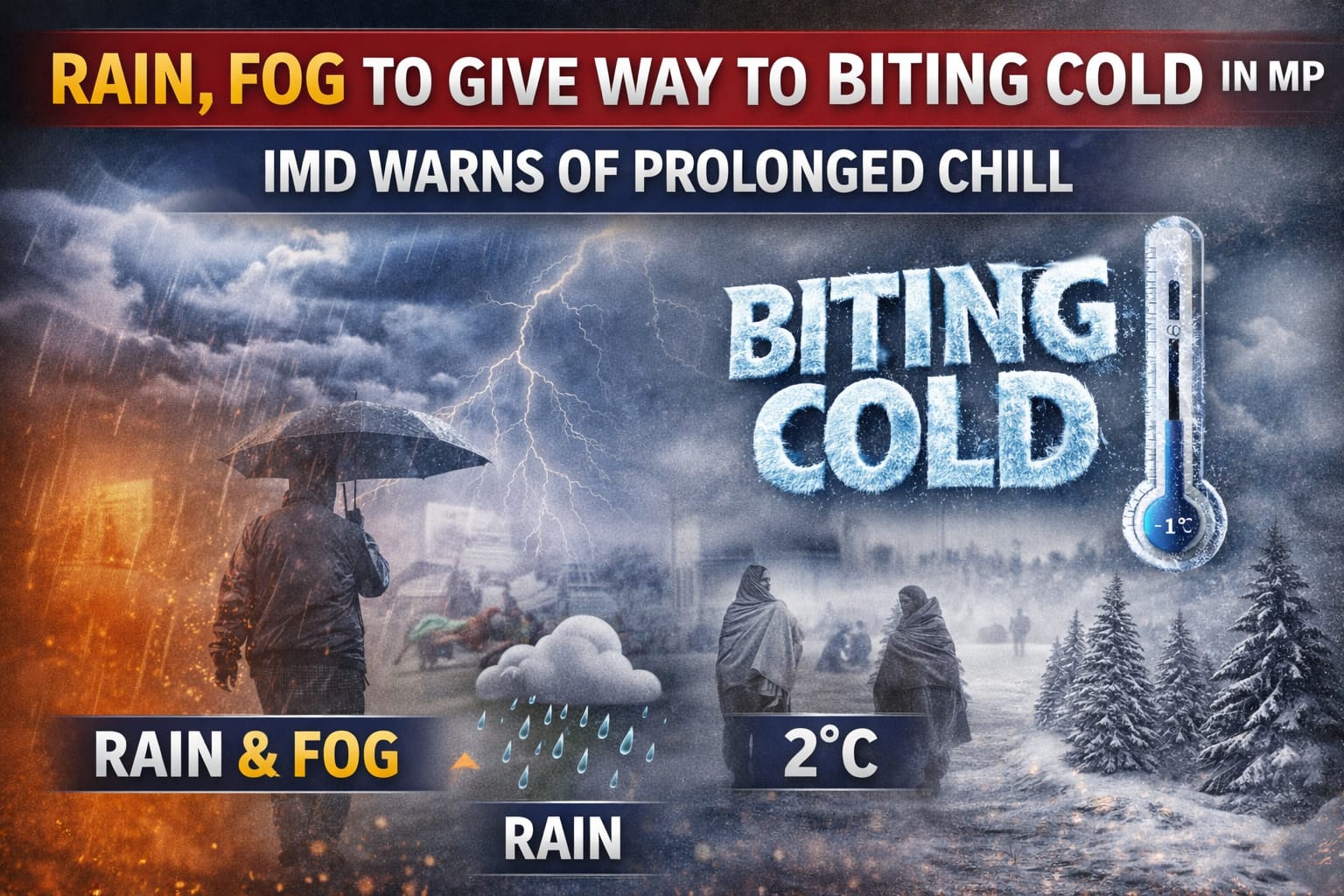
Bhopal, Jan 3: Madhya Pradesh is bracing for rapidly changing winter conditions, with the India Meteorological Department (IMD) warning of rain, dense fog and an impending spell of severe cold across the State in the coming days.
After enduring an intense cold wave over the past few days — during which minimum temperatures plunged to as low as 1 degree Celsius in several districts — residents received brief relief as night temperatures rose above 5 degrees. However, meteorologists cautioned that the respite would be short-lived.
According to the IMD, a Western Disturbance is set to impact the region, bringing light rain accompanied by thunder and lightning to many parts of the State. North and West Madhya Pradesh are likely to witness cloudy skies and drizzle, followed by dense fog.
“ The weather in Madhya Pradesh will once again be a cause for concern in the next few days, with rain, dense fog and then severe cold expected in many districts,” the IMD said in its advisory.
Dense to moderate fog has already been reported in nearly half of the State, sharply reducing visibility in districts such as Datia, Gwalior, Bhopal and Indore. Visibility dropped to around 50 metres in Khajuraho, severely affecting road and rail traffic. Several trains on the Bhopal–Indore–Gwalior routes were delayed, while vehicles were seen moving at a crawl during early morning hours.
The IMD forecast that dense fog would persist for the next three days, after which cold winds from North India are expected to intensify, leading to another severe cold spell. Night temperatures are likely to fall sharply, with the cold expected to be more intense than the previous round.
More than 15 cities recorded maximum daytime temperatures below 24 degrees Celsius, indicating that winter conditions remain firm across the State. Pachmarhi emerged as the coldest place in Madhya Pradesh during Thursday–Friday night.
Senior meteorologist Dr Divya E. Surendran said the State had already witnessed unusually long cold spells. “Several districts, including Bhopal and Indore, experienced a cold wave for 15 to 16 days, and similar conditions are expected to persist in January,” she said.
Weather experts explained that the cold would intensify after rainfall due to increased ground moisture followed by cold northerly winds. “When clouds clear after light rain, temperatures drop sharply, making the cold more biting,” they said.
The prolonged cold has also raised concerns among farmers, as fog, humidity and low temperatures could affect wheat and vegetable crops. Agricultural officials said crop conditions were being closely monitored.
The IMD warned that January could see extended cold-wave conditions lasting 15 to 20 days, with the most severe cold likely from the second week of the month till its end. Officials noted that November and December had already broken long-standing cold records in the State, and similar extreme conditions could continue through January.
