

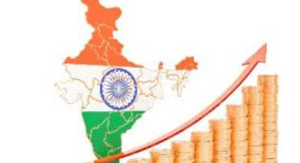
New Delhi, Jan 10: India has overtaken Japan to become the world’s fourth-largest economy in nominal terms, marking a significant symbolic milestone for Asia’s third-largest nation. The achievement has reinforced India’s position as the fastest-growing major economy, yet economists caution that headline GDP rankings mask deeper challenges linked to income levels, employment and inequality.
Despite its expanding economic size, India’s per capita income remains modest at about US$2,700 in 2024 — far below advanced economies such as Japan and Germany. Analysts say this gap highlights the difficulty of translating macroeconomic growth into broad-based prosperity for a population exceeding 1.4 billion.
Economists argue that growth alone is insufficient without sustained job creation and productivity gains. Government estimates suggest India must generate at least eight million jobs annually over the next decade to harness its demographic dividend, with more than a quarter of the population aged between 10 and 26.
Manufacturing is viewed as central to that effort. While policy initiatives such as Make in India and the Production Linked Incentive (PLI) scheme have encouraged domestic production and localisation, manufacturing still accounts for only about 16–17 per cent of GDP, trailing East Asian peers. Business leaders say high logistics costs, limited export incentives and access to affordable credit continue to constrain expansion.
Recent reforms — including the rationalisation of the goods and services tax, streamlined labour laws and the opening of the insurance sector to foreign investment — have improved the business environment. Multinational firms, including smartphone manufacturers, have expanded operations in India, signalling growing global confidence.
However, external pressures are intensifying. Trade tensions, including steep US import tariffs, and a volatile global economy mean India must accelerate reforms to remain competitive. A weaker rupee has helped exporters, but economists warn that global conditions over the next decade are unlikely to be as supportive as in the past.
Structural weaknesses persist in agriculture, which employs nearly half the workforce but suffers from low productivity. Experts stress that boosting farm incomes through research, innovation and inclusive models could stimulate demand across the economy and reduce inequality.
Investment in human capital is also critical. While government health insurance and education reforms have made progress, disparities between rural and urban areas remain wide. Analysts argue that improving school quality, healthcare access and workforce skills is essential for integrating India into global supply chains.
Business executives note that administrative processes have become simpler and more predictable, though execution remains key. Strengthening infrastructure, supply chain resilience, digital governance and climate preparedness will determine whether India’s economic ascent results in lasting prosperity.
As India sets its sights on becoming the world’s third-largest economy by 2030 and a developed nation by 2047, policymakers face a central challenge: ensuring that growth delivers better jobs, higher incomes and reduced inequality — not just a larger GDP number.
