

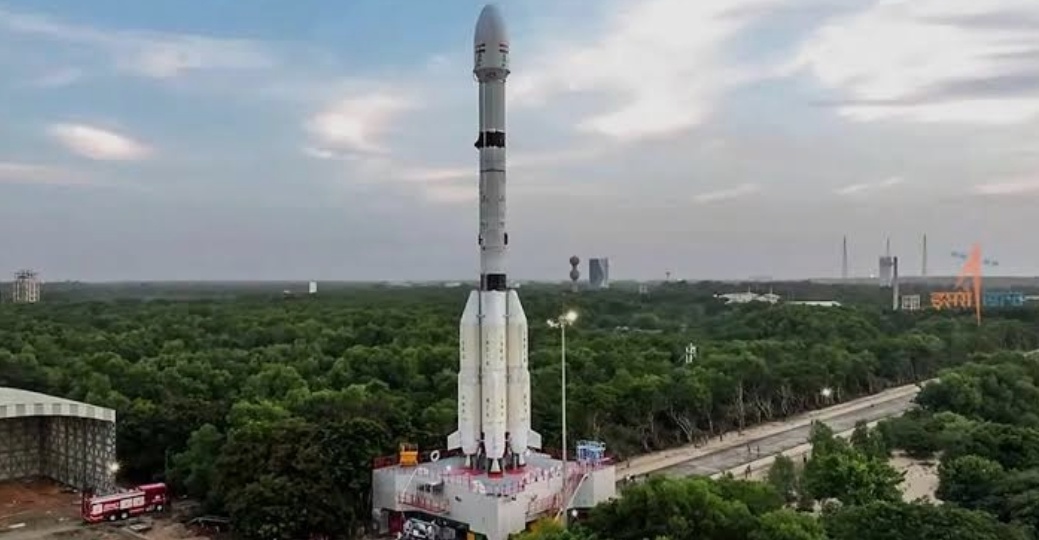
New Delhi, September 4: Hyderabad-based Ananth Technologies Ltd (ATL) played a significant role in ISRO’s latest GSLV-F17 mission by supplying critical avionics, electronic systems and spacecraft subsystems for both the launch vehicle and the EOS-05 Earth-observation satellite.
The Geosynchronous Satellite Launch Vehicle-F17 successfully placed EOS-05 into its intended orbital path on Friday. The mission marked an important return to flight for ISRO after an extended gap in successful launches.
For the GSLV-F17 launch vehicle, ATL supplied 28 packages associated with functions including power management, stage operations and command processing. The company was also involved in the integration and checkout of four L-40 nose-cone decks and the harnessing of the complete GS2 stage.
ATL further undertook testing and evaluation of navigation, guidance and control systems and other control electronics used in the mission.The company also supplied 15 systems for the EOS-05 spacecraft, including 10 power-management packages.
These systems support essential spacecraft functions such as power conversion and distribution, onboard computing and attitude determination.EOS-05 is designed for Earth observation from a geosynchronous orbit, requiring the spacecraft to be placed on a higher-energy trajectory than conventional low-Earth-orbit imaging satellites.
ISRO selected the GSLV Mk-II for the mission because of its ability to provide the orbital energy required for such a trajectory. The launch vehicle uses a cryogenic upper stage powered by liquid hydrogen and liquid oxygen.
ISRO Chairman V Narayanan said the mission performed better than expected, with the satellite reaching an apogee of 31,026 km, around 2,100 km higher than the initial target.The higher-than-expected apogee could help conserve onboard fuel during subsequent orbital manoeuvres and potentially extend the satellite’s operational life, subject to the spacecraft’s overall performance.
ATL Chairman Subba Rao Pavuluri said the company’s involvement across launch-vehicle electronics, stage integration, testing and spacecraft systems demonstrated its expanding capabilities across different segments of India’s space programme.
The company operates facilities in Bengaluru for satellite assembly, integration and testing, while its Thiruvananthapuram operations focus on the fabrication, assembly and testing of launch-vehicle subsystems.
The successful GSLV-F17 mission also underlines the continuing importance of both GSLV and PSLV in India’s space programme. While PSLV remains a versatile launcher widely used for Earth-observation and other missions, GSLV is particularly suited to missions requiring higher orbital energy and geosynchronous trajectories.
India is also moving towards greater private-sector participation in launch-vehicle manufacturing, with NewSpace India Limited expected to facilitate increased industry involvement in PSLV production.
The latest mission therefore represents not only a successful satellite launch but also another step towards strengthening India’s domestic capabilities in spacecraft electronics, launch-vehicle systems and commercial space manufacturing.
