

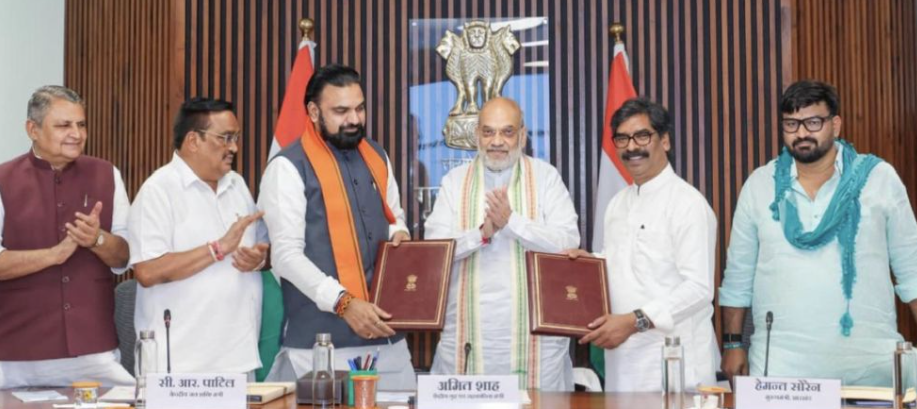
New Delhi, Sept 2: Bihar and Jharkhand have signed a Memorandum of Understanding (MoU) to resolve their nearly 25-year-old dispute over the sharing of Sone River water, marking a significant step towards an inter-State settlement but leaving implementation as the next major challenge.
The agreement, signed in New Delhi on August 31 in the presence of Union Home Minister Amit Shah, Jharkhand Chief Minister Hemant Soren, Bihar Chief Minister Samrat Choudhary and Union Jal Shakti Minister C R Patil, seeks to bring clarity to the allocation of Sone River water between the two States.
Under the pact, Bihar has been allocated 5.75 million acre-feet (MAF) of Sone water, while Jharkhand will receive 2 MAF. The settlement is expected to improve the prospects of irrigation and drinking-water availability in several districts of both States.
In Bihar, districts expected to benefit include Bhojpur, Buxar, Rohtas, Kaimur, Aurangabad, Arwal, Gaya and Patna. In Jharkhand, Palamu, Garhwa and other areas are expected to gain from a more clearly defined water-sharing arrangement.
Cooperative federalism
The Centre has described the agreement as an example of cooperative federalism, with the Inter-State Council playing a role in facilitating dialogue over long-pending water disputes.
The Sone settlement is among several inter-State agreements reached this year through efforts aimed at resolving disputes through consensus and coordination between governments.
Implementation the real testWhile the MoU brings a prolonged dispute closer to resolution, the effectiveness of the agreement will ultimately depend on how its provisions are implemented on the ground.
The allocation of water on paper will need to be backed by mechanisms for regulating and monitoring river flows, coordination between the two State governments and adequate infrastructure to carry water to areas dependent on it.
For farmers and communities across the affected districts, the significance of the agreement will therefore be measured not simply by the signing of the pact but by whether it results in reliable water availability for irrigation and drinking purposes.
The next phase will require both States to convert the political consensus into administrative action, with measurable outcomes in terms of water delivery and improved water security.
After nearly 25 years of disagreement, the MoU closes an important chapter in the Sone water dispute. But for millions dependent on the river, the settlement is the beginning of the implementation test rather than its conclusion.
