

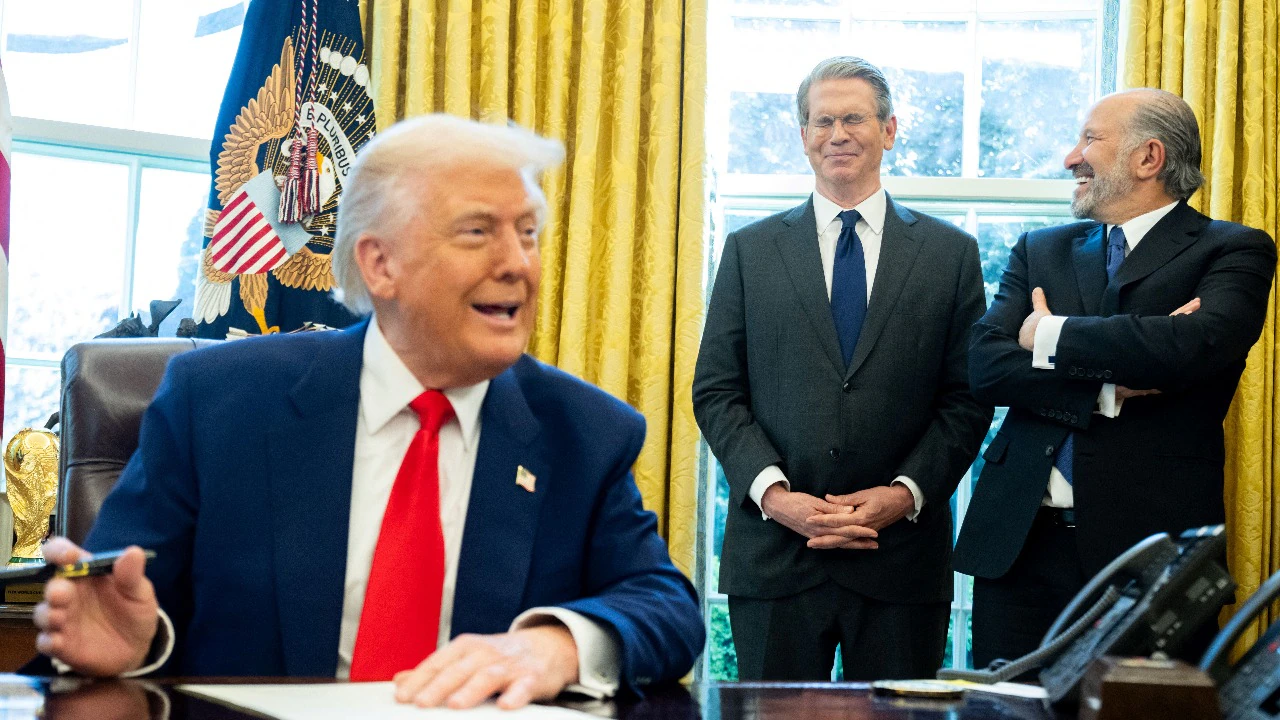
Washington/Beijing, April 10 – U.S. President Donald Trump on Wednesday abruptly suspended sweeping new tariffs on most countries for 90 days, a sharp reversal aimed at calming global markets. But the reprieve did not extend to China, where Trump intensified a deepening trade conflict by raising tariffs on all Chinese imports to 125%.
In response, Beijing confirmed it had imposed 84% duties on all U.S. goods, with the measures taking effect at 12:01 p.m. local time Thursday, according to state news agency Xinhua. The tit-for-tat escalation marks another volatile turn in a trade war that has roiled markets and strained diplomatic ties between the world’s two largest economies. The White House, in a stark warning to allies and rivals alike, said: “DO NOT RETALIATE AND YOU WILL BE REWARDED.”
Ahead of the levies, China’s Ministry of Commerce condemned Washington’s actions. “This is a serious infringement of the legitimate interests of all countries,” a spokesperson said. Another official added, “There is no winner in a trade war, and China does not want one. But the Chinese government will by no means sit by when the legitimate rights and interests of its people are being hurt.”
Trump’s decision to pause tariffs on most nations came just 24 hours after new duties were implemented, following a week of intense financial market volatility. The sharp sell-off wiped trillions off global equities and pushed U.S. government bond yields to levels not seen since the early days of the COVID-19 pandemic.
“I thought people were jumping a little bit out of line, they were getting yippy, you know,” Trump said, using a golf term, in remarks to reporters. Since returning to office in January, Trump has issued a flurry of trade threats, often followed by abrupt policy shifts. On Monday, the White House had dismissed reports of a possible tariff freeze as “fake news.” But by Wednesday, the administration had backpedaled.
The 90-day freeze does not lift existing duties on autos, steel, and aluminum, nor does it apply to China. A 10% blanket tariff on nearly all U.S. imports also remains in place. Goods from Canada and Mexico are still subject to 25% fentanyl-related tariffs unless they meet USMCA origin rules.
Treasury Secretary Scott Bessent framed the pause as a pre-planned strategy to bring countries to the negotiating table. But Trump himself acknowledged that market turmoil had played a role. “You have to be flexible,” Trump said, despite having insisted just days earlier that his policies were firm.
While Trump’s move may bring temporary relief to many U.S. trading partners, analysts say Beijing is unlikely to alter its hardline stance. “China is unlikely to change its strategy: stand firm, absorb pressure, and let Trump overplay his hand,” said Daniel Russel, vice president at the Asia Society Policy Institute. “Beijing believes Trump sees concessions as weakness.”
“Other countries will welcome the 90-day stay of execution—if it lasts—but the whiplash from constant zigzags creates more of the uncertainty that businesses and governments hate,” he added. Despite the hardening stances, Trump maintained that a deal with China was still on the table. “China wants to make a deal,” he said. “They just don’t know how quite to go about it.