

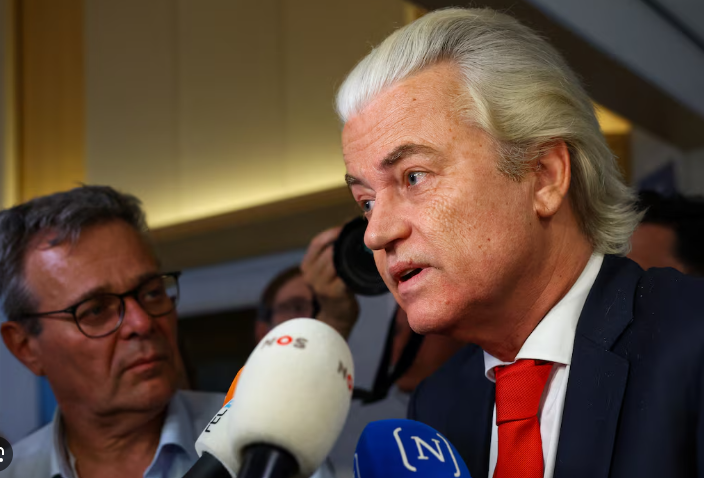
THE HAGUE, June 5: The Dutch government collapsed on Tuesday after far-right leader Geert Wilders withdrew his Freedom Party (PVV) from the ruling coalition over a dispute on immigration policy, triggering political turmoil weeks ahead of a key NATO summit hosted by the Netherlands.
Wilders, whose party won a surprise victory in the November 2023 elections, said his patience had “run out” over delays in implementing a coalition-agreed plan for what he described as the “strictest-ever immigration policy.” His withdrawal ends the brief tenure of a fragile four-party coalition formed under Prime Minister Dick Schoof.
“No signature for our asylum plans… PVV leaves the coalition,” Wilders said on X, formerly Twitter, after pulling his ministers from the cabinet. “We can no longer bear responsibility for this cabinet,” he added, accusing his partners of failing to deliver on core immigration pledges.
The crisis throws the European Union’s fifth-largest economy into uncertainty, with snap elections expected after the summer break. Organizing new polls in the Netherlands typically takes up to three months.
The Freedom Party’s departure follows days of tension and failed crisis talks. Coalition leaders met for last-ditch negotiations on Tuesday morning, which collapsed after just 30 minutes.
Liberal VVD party leader Dilan Yesilgoz, visibly frustrated, called Wilders’s decision “super irresponsible” and warned it could open the door to left-wing parties. “How can you do this to the Netherlands?” she said.
Polls suggest the PVV remains the strongest party, but the gap with rivals has narrowed. The Green/Left alliance, led by former EU commissioner Frans Timmermans, and the VVD are expected to run close behind in any upcoming vote.
The outgoing government, a compromise after coalition partners blocked Wilders from becoming prime minister, had promised sweeping immigration reforms. In late May, Wilders unveiled a 10-point plan, including border closures for asylum seekers and deportation of dual-national convicts — proposals critics labelled as legally dubious and politically explosive.
Political analysts say Wilders may have used the immigration standoff to force a collapse and strengthen his position ahead of elections. “He’s said repeatedly the only way to implement his plans is to become prime minister himself,” said Sarah de Lange, professor of political pluralism at the University of Amsterdam.
The collapse also comes at an awkward time for the Netherlands, just weeks ahead of a NATO summit in The Hague, where world leaders are set to gather amid heightened global security tensions.
The PVV may still struggle to form a majority in the 150-seat parliament. While the farmers’ BBB party is likely to support Wilders, the backing of the VVD remains uncertain. The fourth coalition party, the anti-corruption New Social Contract, has seen its support plunge following the departure of its leader, Pieter Omtzigt.
The fall of the Dutch government adds to a wave of far-right gains across Europe. In recent months, Portugal’s Chega party surged to second place in elections, Germany’s AfD doubled its vote share to over 20%, and Britain’s Reform UK made major strides in local polls.
Wilders, often dubbed the “Dutch Trump” for his anti-immigrant rhetoric and distinctive hairstyle, has long campaigned on restricting asylum and has sparred fiercely with Timmermans in parliamentary debates. His return to the campaign trail is likely to intensify an already fractious political landscape.