Montevideo, May 14 – Jose “Pepe” Mujica, the former guerrilla fighter who rose to become Uruguay’s president and earned global admiration for his humility and progressive reforms, has died at the age of 89, the government announced on Tuesday.
President Yamandu Orsi confirmed the news in a post on social media platform X, calling Mujica a “comrade” and thanking him for “everything you gave us and for your deep love for your people.”
Mujica, who led the South American nation from 2010 to 2015, was widely respected for his unorthodox leadership style, choosing to live in his modest Montevideo home rather than the presidential palace, driving a battered Volkswagen Beetle, and often shunning formal dress codes in favor of working clothes.
A former Marxist guerrilla with the Tupamaros movement in the 1960s and 70s, Mujica spent nearly 15 years in prison – much of it in solitary confinement – before reentering public life following Uruguay’s return to democracy in 1985. He was elected president in 2009, winning 52% of the vote.
During his presidency, Mujica enacted a series of landmark reforms that pushed Uruguay to the forefront of progressive politics in Latin America. His administration legalized same-sex marriage, decriminalized abortion in early pregnancy, and pioneered state-regulated marijuana sales — a move then nearly unprecedented globally.
“Few defended democracy like Mujica,” Brazilian President Luiz Inacio Lula da Silva said in a statement. “He never stopped advocating for social justice and the end of inequality. His greatness transcended Uruguay.”
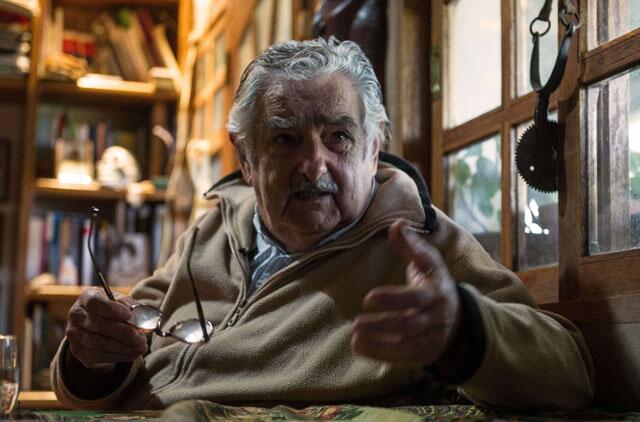
Mujica often drew praise for his candid style and frank statements, though his critics said he lacked presidential polish and frequently clashed with protocol. In a 2024 interview with Reuters, conducted in the tin-roofed house he shared with his wife, former Vice President Lucia Topolansky, Mujica said he still owned his old Beetle, though he preferred the solitude of his tractor.
“It’s more entertaining,” he said, “and you have time to think.”
Born in 1935 to a modest farming family, Mujica described his upbringing as “dignified poverty.” He joined the National Party as a young man before embracing revolutionary politics amid Uruguay’s political unrest. With the Tupamaros, Mujica participated in robberies and political kidnappings but maintained he had never killed anyone.
After surviving torture and isolation in prison, he emerged as a leading figure on the democratic left. He served as agriculture minister under President Tabaré Vázquez before winning the presidency himself.
Despite his leftist roots, Mujica maintained open lines of communication with political opponents, often inviting rivals to traditional asado barbecues at his home. “We can’t pretend to agree on everything,” he once said. “We have to agree with what there is, not with what we like.”
In recent years, Mujica remained politically active, supporting Orsi’s successful presidential bid and continuing to advocate for democratic values and social equity. He also revealed he had been diagnosed with cancer but remained upbeat.
“I want to tell young people that life is beautiful, but it wears out and you fall,” he said in one of his final interviews. “The point is to start over every time you fall, and if there is anger, transform it into hope.” Mujica is survived by his wife, Lucia Topolansky. The couple, who married in 2005, were long-time political and revolutionary partners, dating back to their days in the Tupamaros movement.