

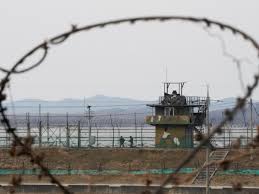
South Korean Military Fires Warning Shots After North Korean Soldiers Cross Border
SEOUL, April 9 – South Korea’s military fired warning shots on Tuesday after a group of North Korean soldiers briefly crossed the heavily fortified border between the two countries, officials in Seoul said, amid heightened tensions on the Korean Peninsula.
In a statement, South Korea’s Joint Chiefs of Staff said approximately ten North Korean soldiers violated the military demarcation line (MDL) in the eastern sector of the Demilitarized Zone (DMZ) at around 5 p.m. local time. The soldiers reportedly returned to the North following South Korea’s warning broadcasts and warning shots.
South Korea’s military said it is “closely monitoring” North Korean movements and analyzing the motive behind the brief incursion, which remains unclear.
While minor border incursions have occurred in the past, the latest incident comes at a time of heightened tensions, with North Korean leader Kim Jong Un continuing to expand his military nuclear program and forge closer ties with Russian President Vladimir Putin amid the ongoing war in Ukraine.
A similar violation occurred in June 2024, when North Korean troops crossed the border without escalation, as South Korean officials concluded the move had likely been unintentional. Tuesday’s incident, however, follows months of increased hostility from Pyongyang and deteriorating relations between the two Koreas.
North Korea has not responded to recent overtures from newly inaugurated U.S. President Donald Trump, who has expressed interest in reviving stalled nuclear diplomacy with Kim. Pyongyang has accused Washington of escalating hostilities since Trump returned to office in January.
Meanwhile, South Korea is grappling with political uncertainty following the ouster of President Yoon Suk Yeol last week after his controversial declaration of martial law. The country remains without a sitting president, compounding concerns over national security and policy stability.
The DMZ, a 250-kilometer-long, 4-kilometer-wide buffer zone that separates the two Koreas, remains one of the most heavily militarized borders in the world. While violent confrontations are rare, incidents involving warning shots and brief incursions occasionally flare tensions between the two nations, which remain technically at war since the 1950-53 Korean War ended in an armistice rather than a peace treaty.