

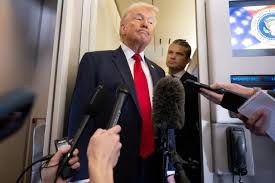
Washington, 17 March: In the third week of the US–Israel military campaign against Iran, President Donald Trump is confronting a set of decisions that could shape both the trajectory of the conflict and the remainder of his presidency, as early expectations of a swift outcome give way to signs of a prolonged confrontation.
Despite projecting confidence in public appearances, the administration is increasingly dealing with the complexities of a war that shows no clear endpoint. Officials acknowledge that the timeline may extend for weeks or longer, forcing Washington to balance military objectives with growing geopolitical and economic pressures.
A planned presidential visit to China has already been postponed, underscoring how the conflict is reshaping broader US foreign policy priorities. At the same time, efforts to assemble an international coalition to secure the strategically vital Strait of Hormuz have encountered reluctance from key allies, raising the possibility that the United States may need to act with limited external support.
Military Options Narrow
The Pentagon is weighing increased naval deployments to safeguard shipping lanes through the Gulf, where roughly a fifth of global oil supplies transit. Recent movements, including the positioning of a Marine amphibious unit of approximately 5,000 personnel, signal that Washington is preparing for a wider range of contingencies.
However, each potential step carries risk. Expanding operations could expose US forces to greater Iranian retaliation, while a restrained approach may leave Tehran capable of continuing to disrupt maritime traffic and energy flows.
The prospect of deploying ground troops remains particularly sensitive, given domestic fatigue with long-running overseas conflicts. Analysts warn that such a move could transform a limited campaign into a broader and more protracted engagement.
Economic Pressures Intensify
Beyond the battlefield, the war’s economic impact is becoming increasingly visible. Fuel prices in the United States have risen sharply in recent weeks, placing renewed strain on households and complicating the administration’s economic messaging.
Higher energy costs risk undermining the president’s focus on affordability, a key concern for voters ahead of upcoming midterm elections. While core supporters have largely maintained their backing, early indications suggest some erosion among centrist and independent voters.
Strategic Trade-offs
The administration now faces a fundamental dilemma. Escalating military action could improve the chances of achieving clearer strategic objectives but at the cost of higher military and political risks. Conversely, scaling back operations may limit immediate dangers while leaving core issues unresolved, including threats to global energy markets.
British Prime Minister Keir Starmer has signaled caution among allies, stating that the United Kingdom would not be drawn into a broader conflict, though it remains open to coordinated solutions. This reflects a wider hesitation among partner nations to deepen involvement.
Presidency at a Crossroads
Political analysts note that conflicts of this nature often come to dominate presidencies, regardless of initial intentions. In this case, the stakes are amplified by the direct link between geopolitical instability and domestic economic conditions.
As the situation evolves, the challenge for Trump will be to navigate between competing risks—military escalation, economic fallout, and political consequences—without a clear path to a quick resolution.
With no option offering a decisive advantage, the administration’s next moves are likely to define not only the course of the conflict but also the broader legacy of the presidency.
