

Vienna, Feb 21: A recent manslaughter conviction by an Austrian court over a fatal Alpine climbing incident has sparked debate across Europe’s mountaineering community, raising questions about legal responsibility between experienced climbers and their less experienced partners.
A court in Innsbruck found an amateur climber, identified as Thomas P, guilty of manslaughter after his girlfriend, Kerstin G, died during a winter ascent of the 3,798-metre Großglockner, Austria’s highest mountain. The ruling is expected to be appealed, but legal experts and climbers alike say it could have far-reaching implications.
In delivering the judgment, Judge Norbert Hofer concluded that the significant gap in skill and experience between the two climbers meant that Thomas P had effectively taken on the role of a guide, even though no money changed hands.
The court held that by assuming a leadership role, he also assumed a legal duty of care — one that he failed to meet.
“You haven’t been convicted because you’re the better climber,” the judge told him in court, according to local media. “You did not fulfil the leadership responsibilities you assumed in the manner required of you by law.”
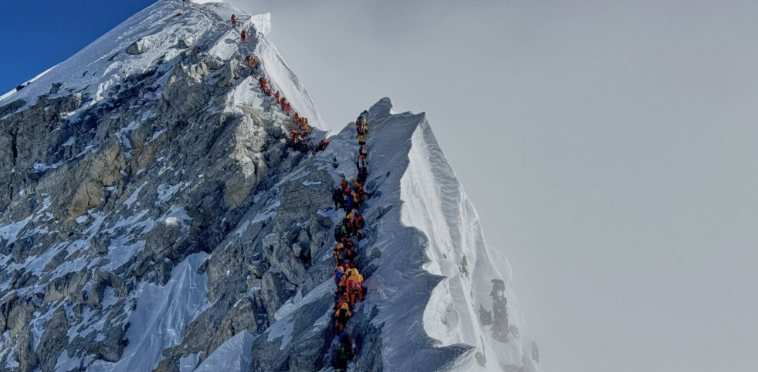
A climb that went wrong The case centred on a winter ascent of a demanding mixed snow and rock route on Großglockner in deteriorating weather conditions. Prosecutors argued that Thomas P made multiple errors in judgment, including choosing a challenging high-altitude climb despite his partner’s limited alpine experience.
The court heard that Kerstin G had never undertaken an alpine tour of similar length, difficulty or altitude. Despite worsening conditions and a late hour near the summit, the pair did not turn back when it was still considered safe to do so.
At one point, Thomas P left his girlfriend alone and exposed on the mountain while he continued on, reportedly seeking help from a mountain hut on the other side. He also declined assistance from a rescue helicopter that had been dispatched to check on them.
Prosecutors listed nine alleged mistakes, arguing that the most serious was bringing an inexperienced climber into extreme winter conditions beyond her capabilities.
A new legal frontier? Professional mountain guides in Austria and elsewhere in Europe are typically certified and can be held liable for negligence. However, this case ventures into more complex territory: whether an experienced amateur can be considered legally responsible for a less experienced partner simply by virtue of taking the lead.
Legal observers say the ruling may introduce a new dimension to duty of care in recreational mountain sports.
Andreas Ermacora, a former head of the Austrian Alpine Club and a lawyer who has represented professional guides, suggested the case may be groundbreaking but cautioned against overgeneralising.
“Every story is unique,” he told Austrian media. “But it may be significant that this is the first time in Austria that someone has been convicted as an unqualified guide.”
He noted that the court appeared to place weight on the fact that the deceased climber would likely not have attempted the ascent alone, effectively relying on her partner’s expertise.
“She transferred her responsibility to him,” Ermacora was quoted as saying. Implications for mountaineering culture The ruling has prompted concern among climbers and instructors about how it might affect the longstanding tradition of mentorship in mountaineering, where less experienced climbers gain skills by partnering with veterans.
John Cousins, a British mountain guide and head of Mountain Training, said the disparity in experience between the pair stood out in the case. However, he and others note that shared responsibility has long been a cornerstone of climbing culture.
Whether the Innsbruck judgment will influence courts in other European countries remains uncertain. Much may depend on how different jurisdictions interpret duty of care in high-risk outdoor sports and how police and prosecutors investigate fatal accidents in the mountains.
For now, the case has prompted climbers across Europe to re-examine not just the physical risks of mountaineering, but also the potential legal consequences of leading a partner into dangerous terrain.
