

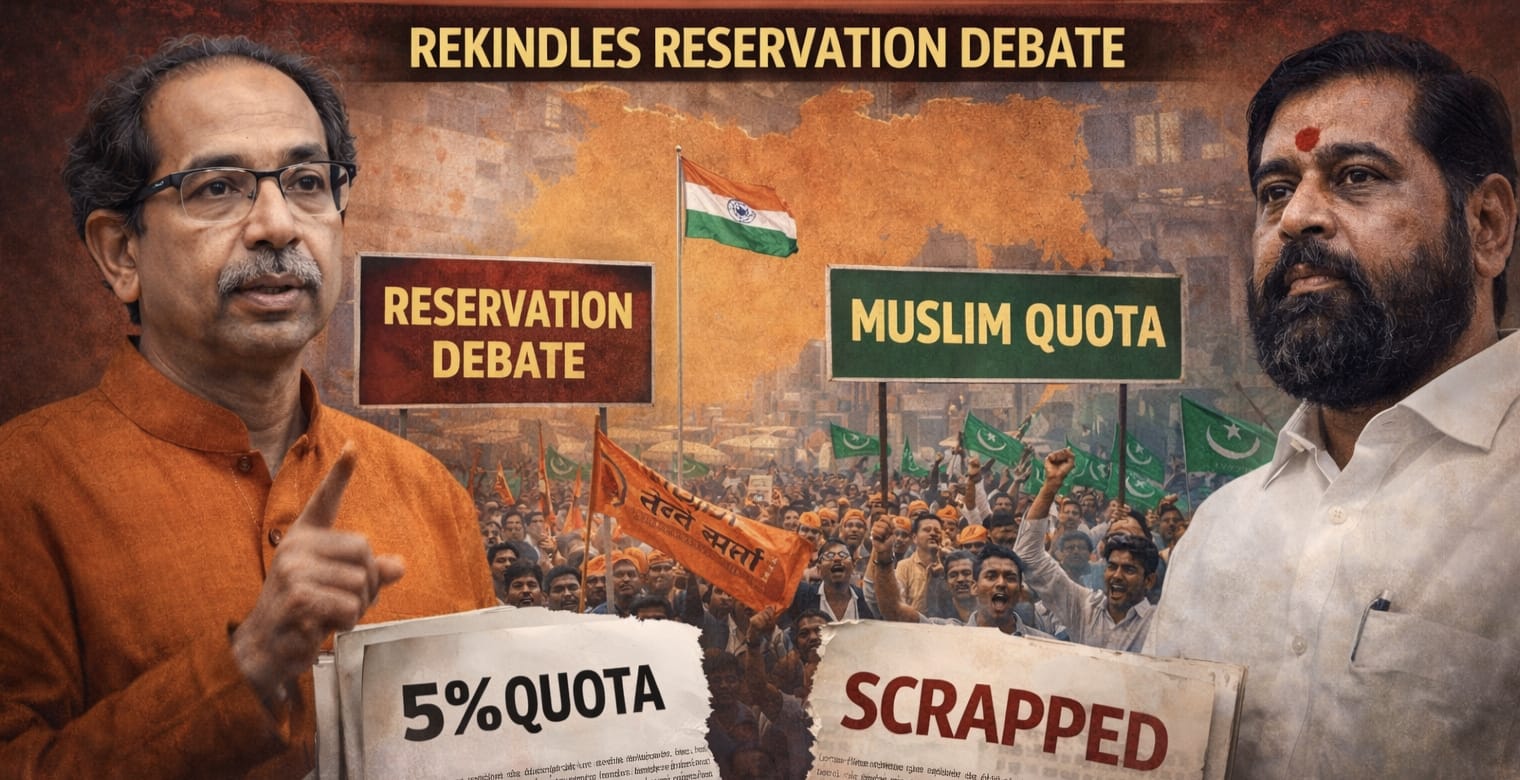
Mumbai, Feb 20: The Maharashtra government has formally withdrawn the administrative framework for a proposed 5 per cent reservation for Muslims, closing the chapter on a policy that remained stalled for over a decade amid legal hurdles.
The decision, taken on February 17–18, 2026, revokes all administrative directions related to the Special Backward Category-A (SBC-A), including the issuance of caste verification and validity certificates under the 2014 policy. Officials clarified that the original ordinance, introduced under the Socially and Educationally Backward Classes (SEBC) category, had lapsed in December 2014 and was never converted into law.
The demand for Muslim reservation dates back to 2008 during the Congress-NCP regime. A panel led by retired IAS officer Mehmood ur Rahman submitted a 2013 report highlighting socio-economic backwardness among several Muslim communities, including weavers, butchers, oil pressers and fisherfolk. Subsequently, in July 2014, the then government announced 16 per cent reservation for Marathas and 5 per cent for backward Muslims under SEBC.
However, the Bombay High Court struck down both the Maratha quota and the 5 per cent Muslim reservation in jobs. The court had allowed 5 per cent reservation for Muslims in educational institutions, but the ordinance lapsed after the BJP came to power later that year, and no further legislative steps were taken to sustain the provision.
Govt Defends Move
Social Justice Minister Sanjay Shirsat defended the latest resolution, asserting that “reservation cannot be granted merely by announcement and must follow due legal process.” The government maintained that the withdrawal does not alter the ground reality, as the quota had not been operational for over ten years.
It reiterated that Muslims can avail reservation benefits only if they fall under existing OBC, VJNT or other recognised backward class categories, and not solely on the basis of religion.
Opposition Slams Decision
Opposition leaders criticised the move, questioning both its timing and intent.
Former Chief Minister Prithviraj Chavan argued that the earlier quota was aimed at backward Muslim communities and “not religion per se,” adding that the government could have enacted a law at least to preserve educational reservation.
Congress leader Amin Patel termed the decision a setback for efforts to bring Muslim youth into the educational mainstream, saying educational reservation was vital for inclusive development.
Clyde Crasto of the NCP (SP) described the move as “anti-minority,” alleging it signalled reluctance to support Muslim representation. AIMIM leader Imtiaz Jaleel also criticised the resolution, questioning its political messaging, while urging Muslim youth to stay focused on education. Samajwadi Party MLA Raees Shaikh said the resolution may not have a direct material impact since benefits were not being availed, but noted it sends a clear political message.
Debate Reignited
The government’s decision has reignited a broader debate over religion versus backwardness-based reservation, constitutional validity versus social equity, and access to education for marginalised communities.
With reservation policies continuing to shape electoral and social discourse, the issue remains politically sensitive and legally complex in Maharashtra’s evolving political landscape.
