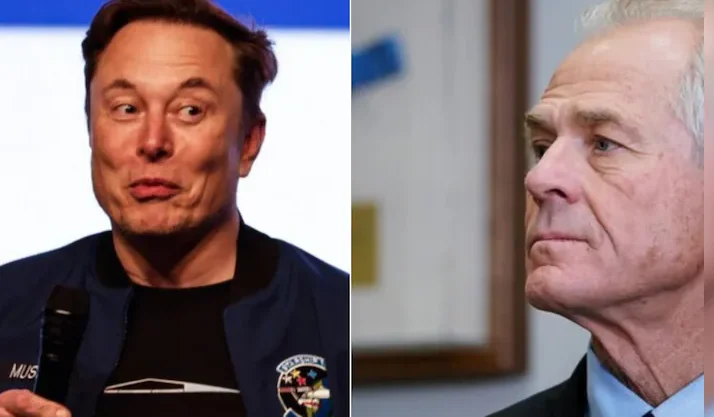
WASHINGTON, April 9 – The White House on Tuesday downplayed a public feud between Tesla CEO Elon Musk and Donald Trump’s trade advisor Peter Navarro, describing the spat over tariffs as a disagreement between “two individuals with very different views.” “Boys will be boys, and we will let their public sparring continue,” White House Press Secretary Karoline Leavitt told reporters during a briefing. “You should all be very grateful that we have the most transparent administration in history.”
The comments came after Musk lashed out at Navarro on social media platform X, formerly known as Twitter, following Navarro’s remarks that Tesla was “not a car manufacturer” but “a car assembler” reliant on foreign-made parts. Navarro also accused Musk of opposing tariffs to protect access to “cheap foreign components.”
Musk responded with a series of insults, calling Navarro “dumber than a sack of bricks” and “truly a moron,” and mockingly referring to him as “Peter Retarrdo.” He also cited a recent study that ranked Tesla’s Model Y as the most American-made vehicle sold in the United States.
The escalating dispute reflects deep divisions within Trump’s inner circle as the administration pushes forward with sweeping new tariffs — including a 10% duty on most imports and higher rates on products from China, the European Union, and Vietnam.
Musk, a vocal critic of protectionist policies, has advocated for a “zero-tariff situation” between the U.S. and Europe, arguing that open trade promotes innovation and consumer choice. Despite the heated exchange, the White House signaled it welcomes a diversity of opinions at the highest levels of government. “I think it also speaks to the president’s willingness to hear from all sides,” Leavitt said. “He makes decisions based on the best interests of the American people.”
Navarro, a staunch proponent of Trump’s reciprocal trade strategy, has long defended tariffs as a tool to revive U.S. manufacturing and reduce dependency on foreign supply chains. He has also drawn criticism in the past for citing a fictional expert, “Ron Vara,” in his economic writings. The war of words comes as the U.S. prepares for a high-stakes election season, with trade policy expected to be a key battleground issue.