

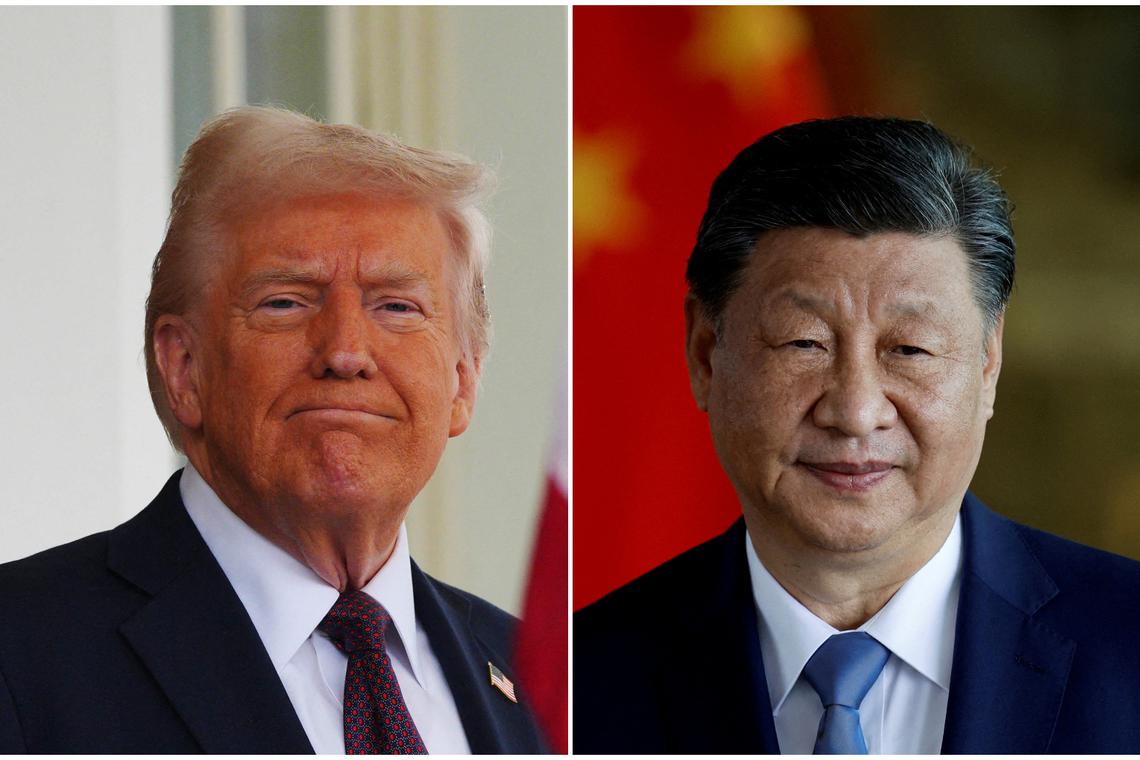
Beijing /Washington, May 3 – China said on Friday it is assessing the possibility of trade negotiations with the United States as a bruising tariff war between the world’s two largest economies continues to disrupt global supply chains and heighten fears of a recession. A spokesperson for China’s Ministry of Commerce told reporters that Beijing remains open to dialogue but warned that Washington must first demonstrate sincerity and abandon its “unilateral tariffs.”
“China’s position is consistent. If we fight, we will fight to the end; if we talk, the door is open,” the spokesperson said. “If the US wants to talk, it should correct its wrong practices.”
The comments came after a state-affiliated Weibo account claimed that the US had been seeking to initiate discussions, and days after President Donald Trump insisted that preliminary talks were already underway — an assertion Beijing publicly denied at the time. The conflicting messages underscore a complex diplomatic standoff in which both sides appear interested in de-escalating tensions but are reluctant to be seen as the initiator.
“This is a game of chicken,” said Ja Ian Chong, assistant professor of political science at the National University of Singapore. “Neither Washington nor Beijing wants to appear weak, but both would benefit from a truce.”
The US has imposed tariffs of up to 245% on certain Chinese goods, prompting tit-for-tat measures from Beijing. Economists warn the prolonged standoff could trigger a global slowdown.
Trump, facing criticism over signs of an economic contraction in the first quarter — the first since 2022 — has claimed victory in forcing China to the table. But a post from a Chinese state-linked social media account argued that it is the US that is “more anxious” and in need of talks.
For President Xi Jinping, the trade war comes amid persistent domestic headwinds: sluggish consumption, a deepening property crisis, and rising unemployment.
“Both sides are posturing, but neither wants to be the first to admit it needs negotiations,” said Wen-Ti Sung, a fellow at the Australian Centre on China in the World. “They’re using language that gives each side room to climb down without losing face.” Analysts say a third-party mediator or vague diplomatic language could help both sides claim victory while quietly working toward a deal.
“The optics matter,” Chong added. “Trump wants to look like he’s made China back down. Xi wants to show that China made Trump act more reasonably.”
Despite the apparent backchannel communications, no formal talks have been announced, and neither side has signaled readiness to concede on key issues. “The two sides are talking,” Chong said. “But they’re still waiting to see who blinks first.”