

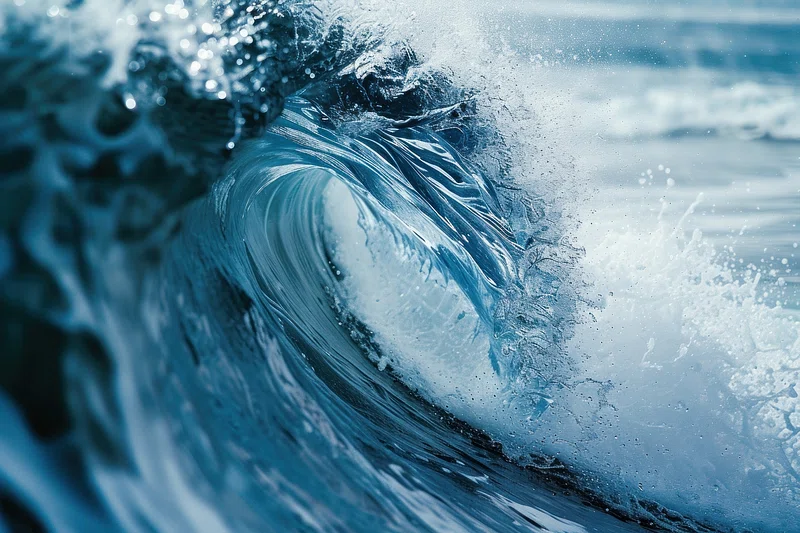
Washington, May 21 – Scientists have warned that a powerful mega-tsunami could strike parts of the United States, including the Pacific Northwest, Alaska, and Hawaii, if a major earthquake hits the Cascadia Subduction Zone in the coming decades.
A new study by researchers at Virginia Tech, published in the Proceedings of the National Academy of Sciences, estimates a 15% probability of an earthquake exceeding magnitude 8.0 in the Cascadia region within the next 50 years.
The Cascadia Subduction Zone, a 600-mile-long fault line stretching from northern California to Vancouver Island in Canada, is where the Juan de Fuca Plate is slowly being pushed beneath the North American Plate. This tectonic boundary is capable of producing megathrust earthquakes powerful enough to displace vast amounts of seawater, potentially triggering a catastrophic tsunami.
Researchers warn that such a quake could cause coastal subsidence of up to 6.5 feet, drastically increasing the destructive potential of the tsunami and leaving coastal communities highly vulnerable.
Areas identified as most at risk include northern California, northern Oregon, and southern Washington, while Alaska and Hawaii are also exposed due to their seismic and volcanic profiles.
A mega-tsunami, unlike typical tsunamis which usually generate wave heights of several feet, involves waves that can reach hundreds of feet and travel several miles inland, causing widespread devastation in densely populated coastal zones.
“These events are rare, but their impacts can be catastrophic,” the researchers wrote. “Preparedness and infrastructure resilience are critical in high-risk zones.”
The study reinforces long-standing concerns among seismologists and emergency planners about the potential for a large-scale disaster originating along the Cascadia fault, which last produced a major earthquake in 1700.