

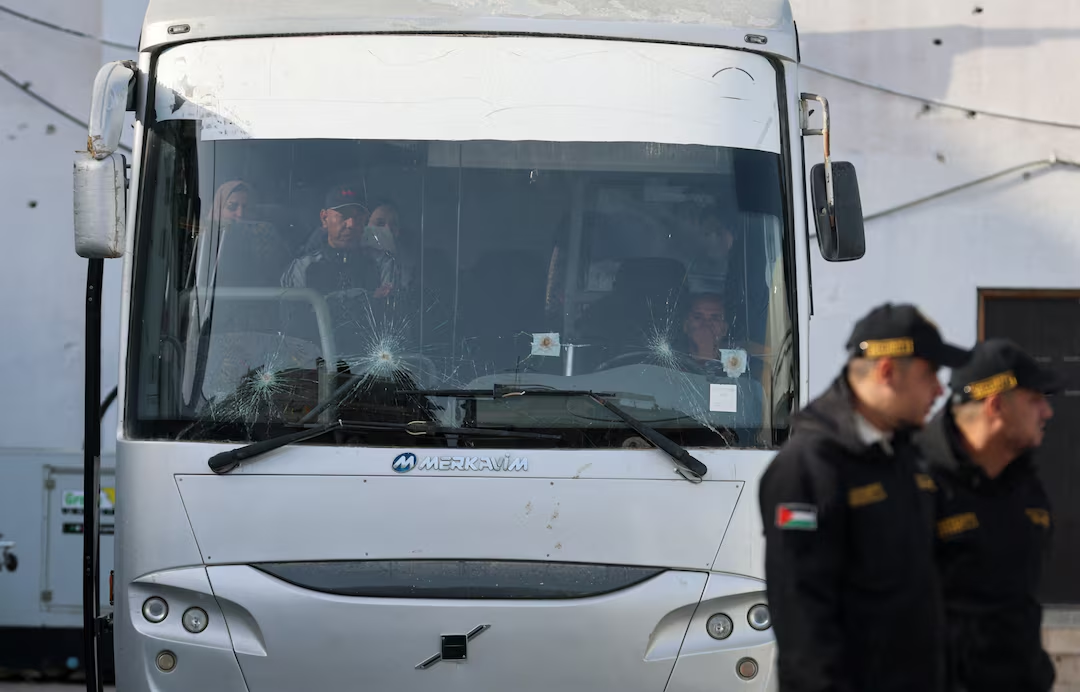
Gaza, March 19: Israel has reopened the Rafah crossing after nearly three weeks, allowing a small number of wounded Palestinians to exit the enclave for urgent medical treatment in Egypt, even as renewed violence threatens the already fragile ceasefire in Gaza.
According to Palestinian humanitarian officials, only eight injured individuals accompanied by 17 relatives were permitted to cross on Thursday, underscoring the limited scope of the reopening. The crossing, a critical gateway for medical evacuations and humanitarian movement, has remained largely shut since mid-2024 during the ongoing conflict.
The partial reopening follows recent discussions in Cairo involving U.S.-linked mediators associated with Donald Trump and representatives of Hamas, aimed at preserving the Gaza ceasefire. While no formal agreement has been announced, the move is being viewed as a cautious step to prevent further deterioration.
Renewed violence undermines truce
Despite a temporary lull in hostilities following late-February regional developments, violence in Gaza has again escalated. Local health authorities reported that Israeli airstrikes in Gaza City killed at least four Palestinians in separate incidents on Thursday.
The Gaza health ministry estimates that around 680 people have been killed since the October ceasefire, while Israel reports four of its soldiers have died during the same period. Both sides have continued to accuse each other of breaching the terms of the truce, raising concerns about its sustainability.
Regional tensions complicate ceasefire efforts
The ceasefire’s stability has been further challenged by the broader regional crisis, particularly U.S.–Israel military actions targeting Iran, which have shifted strategic priorities and heightened tensions across the region.
Analysts note that while violence briefly declined after February 28, hostilities have since resumed an upward trend, casting doubt on the durability of current diplomatic efforts.
Fragile relief amid uncertainty
The reopening of Rafah is being seen as a symbolic but necessary humanitarian gesture, offering limited relief to civilians in urgent need. However, with violence resurging and trust between parties eroding, the broader ceasefire framework remains under significant strain.
Diplomatic channels remain active, but without a sustained reduction in hostilities, the risk of a full breakdown of the truce continues to loom.
