

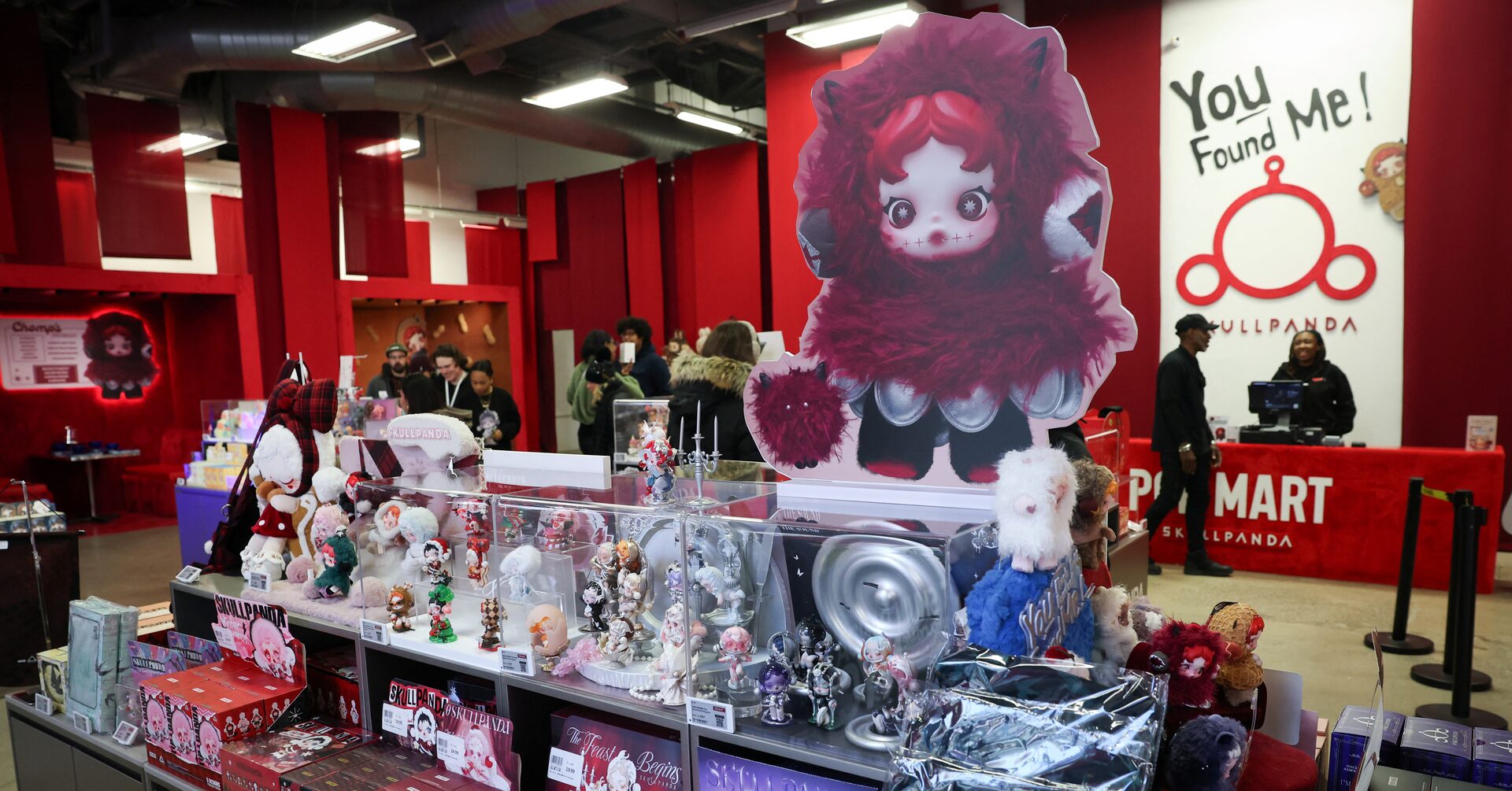
Shanghai/New York, December 19: A wave of Chinese consumer brands is expanding more aggressively into the United States, betting that stronger purchasing power and higher margins can offset sluggish spending at home, even as steep U.S. tariffs and trade tensions cloud the outlook.
Companies including Labubu-maker Pop Mart, variety goods retailer Miniso, sportswear group Anta and fast-fashion label Urban Revivo have announced new U.S. store openings or retail expansions this year, seeking a foothold in the world’s largest consumer market.
The counterintuitive push gathered pace in 2025 as weak domestic demand in China prompted consumer companies to look overseas, after earlier forays into Southeast Asia following the COVID-19 pandemic.
New York has emerged as a key testing ground. Urban Revivo, often dubbed “China’s Zara,” opened a flagship store in Manhattan in March, viewing a presence in the global fashion capital as a litmus test for wider Western expansion.
“We’re only in the early stage of entering this market,” Leo Li, chairman and CEO of Urban Revivo’s parent Fashion Momentum Group, told Reuters. “We need to continuously expand our scale and be profitable to be considered truly successful.”
Li said success in the West would depend on strategy, product strength and brand value, playing down the impact of heightened U.S.–China trade frictions under U.S. President Donald Trump.
A Reuters review of company filings and social media posts shows that brands including Urban Revivo, Auntea Jenny, Chagee, Luckin Coffee and Mixue opened their first U.S. outlets in 2025. Anta plans to open a store in Beverly Hills, while Miniso has expanded rapidly, growing to 421 North American stores by September from just 100 in 2023.
Pop Mart, which entered the U.S. in 2023, operated 41 locations by mid-2025 and has signalled plans for faster expansion. Chief Executive Wang Ning said the company’s North American revenue grew more than tenfold in the first half of the year, citing the U.S. market’s strong purchasing power.
Industry consultants say the appeal is clear: Chinese brands honed in a fiercely competitive domestic market could earn far higher margins if they replicate that success abroad.
“A lot of these Chinese companies are saying, ‘If we could do the same thing in America as we did in China, we would make four times the money,’” said Gabor Holch, founder of consultancy East-West Leadership. Analysts say younger, cost-conscious U.S. consumers are the primary target, many already accustomed to shopping on Chinese platforms such as Shein and PDD Holdings’ Temu.
“Chinese brands today are positioning themselves as more affordable alternatives while building reliability,” said Ivan Su, an analyst at Morningstar. Still, limited brand recognition remains a hurdle. Anta is seeking to build awareness through high-profile U.S. store locations and sponsorships of basketball stars such as Kyrie Irving.
“It’s about building trust in a new market rather than going completely gung-ho,” said Sagar Thanki, a portfolio manager at Guinness Global Investors, an Anta shareholder.
Price and novelty, however, may sway some shoppers. “Zara has a more sophisticated shopper,” said Trina Jackson, 50, while visiting Urban Revivo’s New York store last week, highlighting the challenge Chinese brands face as they seek to redefine perceptions in the U.S. market.
