

NEW DELHI/TEHRAN, May 28 – Pakistan and Iran signaled a thaw in diplomatic relations with high-level meetings in Tehran this week, underscoring a shared stance on the Gaza conflict and renewed calls for regional dialogue, including with India.
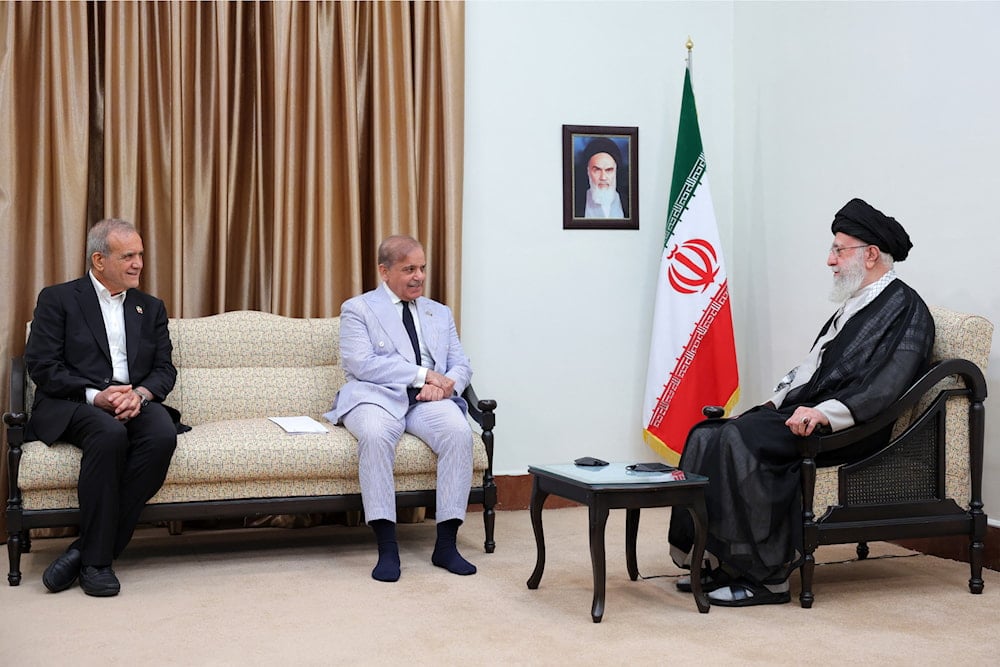
Pakistani Prime Minister Shehbaz Sharif and Army Chief General Asim Munir held talks with Iranian Supreme Leader Ayatollah Ali Khamenei and newly elected President Masoud Pezeshkian, a year after the two neighbours exchanged cross-border airstrikes targeting militant groups.
“The only way to ensure the security of the Islamic Ummah is the unity of Muslim nations,” Khamenei said in a statement following the meeting. He praised Pakistan’s refusal to normalise ties with Israel, calling it a principled stand amid Western pressure.
Sharif reiterated Islamabad’s support for a ceasefire in Gaza and offered to resume dialogue with India on long-standing disputes, including Kashmir, water-sharing, trade and counter-terrorism.
“We are ready to talk… to resolve our outstanding issues,” Sharif said during a joint press conference with Pezeshkian, according to The Dawn. “But if they accept my offer of peace, then we will show that we really want peace, seriously and sincerely.”
Khamenei offered a measured response on India-Pakistan ties, expressing hope that “differences between the two countries will be resolved.”
Tensions between Tehran and Islamabad spiked in January after Iran conducted airstrikes on Pakistani territory targeting Jaish al-Adl, a Sunni militant group accused of attacking Iranian border guards. Pakistan retaliated with strikes against the Baloch Liberation Front in southeastern Iran.
A recent U.S. Defense Intelligence Agency report noted that the two countries have since taken steps to de-escalate, including high-level engagements aimed at rebuilding trust.
Highlighting the strategic importance of Muslim solidarity, Khamenei invoked Pakistan’s past support during the Iran-Iraq war and called for Islamic nations to resist efforts by “global warmongers” to foment divisions.
The Gaza crisis has emerged as a unifying factor between the two nations, with both Tehran and Islamabad sharply criticizing Israeli military actions following the October 2023 Hamas attacks.
India, which has remained neutral on the Gaza conflict, has expressed support for a negotiated two-state solution and called for humanitarian access to affected civilians. In Parliament, Indian officials condemned Hamas’s actions while urging restraint from all parties.
While Sharif raised Kashmir during his Tehran visit, India maintains that the dispute is a bilateral issue and has consistently rejected third-party mediation. Following the Pahalgam terror attack earlier this year, India conducted airstrikes on Pakistani territory and reiterated its demand for the return of Pakistan-occupied Kashmir and an end to cross-border terrorism.
Despite the friction, India hosted Iranian Foreign Minister Abbas Araghchi in May for the 20th India-Iran Joint Commission Meeting, where both sides condemned terrorism and agreed to enhance regional cooperation.
Analysts say Pakistan’s outreach to Iran comes amid shifting alliances in the Middle East and growing tensions between Tehran and Washington over Iran’s nuclear programme. With the U.S. being a key Indian defence partner, New Delhi is expected to monitor the evolving regional dynamics closely.