

Islamabad, Jan 2: A Pakistani anti-terrorism court has sentenced eight journalists and social media commentators to life imprisonment in absentia, convicting them in cases linked to online activity following the arrest of former Prime Minister Imran Khan in May 2023, court officials said on Thursday.
The verdict relates to digital content allegedly shared or amplified during protests that erupted nationwide on May 9, when Khan’s brief detention triggered violent demonstrations, including attacks on military installations and state property.
According to the court’s ruling, the material circulated by the accused was deemed to have contributed to public disorder and was classified as falling under terrorism-related offences as defined by Pakistani law. The court held that the content had the potential to incite fear and destabilise public order.
Most of those convicted were not present during the proceedings and are believed to be residing outside Pakistan. The sentences include additional prison terms and financial penalties, subject to confirmation by the Islamabad High Court.
The case forms part of a broader crackdown launched after the May 2023 unrest, during which authorities pursued hundreds of individuals linked to Imran Khan’s party and its support network. The state has relied heavily on anti-terrorism legislation and, in some cases, military courts to prosecute individuals accused of inciting violence or targeting state institutions.
Among those convicted are journalists and analysts with significant online followings, as well as former military officers who had turned to political commentary on digital platforms.
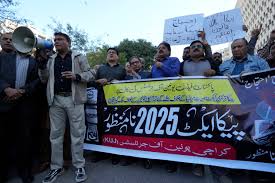
Media rights organisations and civil liberties groups have criticised the ruling, warning that the use of anti-terror laws against journalists risks blurring the line between violent extremism and political expression. The Committee to Protect Journalists has previously described such investigations as punitive measures against critical reporting and dissenting views.
Legal experts say the verdict could have far-reaching implications for freedom of expression in Pakistan, particularly in the digital space, where political debate has increasingly drawn the attention of security agencies.
The case is expected to attract close scrutiny from international human rights bodies amid ongoing concerns over press freedom and the shrinking space for dissent in the country.
