

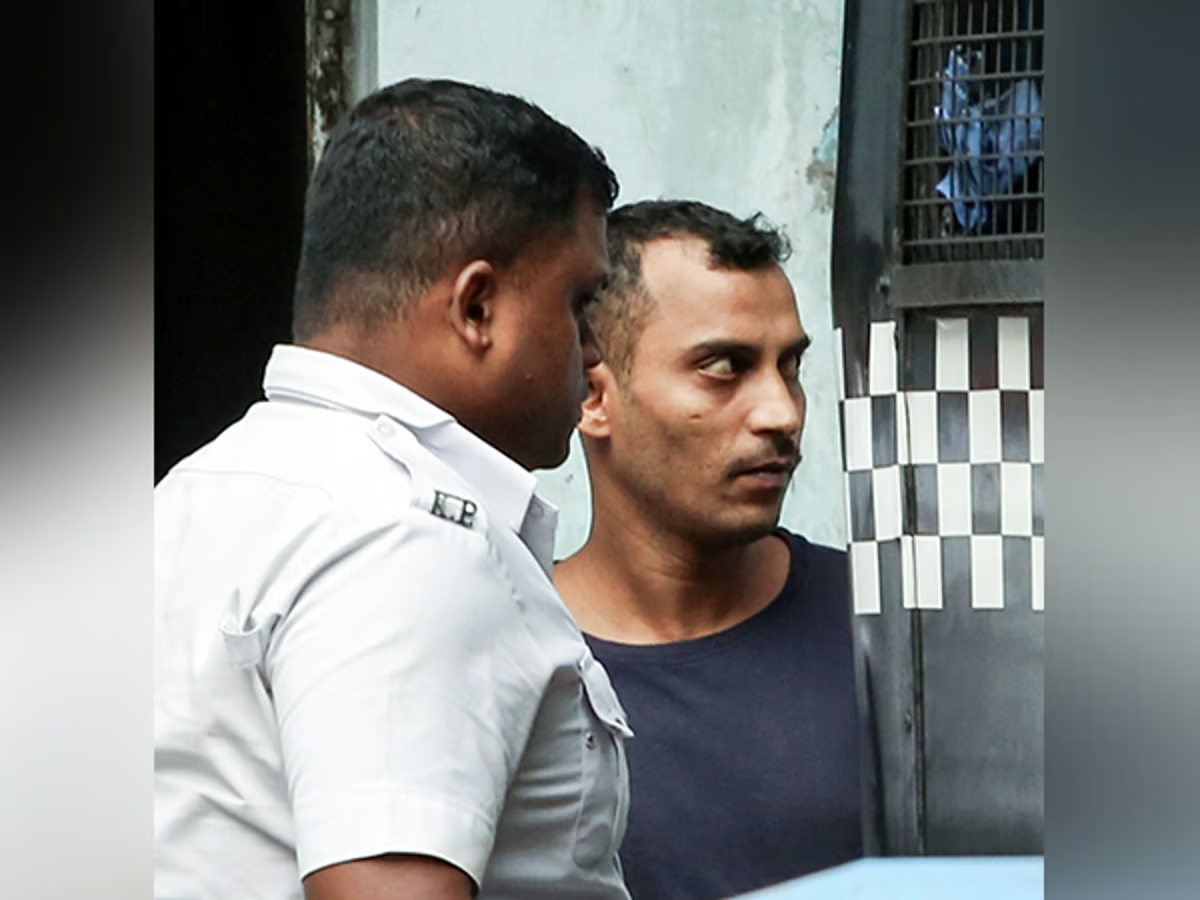
A Kolkata court on Monday sentenced a civic volunteer to life imprisonment for the rape and murder of a junior doctor at a government-run hospital, a case that sparked widespread protests and calls for harsher penalties in West Bengal.
Sanjoy Roy, 35, was convicted under multiple sections of Indian law, including for rape, murder, and causing death, following the killing of the young doctor at RG Kar Medical College and Hospital in August.
Additional Sessions Judge Anirban Das handed down the sentence, describing it as imprisonment “until his last breath.” “This is not the rarest of rare cases. For the rape, you (Roy) are sentenced to life imprisonment with a fine of Rs 50,000. For the murder and causing death, you are given a whole life term. Till your last breath, you will remain in jail,” the judge said. The court also directed the state government to pay Rs 17 lakh ($20,500) in compensation to the victim’s family.
Roy denied the charges during the proceedings, claiming he had been “framed.” “All the allegations are false. I am innocent but was tortured, beaten, and forced to sign papers,” he told the court.
The incident occurred on August 9, when the body of the 26-year-old doctor, who had been working a grueling 36-hour shift, was found in the hospital’s seminar hall. Her death triggered outrage, leading to protests by doctors across the state demanding justice and greater workplace safety. The Central Bureau of Investigation (CBI), which took over the case from Kolkata Police in September, relied on DNA and biological evidence to secure Roy’s conviction. Prosecutors argued the crime was “gruesome” and warranted the death penalty.
“This case shook the entire country. The victim was a young, meritorious doctor, an asset to society. Such a crime deserves the rarest of rare punishment to set an example,” CBI counsel Anurag Modi said during the trial.
However, defense lawyer Shejuti Chakraborty argued against the death penalty, citing insufficient evidence to meet the threshold of the “rarest of rare” standard.
The victim’s family expressed dissatisfaction with the sentence, calling for harsher punishment. “I want justice for my daughter,” the victim’s father said.
West Bengal Chief Minister Mamata Banerjee also criticized the verdict. “We have been demanding capital punishment from the beginning. There should have been ultimate punishment for such a heinous crime,” she told reporters.
The case has also led to the arrest of two other individuals—Abhijit Mandal, a local police officer, and Sandip Ghosh, a former principal of the hospital—on allegations of attempting to cover up the crime. Both were released on bail after the CBI failed to file a chargesheet within the mandated time frame.
The ruling has reignited debates on the adequacy of judicial responses to crimes against women in India, with West Bengal Governor C.V. Ananda Bose emphasized the need for systemic change. “Punishment alone cannot address the rising incidences of violence against women. We must address the deeper societal issues at play,” he said.