

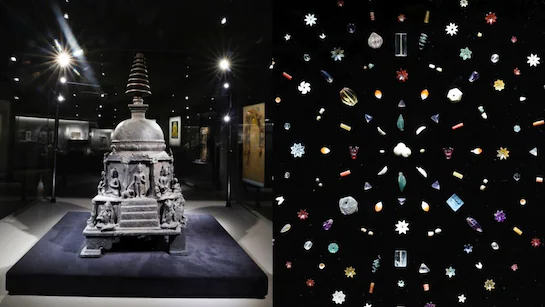
New Delhi, Jan 4: India on Friday unveiled the Piprahwa gems, sacred artefacts linked to the Buddha, for the first time since their removal during the colonial era, marking a key step in reclaiming the country’s cultural and religious heritage.
The collection of over 300 precious stones and ornaments, dating to around the 2nd century BCE, was unearthed in 1898 at a stupa site in Piprahwa, Uttar Pradesh, by British engineer William Claxton Peppe. Inscriptions on the caskets, according to the Ministry of Culture, identify the contents—including bone fragments—as relics of the Buddha.
While many artefacts were transferred to colonial authorities and later housed in the Indian Museum, Kolkata, a large portion remained abroad for 127 years. The issue resurfaced in May 2025 when Peppe’s great-grandson Chris Peppe attempted to auction the gems through Sotheby’s in Hong Kong. The sale was cancelled after India declared them inalienable religious and cultural heritage.
The gems were subsequently acquired by Godrej Industries Group in partnership with the Government of India. Prime Minister Narendra Modi, inaugurating the exhibition in New Delhi, described the display as a moment of deep historical and cultural significance.
