

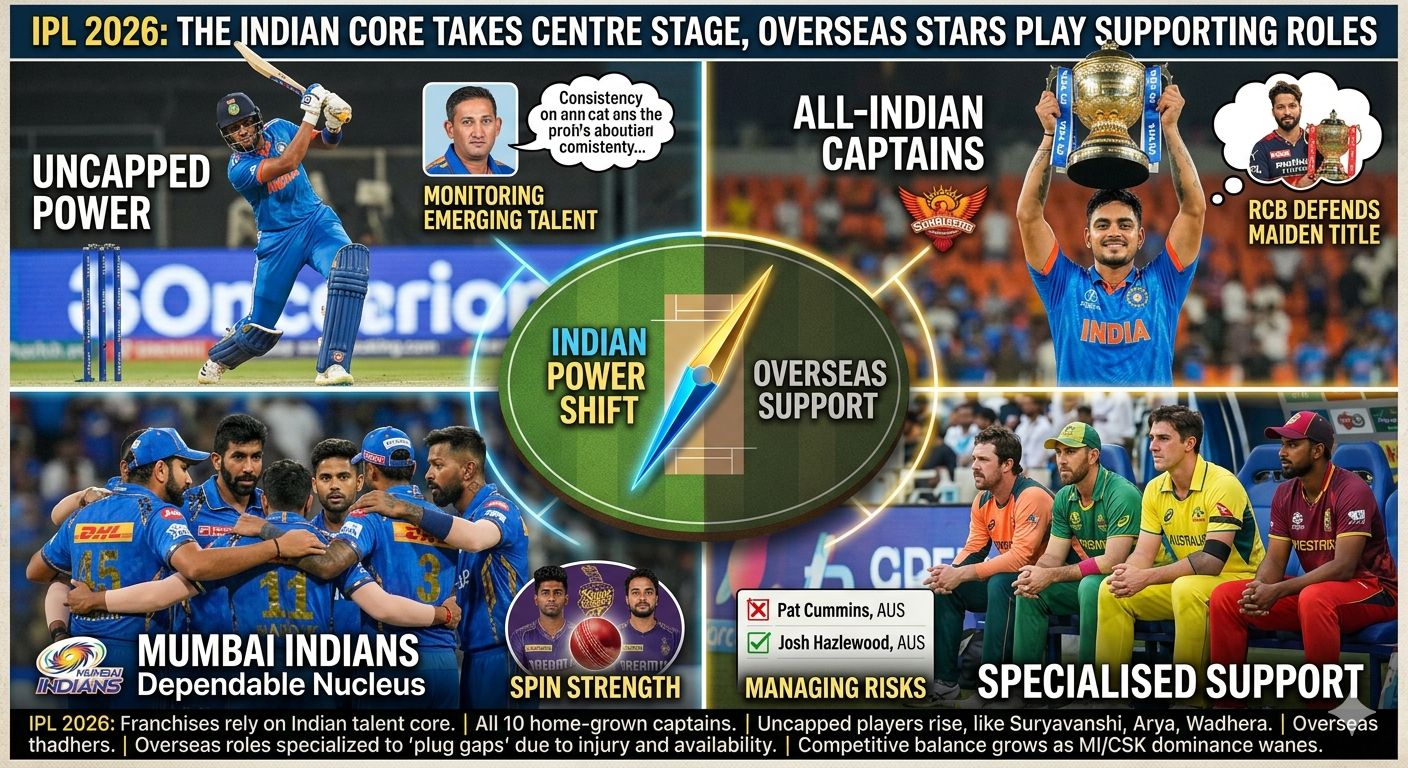
New Delhi, Mar 27: The Indian Premier League 2026 season marks a significant shift in team dynamics, with franchises increasingly relying on domestic talent while overseas players take on more specialised, supporting roles.
For the first time, all teams will begin the season with home-grown captains, underlining a broader transition towards building squads around a strong Indian core. The move reflects a growing emphasis on stability, availability and long-term development of local players.
Established stars such as Jasprit Bumrah, Virat Kohli and Suryakumar Yadav continue to anchor their respective sides, while a new generation of uncapped players is rapidly rising in prominence.
Teen sensation Vaibhav Suryavanshi, who impressed in the previous season, along with emerging performers like Priyansh Arya, Nehal Wadhera and Suyash Sharma, highlights the expanding talent pool that franchises are eager to tap.
Leadership changes further underscore this transformation. Ishan Kishan has been entrusted with leading Sunrisers Hyderabad on a temporary basis, while Rajat Patidar’s successful stint as Royal Challengers Bengaluru captain last season, culminating in a maiden title, has reinforced confidence in domestic leadership.
While overseas players remain integral, their roles have evolved. Once the central figures of franchises, foreign recruits are now increasingly being used to “plug supply gaps rather than define the sides,” especially amid concerns over availability and injuries. Recent absences of players like Pat Cummins and Josh Hazlewood in the season opener highlight the risks associated with overdependence on international stars.
Franchises are instead prioritising a dependable Indian nucleus. Teams like Mumbai Indians will once again bank on stalwarts such as Rohit Sharma, Bumrah, Suryakumar and Hardik Pandya, while Punjab Kings continue to rely on a fearless crop of young batters. Royal Challengers Bengaluru are expected to lean on their spin strength, led by Suyash Sharma.
The evolving landscape has also reduced the dominance of traditional heavyweights like Chennai Super Kings and Mumbai Indians, making the league more competitive and balanced.
Beyond team strategies, the IPL has widened India’s cricketing talent base, with players emerging from regions such as Rajasthan, Saurashtra, Vidarbha, Gujarat, Jharkhand and Jammu and Kashmir, thanks to extensive scouting networks.
National selectors, led by Ajit Agarkar, are closely monitoring performances during the season, tracking emerging players and assessing consistency ahead of major international tournaments, including the upcoming ODI World Cup. Young talents such as Mayank Yadav, Abdul Samad and Nitish Kumar Reddy are expected to be under the scanner, alongside established names like Rishabh Pant.
“It’s unfortunate that Shreyas Iyer misses out… He has to wait for his chance,” Agarkar said, reflecting the intense competition for national selection in an era where the IPL has become a “perfect tool to gauge the temperament of younger players.”
With the league entering what observers describe as a “very interesting phase,” the spotlight this season will firmly be on how effectively franchises harness their Indian core while complementing it with high-impact overseas specialists.
