

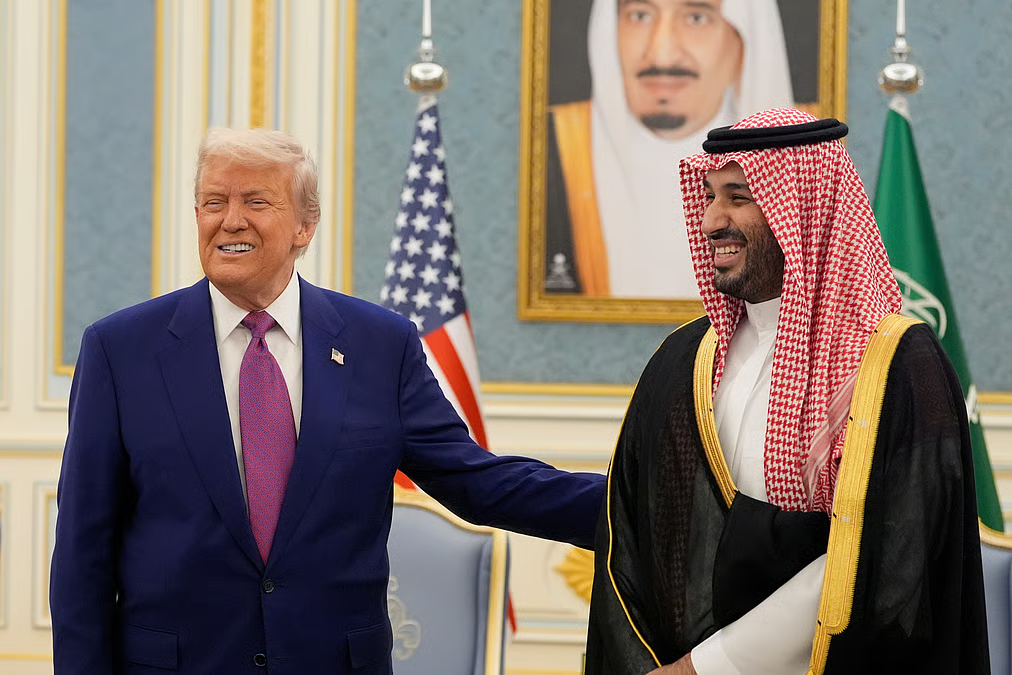
Washington, November 20: U.S. President Donald Trump on Tuesday offered an emphatic defence of visiting Saudi Crown Prince Mohammed bin Salman, saying the kingdom’s de facto ruler “knew nothing” about the 2018 killing of journalist Jamal Khashoggi — a stance that directly contradicted the conclusion of U.S. intelligence agencies.
The renewed controversy erupted during an Oval Office appearance marking the crown prince’s first White House visit in more than seven years, part of a push by Riyadh to restore his global standing after the uproar over Khashoggi’s murder inside the Saudi consulate in Istanbul.
“A lot of people didn’t like that gentleman that you’re talking about,” Trump told reporters, sitting alongside the crown prince. “Things happened, but he knew nothing about it, and we can leave it at that.”
U.S. intelligence agencies previously assessed that bin Salman approved the operation to capture or kill Khashoggi, a U.S.-based critic of the Saudi leadership. The prince has denied ordering the killing but acknowledged overall responsibility as the kingdom’s day-to-day ruler.
Bin Salman said the killing had been “painful” and insisted the Saudi government had taken “all the right steps of investigation,” calling the incident “a huge mistake.”
Trump rebuked the reporter who raised the Khashoggi question, accusing them of attempting “to embarrass our guest,” while praising the crown prince for doing an “incredible” job on human rights without elaborating.
Khashoggi’s widow, Hanan Elatr Khashoggi, condemned Trump’s remarks, telling Reuters that “nothing can justify such a horrible crime … because he’s controversial or unliked,” and urged Trump to meet her so she could show him “the real Jamal.”
Arms Deals and Strategic Agreements
The White House announced that Trump had designated Saudi Arabia a major non-NATO ally — a status granting military and economic privileges — as the two countries unveiled agreements on arms sales, civil nuclear cooperation, artificial intelligence and critical minerals.
A White House fact sheet said both sides signed a Strategic Defense Agreement aimed at strengthening deterrence in the Middle East and easing the entry of U.S. defense firms into the Saudi market. The deal, however, fell short of the NATO-style mutual defense pact Riyadh initially sought.
Trump also approved future deliveries of F-35 fighter jets to Saudi Arabia, a significant policy shift that would make Riyadh the first Middle Eastern nation besides Israel to acquire the stealth aircraft. The kingdom has requested 48 of the jets. The Saudis also agreed to buy 300 American tanks.
The two governments concluded negotiations on a civil nuclear energy cooperation framework, which Washington said would establish the foundation for a long-term partnership. Talks have long been complicated by Saudi resistance to U.S. demands that it forgo uranium enrichment.
Regional Diplomacy and Israel
Trump said he received a “positive response” from bin Salman regarding prospects for Saudi Arabia normalizing relations with Israel. The crown prince reiterated Riyadh’s stance that any deal requires Israel to commit to a path toward Palestinian statehood — a condition Israel has rejected.
Investment Pledge and Vision 2030
Earlier in the day, bin Salman was welcomed with full ceremonial honors, including an honor guard, a cannon salute and a flyover by U.S. warplanes.
Sitting beside Trump, the crown prince pledged to increase Saudi investment in the United States to $1 trillion, up from a $600 billion commitment made during Trump’s visit to Riyadh in May. He provided no details or timeline. Analysts note such an investment would be difficult as Saudi Arabia pours funds into costly domestic megaprojects under its Vision 2030 reform plan.
The White House said additional agreements were signed on artificial intelligence and critical minerals cooperation.
Questions Over Business Ties
Responding to questions about potential conflicts of interest involving his family’s business dealings in Saudi Arabia, Trump said he had no involvement in the Trump Organization. “I have nothing to do with the family business,” he said. “What my family does is fine. They do business all over.”
The White House has said Trump placed his business interests in a trust managed by his children when he took office. As beneficiary, he will regain direct access to the family’s earnings after leaving office. The crown prince will continue his U.S. visit on Wednesday with an investment conference at the Kennedy Center attended by senior corporate leaders.
