

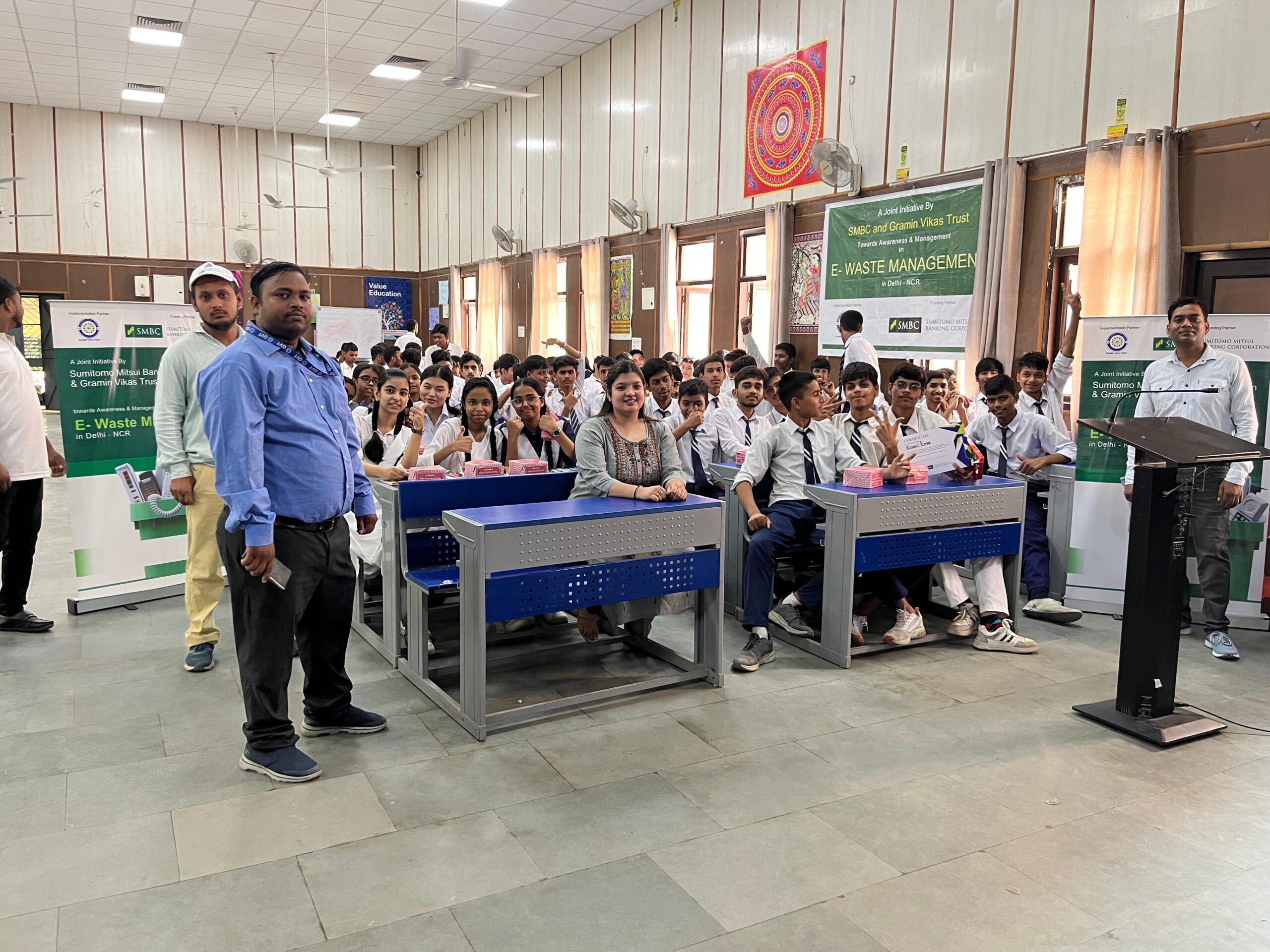
New Delhi, August 25: Gramin Vikas Trust (GVT), in partnership with Sumitomo Mitsui Banking Corporation (SMBC), is driving the third phase of the E-Waste Management Project in Delhi-NCR, where schools and Resident Welfare Associations (RWAs) are stepping up as key community partners to promote responsible e-waste disposal. This model is emerging as a unique example of community-led climate action amid India’s escalating urban e-waste crisis.
Launched in 2022, the E-Waste Management Project was conceived to address the alarming rise in electronic waste, particularly in underserved and informal urban settlements where disposal methods are often unsafe and awareness is limited. Implemented by GVT with financial and strategic support from SMBC, the project aims to create a scalable, community-driven, and environmentally sound model for e-waste collection, processing, and awareness building.
The initiative aligns with national environmental goals as well as the Sustainable Development Goals (SDGs) on responsible consumption (SDG 12), climate action (SDG 13), and decent work (SDG 8).
During Phase I (Oct 2022 – Mar 2023), the project laid the foundation by strengthening RRR (Reduce, Reuse, Recycle) centers, training waste workers in basic safety and handling techniques, and conducting initial community sensitization sessions in South Delhi’s Sangam Vihar area. This phase established the need for localized, community-led infrastructure and demonstrated early signs of positive behavioural change.
In Phase II (Apr 2023 – Mar 2024), the project expanded its reach and depth. With the introduction of a GPS-enabled e-waste collection van, being run both for community and doorstep collection of e-waste, and targeted awareness campaigns. Phase II saw a significant increase in citizen participation. The highlight achievements of last two phases include a significant collection of around 395 kgs of electronics with around 370kgs of the waste successfully recycled via 25 trained e-waste workers from around 7000 community members and approximately 3000 school children joining in the collection wagon.
The successful pilot confirmed that strategic awareness, accessibility, and accountability can lead to measurable impact.
Now in Phase III, the project is scaling across 18 locations in Delhi-NCR—including Malviya Nagar, Nehru Place, Mehrauli, Okhla, Govindpuri, South Extension, Vasant Kunj, and Chattarpur. One of the defining strategies of this phase is to deeply involve schools and RWAs as community anchors for e-waste awareness and collection. Entire project team is working in close liaison with area’s municipal commissioners and government department.
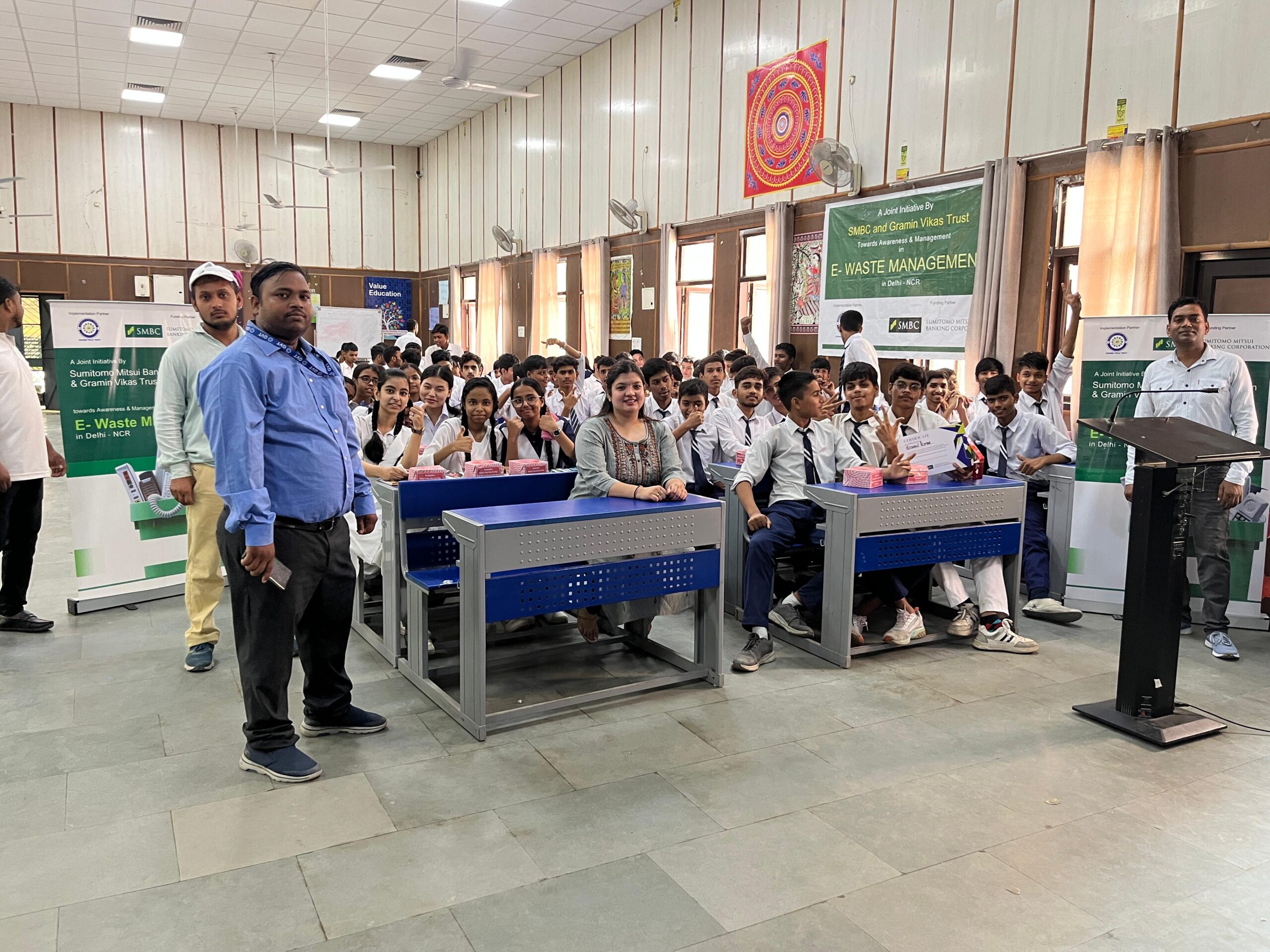
Schools have become not just awareness hubs but also collection points. Through interactive workshops, quizzes, pledge campaigns, and student-led initiatives, schools are enabling young minds to understand the toxic impact of e-waste and their role in safe disposal.
Many schools have established “E-Waste Corners,” encouraging students to bring old gadgets from home—chargers, batteries, calculators, headphones—and deposit them for safe recycling. These activities are often timed with larger awareness drives and collection events that involve teachers, parents, and community members.
“Our students were shocked to learn that discarded electronics can poison water and air for years,” said a school teacher from Sarvoday Co-ed school, Harinagar (Ashram, Delhi). “Now they are not only collecting waste from home but educating their families too,” the teacher added.
In parallel, RWAs across colonies in Green Park, Panchsheel, and Lado Sarai have partnered with the project to organize door-to-door awareness drives, WhatsApp group outreach, and Sunday collection drives. With support from GVT, RWAs are setting up branded kiosks and drop-off bins where residents can safely dispose of their unused electronics. These initiatives are strengthening peer accountability and reshaping waste behaviour at the neighbourhood level.
To support both schools and RWAs, the project is deploying e-waste collection vans on designated routes. These vans are equipped with GPS, LED screens and audio messaging systems and serve both logistical and educational purposes. Citizens can also use the mobile app to schedule pickups, track their contributions, and earn “green points” as incentives for responsible behaviour.
Sumitomo Mitsui Banking Corporation, the CSR partner of the project, views this as a transformative example of bottom-up climate governance. “By partnering with schools and RWAs, we are not only creating collection points—we are cultivating a culture of environmental responsibility,” said a spokesperson from GVT, the NGO implementing the project on ground.
In the coming months, the project will introduce School Quiz competitions, upcycling trainings from e-waste, and community recognition programs to celebrate and amplify local leadership in e-waste management. Leading schools and RWAs will also be featured in digital storytelling campaigns to inspire others to join.
By placing trust in local institutions and turning students and residents into environmental stewards, Phase III of the GVT-SMBC E-Waste Management Project is proving that systemic change doesn’t always start at the top. Sometimes, it begins with a classroom pledge—or a shared neighbourhood decision to keep our electronics out of landfills and in the loop of sustainability.
